AI estimate as of October 2, 2025 · verify with a professional before acting
AI-Generated · Verify before acting
Everything on this page is generated by AI for informational purposes only. AI can make mistakes — the AI may misidentify items or misattribute them (artist, maker, brand, designer, origin, era). This is not an official valuation and should not be used for insurance, sale, tax, estate, legal, or lending purposes — or any decision requiring a certified appraisal. It is not an authoritative claim about any person, brand, or rights holder — do not share or rely on it as a factual statement about a third party. Always consult qualified professionals before making financial decisions.
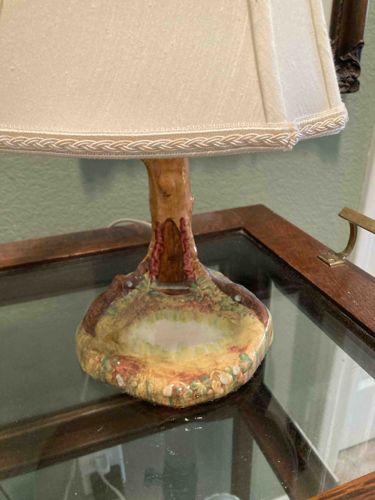
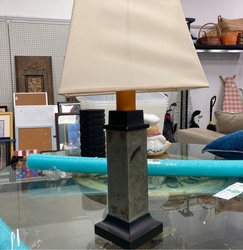
This item is a decorative table lamp featuring a whimsical, nature-inspired design. The base of the lamp appears to be crafted from ceramic, sculpted and painted to mimic organic forms, possibly a tree trunk emerging from a forest floor or mossy ground. The central 'trunk' element is irregularly shaped and finished in tones of brown and beige, suggesting wood or bark. At its base, there's a flaring, undulating form, heavily textured and painted with a multicolor palette of greens, yellows, burnt oranges, and hints of red, creating a vibrant, earthy appearance. The texture on this lower section seems to depict foliage, stones, or fungi, adding to the naturalistic theme. A small, shallow, irregularly shaped basin-like depression is visible in the center of the base, finished in a lighter, almost iridescent light green or white glaze, which could serve as a catch-all or simply be a decorative element. The lampshade is a classic drum or empire shape, made of an off-white or beige fabric, possibly linen or silk, with vertical pleating or seams, and adorned with a decorative braided trim along its bottom edge. The overall condition appears good from the visible angles, with no obvious cracks, chips, or significant wear on the ceramic base, though a thorough inspection would be needed to confirm this. The style suggests it could be a vintage piece from the mid-20th century, possibly 1950s-1970s, or a more contemporary piece designed to evoke that era's folk art or whimsical aesthetics. The craftsmanship indicates a hand-painted and sculpted piece, which adds to its unique character.
AI Appraisal Report
Upon visual examination of the Whimsical Nature-Inspired Table Lamp with Ceramic Base, I find its condition to be quite good from the available images. There are no obvious cracks, chips, or significant wear visible on the sculpted ceramic base, which is a positive indicator. The vibrancy of the paint on the 'forest floor' element also appears well-preserved. Minor inconsistencies in the finish are likely attributable to its handmade nature rather than damage. The fabric lampshade seems intact, with consistent pleating and braided trim, though some light discoloration or dust may be present, which is common with age.
Authenticity is a key consideration here. While the aesthetic suggests a mid-20th century folk art or decorative piece, possibly from the 1950s-1970s, it could also be a more contemporary homage. The craftsmanship, particularly the detailed sculpting and hand-painting, points to a unique, artisan-made item rather than mass production. Comparable items in the market, often described as 'whimsical ceramic table lamps' or 'mid-century art pottery lamps,' typically range from $150 to $600 depending on the artist, specific design, and condition. The nature-inspired theme and vibrant color palette contribute positively to its appeal among collectors of unique decorative arts.
Factors impacting its value include its unique artistic quality and good apparent condition. Demand for vintage and artisan-made lighting remains steady, particularly for distinctive pieces. Rarity is moderate; while not a one-of-a-kind museum piece, its handmade nature means each is unique. However, without in-person examination, I cannot definitively verify the ceramic's age or origin, nor authenticate any potential artist's mark that might be on the underside of the base. A physical inspection would allow me to check for artist signatures, manufacturing stamps, assess the quality and type of ceramic (e.g., earthenware, stoneware), and examine the wiring and socket, which can often date a piece. Provenance documentation, such as original purchase receipts or artist information, would significantly enhance authenticity and potentially the value beyond this estimate.