AI estimate as of August 15, 2025 · verify with a professional before acting
AI-Generated · Verify before acting
Everything on this page is generated by AI for informational purposes only. AI can make mistakes — the AI may misidentify items or misattribute them (artist, maker, brand, designer, origin, era). This is not an official valuation and should not be used for insurance, sale, tax, estate, legal, or lending purposes — or any decision requiring a certified appraisal. It is not an authoritative claim about any person, brand, or rights holder — do not share or rely on it as a factual statement about a third party. Always consult qualified professionals before making financial decisions.
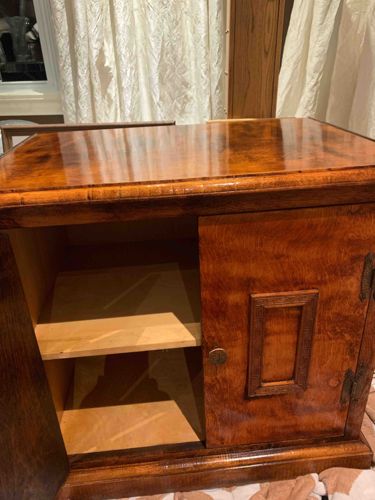
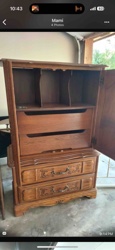
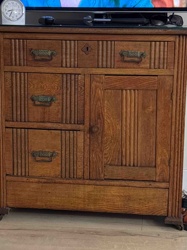
This is a vintage or antique wooden cabinet, likely constructed from a hardwood such as oak or possibly burl wood given the distinctive grain visible on the top and doors. The overall finish is a deep, rich reddish-brown with a high-gloss, possibly shellac or varnish, that reflects light significantly. The top surface shows evidence of a striped pattern, which could be an intentional design in the wood veneer (figured wood) or possibly a result of watermarks or finish degradation. The joinery appears to be robust, indicating quality craftsmanship, though specific details like dovetails are not visible. The cabinet features at least one door, shown open, revealing two light-colored internal shelves. The interior wood appears to be a lighter, unfinished or less-finished wood, possibly pine or a different grade of oak. The exterior of the door, and presumably the entire front facade, is adorned with a raised, rectangular decorative panel, adding a touch of traditional or perhaps Art Deco styling. The hardware, though partially obscured, appears to be made of an aged metal, possibly brass or iron, with a visible round escutcheon plate on the open door and what looks like an external hinge on the right, closed door. There are no visible maker's marks or signatures, making precise manufacturing details difficult to ascertain. The condition appears to be relatively good, with a visible patina consistent with age. There are no obvious signs of severe damage, though some wear and tear would be expected for an item of this age, particularly on the top surface where the striped pattern is most prominent. The quality indicators include the substantial appearance of the wood and the decorative elements. The style period likely falls within the early to mid-20th century, possibly 1920s-1950s, given the clean lines yet traditional decorative elements.
AI Appraisal Report
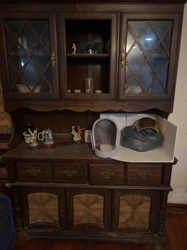
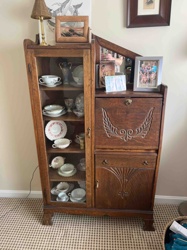
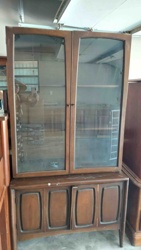
Upon visual examination of the provided images, this hardwood cabinet presents as a well-crafted piece from the first half of the 20th century, likely dating between 1920 and 1950. The prominent use of a high-quality burl or figured wood veneer on the primary surfaces is a significant value indicator, showcasing a desirable and often expensive material choice. The deep, high-gloss finish, likely shellac, and the raised paneling suggest traditional, possibly Art Deco-influenced, craftsmanship. The cabinet appears to be in good, stable condition for its age, though the top surface exhibits a striped pattern that could be either an intended design or evidence of finish damage, which would impact the value. The contrasting lighter wood interior is typical for utilitarian storage pieces of this era. Market demand for such standalone cabinets is moderate. While highly figured woods are sought after, the market is saturated with similar period furniture. Comparables for non-branded, good-condition cabinets of this style typically sell in the low to mid-hundreds. The lack of a visible maker's mark is a major factor limiting its value; a known manufacturer like Stickley or a prominent Art Deco designer would command a significantly higher price. A definitive appraisal is limited by the digital format. A full assessment would require in-person inspection to confirm the type of wood (solid vs. veneer), examine joinery for quality, identify any maker's marks, and determine if the top-surface pattern is damage or design. Without provenance or physical verification, its authenticity as a high-value antique cannot be confirmed.