AI estimate as of October 29, 2025 · verify with a professional before acting
AI-Generated · Verify before acting
Everything on this page is generated by AI for informational purposes only. AI can make mistakes — the AI may misidentify items or misattribute them (artist, maker, brand, designer, origin, era). This is not an official valuation and should not be used for insurance, sale, tax, estate, legal, or lending purposes — or any decision requiring a certified appraisal. It is not an authoritative claim about any person, brand, or rights holder — do not share or rely on it as a factual statement about a third party. Always consult qualified professionals before making financial decisions.
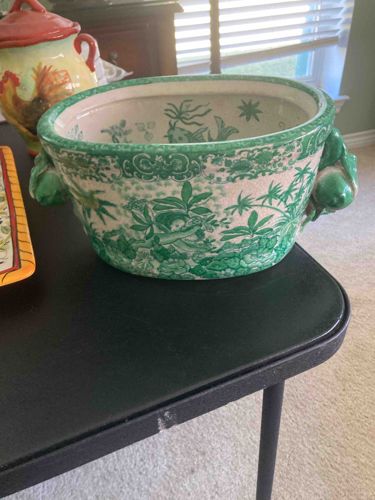
This item is an oval-shaped ceramic planter or cachepot featuring an intricate green and white chinoiserie-style transferware pattern. The primary color of the ceramic visible through the pattern is an off-white or cream, which serves as the background for the vivid green pictorial designs. The pattern depicts a detailed landscape with stylized foliage, architectural elements, and figures, possibly in an East Asian or fantastical setting, consistent with chinoiserie motifs. The rim of the planter is rounded and also decorated with the same green pattern, providing a cohesive look. A notable feature is the pair of dimensional, figural handles on either end, which appear to be stylized Toby Jug-like faces or grotesque masks, executed in the same green color as the transferware. The handles are well-integrated into the overall design, adding a whimsical and decorative touch. The interior of the planter is visible and appears to be glazed with the same off-white color, also exhibiting the green transferware pattern across its surface, confirming its status as a decorative vessel rather than a utilitarian cooking pot. Visible condition issues include fine crazing across the glazed surface, which is a common characteristic of older ceramic pieces and suggests age. There are no obvious chips, cracks, or repairs discernible from the provided images, but a closer inspection would be needed to confirm. The craftsmanship suggests a manufactured item, likely from the early to mid-20th century, drawing inspiration from historical English transferware. The quality appears good, with clear pattern application and well-formed handles, indicating a decorative piece intended for display, possibly holding plants, flowers, or other decorative arrangements.
AI Appraisal Report
Based on my visual examination of the provided image, this Toby Jug Style Ceramic Planter or Cachepot presents as a charming decorative piece. The intricate green and white chinoiserie-style transferware pattern is well-executed, with good clarity in the design elements depicting a landscape with figures and architecture. The off-white ceramic base provides a pleasing contrast to the vivid green. The most distinctive feature, and indeed what gives this piece its 'Toby Jug Style' designation, are the dimensional figural handles, which appear to be stylized faces or masks, skillfully integrated into the overall aesthetic. These handles add a significant whimsical and unique touch.
From the image, the condition appears good, with the primary visible issue being fine crazing across the glazed surface. This is very common for ceramic pieces of its likely age, suggesting it has been well-preserved for its type. I do not observe any obvious chips, cracks, or repairs, though a physical inspection would be crucial to confirm this definitively. The quality of the transferware application and the well-formed handles indicate a manufactured item, likely dating from the early to mid-20th century, drawing inspiration from historical English transferware traditions.
In terms of market conditions, chinoiserie patterns and decorative cachepots hold a consistent, albeit modest, demand. The unique Toby Jug-like handles enhance its collectibility beyond a generic planter. Comparable items, often referred to as 'majolica' style face planters or transferware cachepots, typically range from $100 up to $300, depending on condition, size, and the distinctiveness of the design. The current piece's good visual condition and unique handles place it firmly in the middle to upper end of this range. Rarity for such manufactured pieces is moderate; while not unique, this specific combination of pattern and handle style isn't ubiquitous.
Factors impacting value positively include the attractive design, good apparent condition, and the distinctive figural handles. Negative factors would be any hidden damage that a physical inspection might reveal. Limitations in authenticity verification from images alone are significant; I cannot feel for repairs, examine the base for maker's marks, assess the tactile quality of the ceramic, or confirm the absence of hairline cracks. A physical inspection would be needed to verify material composition, confirm the absence of repairs or significant damage, and identify any maker's marks or provenance documentation that would further authenticate and potentially enhance its value.