AI estimate as of September 28, 2025 · verify with a professional before acting
AI-Generated · Verify before acting
Everything on this page is generated by AI for informational purposes only. AI can make mistakes — the AI may misidentify items or misattribute them (artist, maker, brand, designer, origin, era). This is not an official valuation and should not be used for insurance, sale, tax, estate, legal, or lending purposes — or any decision requiring a certified appraisal. It is not an authoritative claim about any person, brand, or rights holder — do not share or rely on it as a factual statement about a third party. Always consult qualified professionals before making financial decisions.
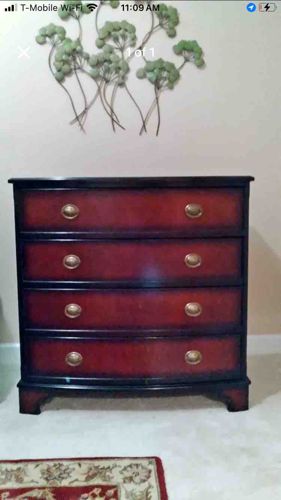
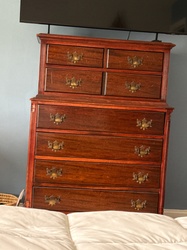
This item is a four-drawer bow-front chest, likely constructed from a combination of solid wood and veneers, exhibiting a rich, dark reddish-brown finish that suggests mahogany, cherry, or a similar stained wood. The top surface appears to be a darker, almost espresso-colored wood, providing a contrast to the drawer fronts. The chest features a distinct 'bow-front' design, where the front of the drawers and the supporting frame curve outwards gently. This design element adds depth and a classic, elegant aesthetic. Each of the four drawers is fitted with two circular, brass-toned pull handles, which appear to be antique or antiqued in style, showing some signs of wear or patina consistent with age and use. The construction details indicate a traditional cabinet-making approach, with visible straight lines forming the rectangular structure of the chest, offset by the curved drawer fronts. The base of the chest features subtle bracket feet, providing stability and elevating the main body slightly off the floor. The overall condition appears good, with some visible scuffing or minor surface wear on the drawer fronts, particularly around the pulls, which is typical for a used piece of furniture. There are no obvious signs of significant damage, repairs, or structural integrity issues from the provided image. The dark finish, brass hardware, and bow-front profile suggest a traditional or Georgian-inspired style, possibly dating from the late 20th century, though it could be earlier depending on the quality of construction and materials used. The craftsmanship appears solid and functional, indicating a piece designed for everyday use.
AI Appraisal Report
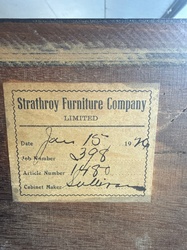
Upon visual examination of the provided image, I assess this four-drawer bow-front chest to be in good overall condition. There are visible signs of minor surface wear and scuffing, particularly around the brass-toned pulls, consistent with typical use and appropriate for its likely age. These do not appear to impact structural integrity. The bow-front design, dark reddish-brown finish (suggesting mahogany or cherry, possibly veneered), and traditional brass hardware point to a Georgian-inspired or traditional style, likely from the late 20th century. Authenticity as an antique is difficult to ascertain from an image alone; while the style is classic, mass production methods of the late 20th century often replicated such designs. Market conditions for traditional furniture, especially reproduction pieces, remain moderate. Demand is steady for functional and aesthetically pleasing smaller case goods, but rarity is low. Comparables in this style and condition from reputable online marketplaces and auction results typically fall within the $300-$700 range, with higher values for documented antique pieces or those with exceptional craftsmanship/materials. Key factors impacting its value positively are its good condition and classic design; negatively, its probable reproduction status and commonness of style in the broader market. For full authentication and to determine if it is a true antique versus a well-made reproduction, an in-person examination would be critical to assess joinery, wood species, veneer application, and hardware attachment methods. Provenance documentation could also shed light on its manufacturing origin and age.