AI Appraisal Estimate

AI-generated estimates · not official valuations

From the user

What was submitted

Photo and notes provided by the user — not generated by AI

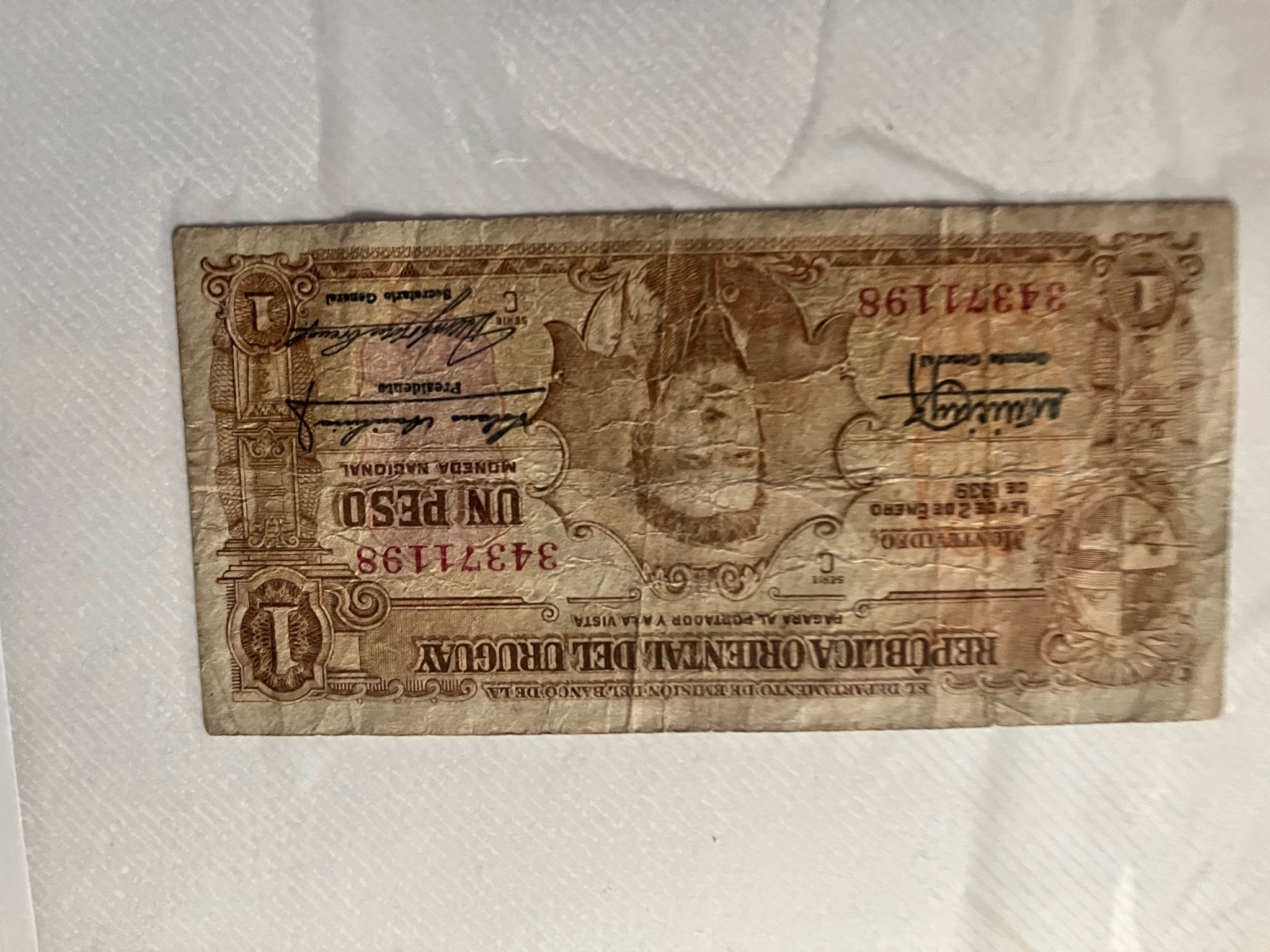
Submitted item photo
Submitted photo · June 3, 2026

User's notes

No additional notes provided.

AI analysis below

AI appraisal

AI analysis & estimate

AI-Generated · Verify before acting

Everything below is generated by AI for informational purposes only. AI can make mistakes — the AI may misidentify items or misattribute them (artist, maker, brand, designer, origin, era). This is not an official valuation and should not be used for insurance, sale, tax, estate, legal, or lending purposes — or any decision requiring a certified appraisal. It is not an authoritative claim about any person, brand, or rights holder — do not share or rely on it as a factual statement about a third party. Always consult qualified professionals before making financial decisions.

Read the full disclaimer

AI Identification

·Not independently authenticated·Verify before acting

Uruguayan Banknote in the Style of a 1939 One Peso Bill

Paper Money and Banknotes

AI Estimated Value

·Not an official valuation·Verify before acting

$5.00 - $15.00

As of June 3, 2026

AI Item Analysis

·AI can make mistakes·Verify before acting
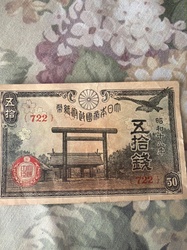
This item appears to be a paper currency note consistent with the design of a mid-20th-century Uruguayan one peso banknote. The bill features a central portrait consistent with José Gervasio Artigas and is printed in a monochromatic brown or sepia ink on paper that shows significant signs of age and handling. Visible text includes 'REPÚBLICA ORIENTAL DEL URUGUAY', 'UN PESO', 'MONEDA NACIONAL', and 'MONTEVIDEO, LEY DE 2 DE ENERO DE 1939'. It bears two red serial numbers reading '34371198' and several printed signatures that appear consistent with 'Secretario General', 'Presidente', and 'Gerente General', though these are unverified. The condition is heavily circulated, characterized by numerous horizontal and vertical creases, frayed edges, corner rounding, and overall staining or foxing throughout the substrate. There are no security features such as watermarks or threads visible in the image, and the attribution is based on the legible printed text which suggests a 1939 series; however, physical inspection by a numismatist would be required to assess validity and origin.
AI Appraisal Report

·AI can make mistakes·Verify before acting
I have examined the image provided of the Uruguayan one peso banknote, which appears consistent with the Ley de 2 de Enero de 1939 series. Based on what I can see, the bill bears markings and a portrait consistent with José Gervasio Artigas. However, I cannot verify the legitimacy of the substrate or the ink from a photo alone; physical inspection by a numismatist would be necessary to confirm if this is a contemporary issue or a later reproduction. The estimate reflects the assumed identification as a circulating note of that era. The condition is a primary factor in this valuation; the note shows heavy circulation, including significant creasing, frayed edges, and foxing, which generally places it in 'Good' or 'Very Good' (VG) numismatic condition rather than 'Fine' or 'Uncirculated'. Market demand for mid-20th-century South American currency is steady among specialized collectors, but value is highly sensitive to preservation. Comparable notes in this heavily handled state typically trade at a nominal level. To confirm attribution, one would need to check for specific paper textures and ink penetration that are not discernable in an image. If this item were determined to be a modern reproduction or a facsimile, the value would be negligible, likely under $1.00. High-grade examples of this series fetch higher prices, but the visible wear here significantly limits the market premium. This valuation assumes the item is a true circulating example of the 1939 series as suggested by the printed text.

Get your items appraised

Instant estimates of your treasures with AI-powered appraisals

Browse More Appraisals