Landscape Study by Gabriele Münter (Attributed)
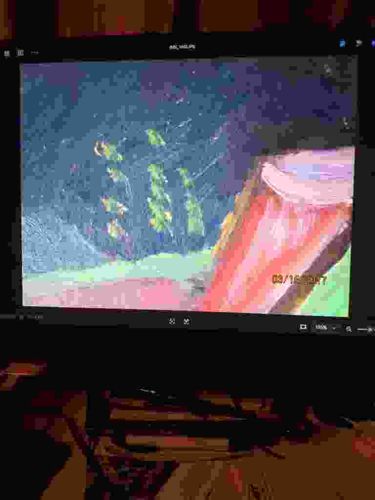
This item is an oil painting on cardboard, attributed to the German Expressionist artist Gabriele Münter, dated circa 1912. The composition features a bold, simplified landscape typical of the Blue Rider (Der Blaue Reiter) movement. Physical characteristics include thick, impasto brushstrokes and a vibrant palette of deep blues, forest greens, and a striking coral-red or pink foreground element. The use of cardboard as a substrate was common among expressionists for quick studies and plein air work. Distinguishing features include the characteristic black outlines and the reduction of forms into blocks of color, a style Münter refined during her time in Murnau. Regarding condition, the image shows some surface texture consistent with age, though the low resolution makes a definitive assessment of craquelure or pigment fading difficult. The painting exhibits the high quality of early 20th-century German avant-garde art, emphasizing emotional expression over realistic representation. A notable timestamp '03/16/2017' is overlaid on the digital image, though this is not part of the physical artwork. The piece represents a significant era in Modernism, showcasing the transition toward abstraction through simplified nature motifs and subjective color usage.
AI-Generated Appraisal Disclaimer
Estimated Value
$40,000 - $60,000
Basic Information
Category
Fine Art - Painting
Appraised On
February 24, 2026
Estimated Value
$40,000 - $60,000
Additional Details Provided By Owner
User Provided Information
Gabriela munter 1912. cardboard oil
Item Description
This item is an oil painting on cardboard, attributed to the German Expressionist artist Gabriele Münter, dated circa 1912. The composition features a bold, simplified landscape typical of the Blue Rider (Der Blaue Reiter) movement. Physical characteristics include thick, impasto brushstrokes and a vibrant palette of deep blues, forest greens, and a striking coral-red or pink foreground element. The use of cardboard as a substrate was common among expressionists for quick studies and plein air work. Distinguishing features include the characteristic black outlines and the reduction of forms into blocks of color, a style Münter refined during her time in Murnau. Regarding condition, the image shows some surface texture consistent with age, though the low resolution makes a definitive assessment of craquelure or pigment fading difficult. The painting exhibits the high quality of early 20th-century German avant-garde art, emphasizing emotional expression over realistic representation. A notable timestamp '03/16/2017' is overlaid on the digital image, though this is not part of the physical artwork. The piece represents a significant era in Modernism, showcasing the transition toward abstraction through simplified nature motifs and subjective color usage.

Related Tags
Get Your Items Appraised
Instant estimates of your treasures with AI-powered instant appraisals