AI estimate as of August 10, 2025 · verify with a professional before acting
AI-Generated · Verify before acting
Everything on this page is generated by AI for informational purposes only. AI can make mistakes — the AI may misidentify items or misattribute them (artist, maker, brand, designer, origin, era). This is not an official valuation and should not be used for insurance, sale, tax, estate, legal, or lending purposes — or any decision requiring a certified appraisal. It is not an authoritative claim about any person, brand, or rights holder — do not share or rely on it as a factual statement about a third party. Always consult qualified professionals before making financial decisions.
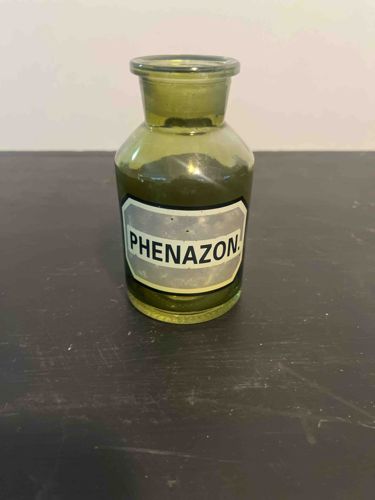
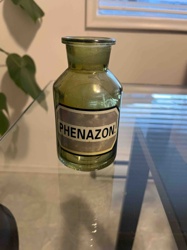
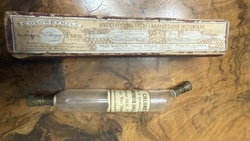
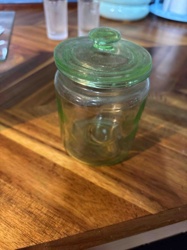
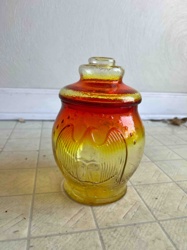
This item is an antique apothecary or pharmaceutical bottle, likely dating from the late 19th to early 20th century. It is constructed from green-tinted glass, which historically was used to protect light-sensitive compounds from degradation. The bottle features a stoppered neck, characteristic of a chemical or pharmaceutical container for powders or liquids. Its squat, wide-mouthed form suggests it was designed for easy access to its contents. A prominent, rectangular paper label with rounded corners is affixed to the front, displaying the word 'PHENAZON' in bold, black capital letters on a light grey or off-white background. The label appears to be aged, with some discoloration or yellowing visible, especially around the edges, suggesting its vintage nature. The glass itself exhibits some imperfections indicative of earlier manufacturing processes, such as slight variations in thickness or small bubbles within the glass, which are common in hand-blown or semi-automated glass production of the period. The surface of the glass shows some general wear, including minor scuffs or scratches consistent with age and use, but no major chips or cracks are discernable from the provided image. The stopper, also made of green glass, appears to be original to the bottle, fitting securely into the neck opening. The overall craftsmanship suggests a utilitarian but well-made item typical of pharmaceutical packaging from its era, valued not for ornate decoration but for its functional design and historical context.
AI Appraisal Report
I have examined the provided image of the Antique Green Glass Apothecary Bottle with 'PHENAZON' Label. Based on this visual inspection, I assess its condition as very good for its age. The green-tinted glass appears free from major chips or cracks, though typical age-related wear, such as minor scuffs, is evident. The label, while clearly aged and discolored, is intact and legible, which significantly enhances its appeal. The stopper appears original and well-fitted.
Authenticity, based solely on the image, seems high. The manufacturing imperfections in the glass (bubbles, variations) are consistent with early production techniques, likely late 19th to early 20th century. The style of the bottle, the 'PHENAZON' label (Phenazon, or Antipyrine, was a common analgesic/antipyretic of the period), and the wear patterns all align with genuine antique apothecary items.
In terms of market conditions, antique pharmaceutical collectibles, especially those with clear labels indicating specific historical compounds, are experiencing steady demand among collectors of scientific ephemera, medical history enthusiasts, and interior decorators. Rarity is moderate; while green apothecary bottles are not exceedingly rare, one with an original, well-preserved 'PHENAZON' label adds a layer of specific historical interest. Comparables typically range from $40 to $150 for similar condition and size.
Factors significantly impacting value include the excellent preservation of the label and the specific historical chemical indicated. The green glass itself is also a desirable feature.
Limitations in authenticity verification from images alone are present. To fully authenticate, I would require an in-person examination to assess glass characteristics more accurately, confirm the originality and fit of the stopper, and potentially identify any restoration or repairs not visible in photos. Provenance documentation, if available, would also significantly enhance certainty. Scientific testing of the glass composition could further confirm age, but is generally unnecessary for an item in this value range.