Victorian Style Cranberry Glass Pedestal Bowl
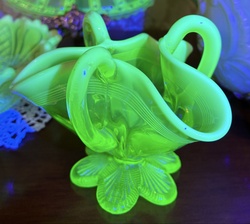
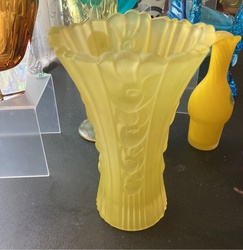
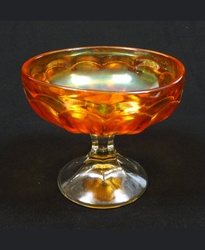
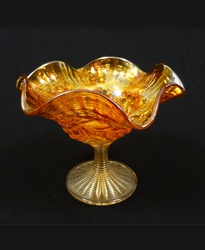
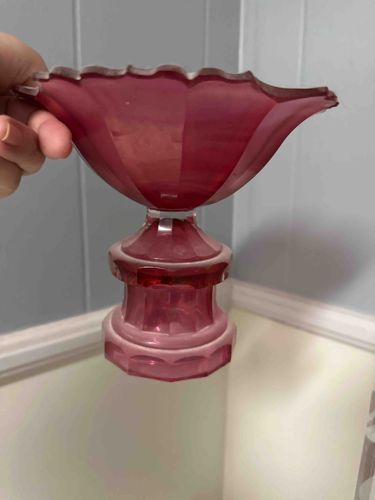
This item is a decorative pedestal bowl, often referred to as a comport or tazza, crafted in the Victorian style. The piece is made of cranberry glass, a type of gold ruby glass known for its deep pinkish-red hue achieved through the addition of gold salts. The bowl features a flared, wide rim with a delicate scalloped edge and vertical fluting that extends toward the base of the vessel. It is supported by a thick, multifaceted pedestal base with architectural, tiered molding and a hexagonal bottom. The glass displays varying levels of opacity, with the thicker base sections showing a denser, slightly more violet-pink tone compared to the translucency of the bowl. The construction suggests a combination of mold-pressing and finishing, characteristic of mid-to-late 19th-century or early 20th-century glassware production. In terms of condition, the piece shows no visible cracks or deep chips in this view, though minimal shelf wear is expected on the underside of the faceted base. The glass possesses a clear, vibrant brilliance, indicating high-quality lead content or expert craftsmanship. This style of glass was popularized by companies like Fenton or various Bohemian glassmakers, serving as both utilitarian serving pieces and highly collectable art glass.
AI-Generated Appraisal Disclaimer
Estimated Value
$150 - $250
Basic Information
Category
Antique Glassware / Art Glass
Appraised On
April 1, 2026
Estimated Value
$150 - $250
Item Description
This item is a decorative pedestal bowl, often referred to as a comport or tazza, crafted in the Victorian style. The piece is made of cranberry glass, a type of gold ruby glass known for its deep pinkish-red hue achieved through the addition of gold salts. The bowl features a flared, wide rim with a delicate scalloped edge and vertical fluting that extends toward the base of the vessel. It is supported by a thick, multifaceted pedestal base with architectural, tiered molding and a hexagonal bottom. The glass displays varying levels of opacity, with the thicker base sections showing a denser, slightly more violet-pink tone compared to the translucency of the bowl. The construction suggests a combination of mold-pressing and finishing, characteristic of mid-to-late 19th-century or early 20th-century glassware production. In terms of condition, the piece shows no visible cracks or deep chips in this view, though minimal shelf wear is expected on the underside of the faceted base. The glass possesses a clear, vibrant brilliance, indicating high-quality lead content or expert craftsmanship. This style of glass was popularized by companies like Fenton or various Bohemian glassmakers, serving as both utilitarian serving pieces and highly collectable art glass.
Related Tags
Get Your Items Appraised
Instant estimates of your treasures with AI-powered instant appraisals