AI Appraisal Estimate

AI-generated estimates · not official valuations

From the user

What was submitted

Photo and notes provided by the user — not generated by AI

Submitted item photo
Submitted photo · May 27, 2026

User's notes

Good condition vintage in

AI analysis below

AI appraisal

AI analysis & estimate

AI-Generated · Verify before acting

Everything below is generated by AI for informational purposes only. AI can make mistakes — the AI may misidentify items or misattribute them (artist, maker, brand, designer, origin, era). This is not an official valuation and should not be used for insurance, sale, tax, estate, legal, or lending purposes — or any decision requiring a certified appraisal. It is not an authoritative claim about any person, brand, or rights holder — do not share or rely on it as a factual statement about a third party. Always consult qualified professionals before making financial decisions.

Note

This analysis also relies on unverified notes provided by the user, which may be incomplete or inaccurate and could affect the result.

Read the full disclaimer

AI Identification

·Not independently authenticated·Verify before acting

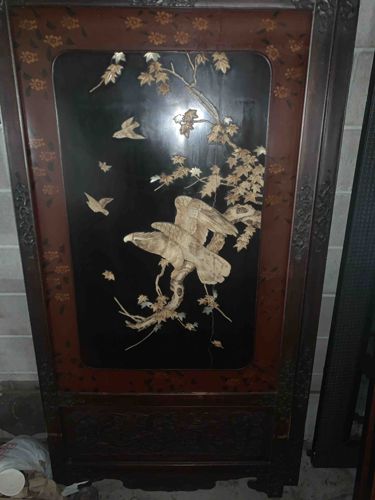
Vintage Japanese Bone and Mother-of-Pearl Inlay Lacquer Screen Panel

Antiques & Decorative Arts

AI Estimated Value

·Not an official valuation·Verify before acting

$400 - $600

As of May 27, 2026

AI Item Analysis

·AI can make mistakes·Verify before acting
This is a large, rectangular decorative screen panel, likely of Japanese or East Asian origin, dating towards the mid-20th century. The piece features an intricate high-relief scene of a hawk or eagle perched upon a gnarled pine branch, accompanied by smaller birds in flight. The central figure is masterfully rendered using carved bone or ivory-colored resin, showing detailed feathering and skeletal structure. Mother-of-pearl (nacre) and bone are further utilized for the foliage and blossoms, creating a shimmering contrast against the deep black lacquer ground. The central black panel is framed by a reddish-brown or cinnabar-toned border decorated with delicate floral motifs. The outer framework is constructed of dark-stained wood, featuring elaborate hand-carved relief work at the base and side stiles, depicting traditional scrolling vines and cloud patterns. Structurally, the panel appears solid with a recessed lower apron. Regarding condition, there is visible surface dust and light scuffing to the lacquer, common with vintage age. Some minor loss or lifting of the thin inlay may be present upon closer inspection, but the primary figures remain intact. The craftsmanship indicates a high-quality decorative export or domestic piece intended for a refined interior, exhibiting classic Meiji-style artistic influence.


AI Appraisal Report

·AI can make mistakes·Verify before acting
Based on my visual examination of this vintage Japanese lacquer screen panel, I have determined it to be a decorative export piece, likely dating from the mid-20th century (specifically the Shōwa period, roughly 1950s-1970s). The craftsmanship displays the classic 'shibayama' style technique, featuring high-relief inlay work of a hawk—a symbol of strength and vision—executed in carved bone and mother-of-pearl against a black lacquer ground. The condition appears generally good for its vintage, with the primary central figures intact. The artistry of the hawk’s plumage is commendable, showing nice dimensionality. However, upon close inspection of the photos, the materials likely include bovine bone rather than ivory, which is consistent with export regulations and production methods of this era. The deep relief carving on the outer wooden frame adds significant aesthetic value. There are signs of surface wear, dust accumulation, and potential minor lacquer checking, which are expected with age. The market for these mid-century decorative screens has softened slightly from its peak but remains stable for pieces with intact inlay. Comparable sales for single panels of this size and complexity typically range between $300 and $700 at auction, depending on the intricacy of the carving. Full sets of four panels command significantly higher prices; as a single panel, it is viewed primarily as wall décor rather than a functional room divider. To provide a definitive authentication regarding the materials, specifically to rule out ivory or distinguish between bone and high-quality resin, a physical inspection using magnification (to look for Schreger lines) and a hot pin test would be required. Without physical handling, I cannot confirm the stability of the glue backing the heavy inlay, which is a common failure point in these pieces.

Get your items appraised

Instant estimates of your treasures with AI-powered appraisals

Browse More Appraisals