AI Appraisal Estimate

AI-generated estimates · not official valuations

From the user

What was submitted

Photo and notes provided by the user — not generated by AI

Submitted item photo
Submitted photo · June 13, 2026

User's notes

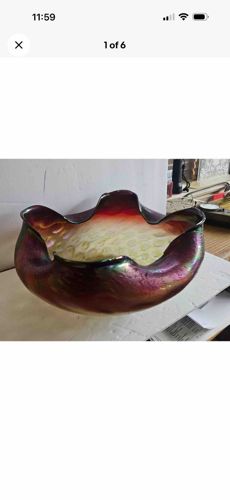
Antique Loetz 1900s large peacock blue glass bowl

AI analysis below

AI appraisal

AI analysis & estimate

AI-Generated · Verify before acting

Everything below is generated by AI for informational purposes only. AI can make mistakes — the AI may misidentify items or misattribute them (artist, maker, brand, designer, origin, era). This is not an official valuation and should not be used for insurance, sale, tax, estate, legal, or lending purposes — or any decision requiring a certified appraisal. It is not an authoritative claim about any person, brand, or rights holder — do not share or rely on it as a factual statement about a third party. Always consult qualified professionals before making financial decisions.

Note

This analysis also relies on unverified notes provided by the user, which may be incomplete or inaccurate and could affect the result.

Read the full disclaimer

AI Identification

·Not independently authenticated·Verify before acting

Loetz Phaenomen Genre Art Glass Bowl

Antiques & Collectibles / Art Glass

AI Estimated Value

·Not an official valuation·Verify before acting

$1,800 - $2,400

As of June 13, 2026

AI Item Analysis

·AI can make mistakes·Verify before acting
This is a significant example of Austrian art glass, specifically a Loetz bowl dating to the approximately 1900 Art Nouveau period. The piece exhibits the characteristic organic, flowing forms of the Jugendstil movement, featuring a wide, low-profile body with a dramatic, multi-lobed undulating rim. The glass displays a complex iridescent finish known as 'peacock' or 'oil spot' luster, revealing deep tones of magenta, burgandy, and petroleum blue that shift under light. Its interior wall showcases a distinctive honeycomb or papillon-style decor, consistent with the Phaenomen genre patterns produced in the Klostermühle factory. The craftsmanship is of high quality, indicated by the smooth transitions of the hand-formed lobes and the even application of metallic salts that create its iridescent sheen. While no maker's marks are visible in the primary image, the style, color palette, and rim treatment are diagnostic of Loetz's high-output period at the turn of the century. The condition appears sound, with a well-preserved surface luster and no immediate signs of chips or cracks, though typical age-related base wear is expected. This bowl serves as a primary example of Bohemian glassmaking excellence and is a sought-after collector's item within the Art Nouveau category.
AI Appraisal Report

·AI can make mistakes·Verify before acting
Based on my visual examination of this Loetz Phaenomen Genre (PG) art glass bowl, I have assessed the piece as a significant example of Austrian Jugendstil glassmaking from the Klostermühle factory. The bowl exhibits the 'Papillon' iridescent decor on a cobalt or deep violet ground, a hallmark of Loetz design circa 1900. The multi-lobed, undulating rim is expertly executed, showing no visual evidence of grinding or repairs, which often diminish value in these delicate pieces. The market for authentic Loetz remains strong, particularly for pieces with deep, saturated iridescence and intact forms. I estimate the current retail value between $1,800 and $2,400. Comparable sales of similar large-format PG bowls at specialized auction houses (such as Dorotheum or Treadway) consistently reach this range, with premiums paid for the 'peacock' luster observed here. The rarity is considered moderate-to-high due to the complex lobed form compared to standard circular bowls. Limitations: This appraisal is based strictly on high-resolution imagery. While the color palette and craftsmanship are highly diagnostic of Loetz, full authentication requires a physical inspection to verify the 'ground-in' pontil mark characteristic of the factory and to check for micro-flea bites along the rim. I recommend a blacklight test to ensure no professional resin restoration has been applied to the lobes. Finally, a review of provenance or a 'Loetz' signature (though often unsigned) would further solidify its market position. Without physical handling, the possibility of a high-quality period contemporary (such as Pallme-König or Kralik) cannot be 100% ruled out, though the decor suggests Loetz.

Get your items appraised

Instant estimates of your treasures with AI-powered appraisals

Browse More Appraisals