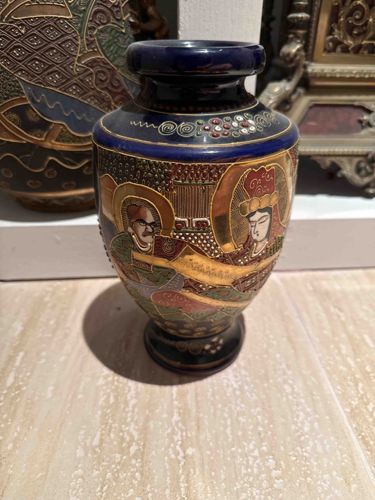
Japanese Satsuma Cobalt Blue Moriage Ovoid Vase
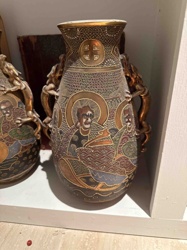
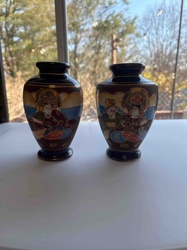
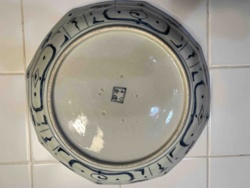
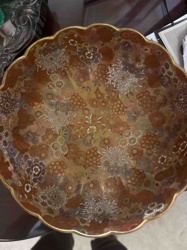
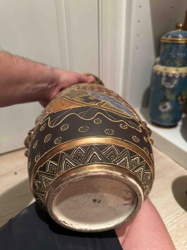
This is a vintage Japanese Satsuma-style porcelain vase, characterized by an ovoid body, a tapered neck with a rolled rim, and a matching pedestal base. The primary glaze is a deep, rich cobalt blue that appears on the neck, shoulder, and foot. The central frieze features a traditional hand-painted scene depicting multiple figures, likely immortals or Arhats, characterized by halo-like auras and ornate robes. The decoration utilizes the moriage technique, which involves raised, slip-trailed enamels that provide a Three-dimensional tactile quality to the jewelry, garment patterns, and facial features. Heavy gold gilt highlights are used throughout the central band to create a sense of opulence typical of later Meiji or early Showa period exports. The color palette includes earthy reds, forest greens, and creamy whites set against the golden background. Regarding condition, the vase shows some light surface wear and potential fading of the gold gilt on the raised edges. There are no visible cracks or large chips in the main body, though the base shows minor scuffing consistent with age. The craftsmanship displays the dense, busy aesthetic referred to as 'thousand faces' style, common in decorative items produced for the Western market in the early 20th century.
AI-Generated Appraisal Disclaimer
Estimated Value
$150 - $350
Basic Information
Category
Asian Antiques / Japanese Ceramics
Appraised On
February 26, 2026
Estimated Value
$150 - $350
Item Description
This is a vintage Japanese Satsuma-style porcelain vase, characterized by an ovoid body, a tapered neck with a rolled rim, and a matching pedestal base. The primary glaze is a deep, rich cobalt blue that appears on the neck, shoulder, and foot. The central frieze features a traditional hand-painted scene depicting multiple figures, likely immortals or Arhats, characterized by halo-like auras and ornate robes. The decoration utilizes the moriage technique, which involves raised, slip-trailed enamels that provide a Three-dimensional tactile quality to the jewelry, garment patterns, and facial features. Heavy gold gilt highlights are used throughout the central band to create a sense of opulence typical of later Meiji or early Showa period exports. The color palette includes earthy reds, forest greens, and creamy whites set against the golden background. Regarding condition, the vase shows some light surface wear and potential fading of the gold gilt on the raised edges. There are no visible cracks or large chips in the main body, though the base shows minor scuffing consistent with age. The craftsmanship displays the dense, busy aesthetic referred to as 'thousand faces' style, common in decorative items produced for the Western market in the early 20th century.
Get Your Items Appraised
Instant estimates of your treasures with AI-powered instant appraisals