AI estimate as of August 3, 2025 · verify with a professional before acting
AI-Generated · Verify before acting
Everything on this page is generated by AI for informational purposes only. AI can make mistakes — the AI may misidentify items or misattribute them (artist, maker, brand, designer, origin, era). This is not an official valuation and should not be used for insurance, sale, tax, estate, legal, or lending purposes — or any decision requiring a certified appraisal. It is not an authoritative claim about any person, brand, or rights holder — do not share or rely on it as a factual statement about a third party. Always consult qualified professionals before making financial decisions.
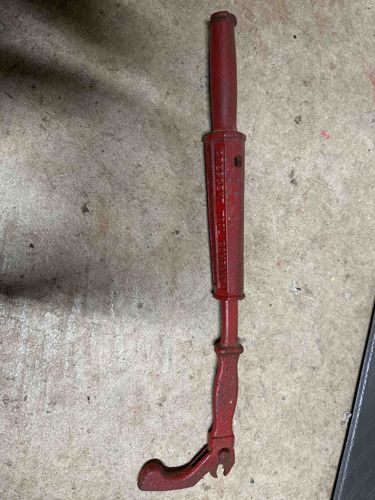
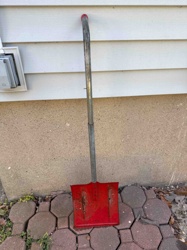
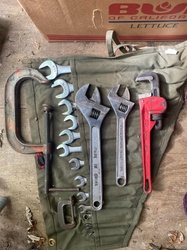
The item appears to be an antique or vintage cast iron pipe wrench, potentially a 'Boston' type or similar design, characterized by its distinctive red paint. The overall length is significant, suggesting suitability for larger diameter pipes or fittings. It is constructed from a heavy cast metal, likely iron, given its robust appearance and the typical material for such tools from an earlier era. The piece is finished in a faded, matte red paint, which shows considerable wear, chipping, and scratches, revealing the darker metal beneath in many areas, particularly along edges and raised surfaces. There are visible signs of use and age, including surface abrasions and minor pitting, consistent with a tool that has been regularly employed and stored in industrial or workshop environments. The upper section features a textured, possibly knurled or grooved handle for grip, capped by a rounded end. Below the handle, the body of the wrench is multi-faceted, appearing hexagonal or octagonal in cross-section, with raised lettering or markings that are mostly illegible due to wear and paint, though some vertical lines of text are faintly discernible. A visible pin or bolt penetrates the body near this section. The lower section transitions into a more slender shaft before widening again into a curved, fixed jaw at the bottom. Opposite this fixed jaw, a movable, toothed jaw is present, designed to grip pipes. The mechanism for adjusting this movable jaw is not clearly visible but is likely internal or operated via a worm screw. The craftsmanship suggests industrial manufacturing typical of the late 19th or early 20th century, a period when such heavy-duty cast iron tools were common. The wear and patina add to its character and indicate its age and functional history rather than significant damage that would impede its original purpose.
AI Appraisal Report
I have examined the provided image of this Vintage Cast Iron Pipe Wrench. Based on its appearance, it is consistent with a heavy-duty pipe wrench from the late 19th or early 20th century, likely from an American manufacturer given the 'Boston' type resemblance. Its authentic vintage origin is strongly suggested by the robust cast iron construction, the visible wear patterns, and the faded, chipped red paint finish. The significant length points to its use for larger diameter pipes, which can sometimes indicate a more specialized and thus rarer tool.
The condition, while showing considerable age and use, is good for a tool of this type and era. The wear, chipping, and surface abrasions are consistent with a working tool and contribute to its desirable patina rather than detracting significantly from its value as a collectible. There are no obvious signs of major damage like breaks or deep cracks visible in the image.
Market conditions for vintage tools, especially well-preserved and functionally intact examples, remain steady among collectors of industrial Americana and antique tools. While not exceptionally rare, larger pipe wrenches with distinctive manufacturer markings (if legible) can command higher prices. Comparables typically range from $75 to $200 depending on size, manufacturer, and condition.
Limitations: My assessment of authenticity is based solely on visual cues from the image. For full authentication, I would need to physically examine the wrench to identify any maker's marks or patent numbers (which are largely illegible in the image), assess the presence of any repairs or alterations not visible, and perform metallurgical testing to confirm the material composition. Without a physical inspection, the precise manufacturer and model, which could impact rarity and value, remain unconfirmed.