AI Appraisal Estimate

AI-generated estimates · not official valuations

From the user

What was submitted

Photo and notes provided by the user — not generated by AI

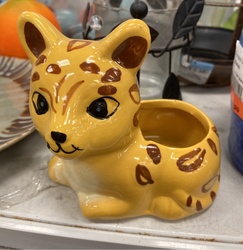
Submitted item photo
Submitted photo · June 8, 2026

User's notes

No additional notes provided.

AI analysis below

AI appraisal

AI analysis & estimate

AI-Generated · Verify before acting

Everything below is generated by AI for informational purposes only. AI can make mistakes — the AI may misidentify items or misattribute them (artist, maker, brand, designer, origin, era). This is not an official valuation and should not be used for insurance, sale, tax, estate, legal, or lending purposes — or any decision requiring a certified appraisal. It is not an authoritative claim about any person, brand, or rights holder — do not share or rely on it as a factual statement about a third party. Always consult qualified professionals before making financial decisions.

Read the full disclaimer

AI Identification

·Not independently authenticated·Verify before acting

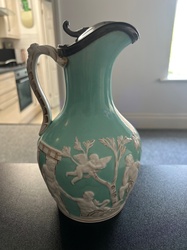
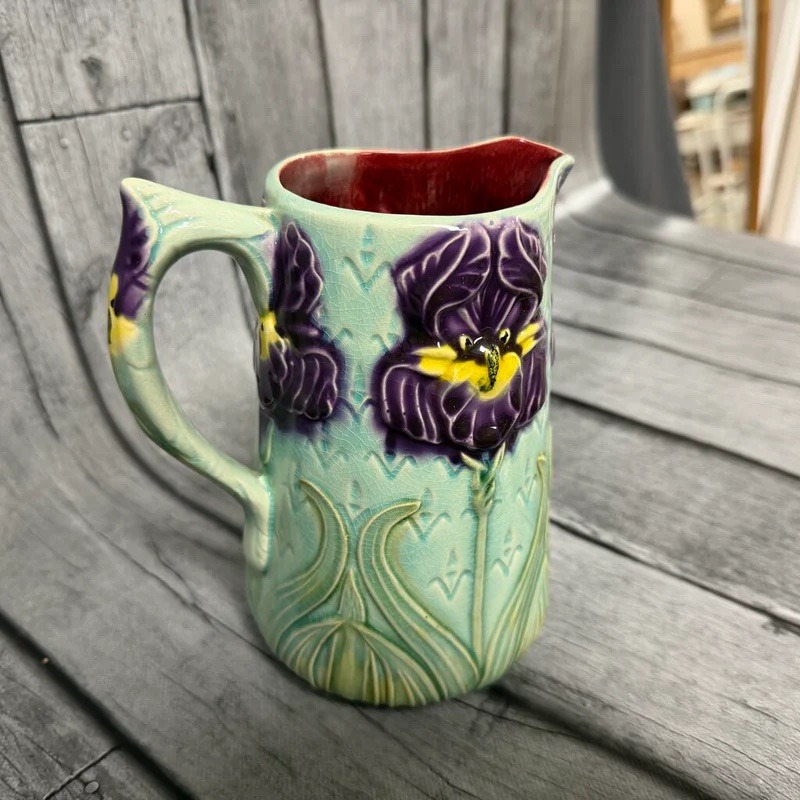
Majolica-style ceramic pitcher with iris motif

Ceramic Decorative Arts

AI Estimated Value

·Not an official valuation·Verify before acting

$150.00–$350.00

As of June 8, 2026

AI Item Analysis

·AI can make mistakes·Verify before acting
This item appears to be a decorative ceramic pitcher, stylistically consistent with late 19th or early 20th-century majolica ware. The vessel features a vibrant, multi-colored glaze with a pale seafoam green background or 'body' color that exhibits a fine network of surface crazing throughout. The exterior is decorated with highly raised, relief-molded purple irises with yellow centers and long, vertical green leaves extending from the base. The handle is integrated into the floral design, appearing to be molded in the form of a botanical stem or leaf. The interior of the pitcher is finished in a deep burgundy or maroon glaze. While no maker's mark or signature is visible in the provided image to verify a specific manufacturer like Minton or George Jones, the heavy relief work and saturated lead-glaze appearance are characteristic of Victorian-era art pottery styles. The condition shows notable surface crazing, which is common for aged earthenware, and some slight variations in glaze thickness. Because no manufacturer label or bottom stamp is visible, the identification is based solely on decorative features and must be physically inspected to determine a specific maker or origin.
AI Appraisal Report

·AI can make mistakes·Verify before acting
Based on the image provided, I have performed a visual assessment of this decorative ceramic pitcher. The vessel exhibits characteristics consistent with late 19th-century Majolica ware, specifically the relief-molded botanical motifs and the saturated, polychrome lead-glazes. Based on what I can see, the iris patterning and the contrast between the seafoam green exterior and the maroon interior suggest a piece produced in the Victorian aesthetic tradition, possibly by an English or Continental manufacturer. I must emphasize that this attribution remains a hypothesis. Without a visible maker's mark or the ability to inspect the foot-ring and clay body, I cannot verify if this is a period piece or a later 20th-century revival. The value of $150–$350 is based on the assumption that this is a late 19th-century item. Majolica market values are heavily influenced by the prestige of the maker; if this were attributed to a premier firm like George Jones or Minton, the value could increase significantly. Conversely, if physical inspection reveals it to be a modern reproduction or a less complex 'in the style of' piece, the value would likely drop below $50. The presence of surface crazing is typical for earthenware of this age, though I cannot determine from a photo if there are hidden hairline fractures or professional restorations. To establish a more precise valuation, a physical examination is required to verify the weight, glaze composition, and any impressed marks. The market for Victorian art pottery remains steady for high-quality relief work, though buyers increasingly prioritize pieces with documented provenance and lack of structural damage.

Get your items appraised

Instant estimates of your treasures with AI-powered appraisals

Browse More Appraisals