AI Appraisal Estimate

AI-generated estimates · not official valuations

From the user

What was submitted

Photo and notes provided by the user — not generated by AI

Submitted item photo
Submitted photo · June 30, 2026

User's notes

No additional notes provided.

AI analysis below

AI appraisal

AI analysis & estimate

AI-Generated · Verify before acting

Everything below is generated by AI for informational purposes only. AI can make mistakes — the AI may misidentify items or misattribute them (artist, maker, brand, designer, origin, era). This is not an official valuation and should not be used for insurance, sale, tax, estate, legal, or lending purposes — or any decision requiring a certified appraisal. It is not an authoritative claim about any person, brand, or rights holder — do not share or rely on it as a factual statement about a third party. Always consult qualified professionals before making financial decisions.

Read the full disclaimer

AI Identification

·Not independently authenticated·Verify before acting

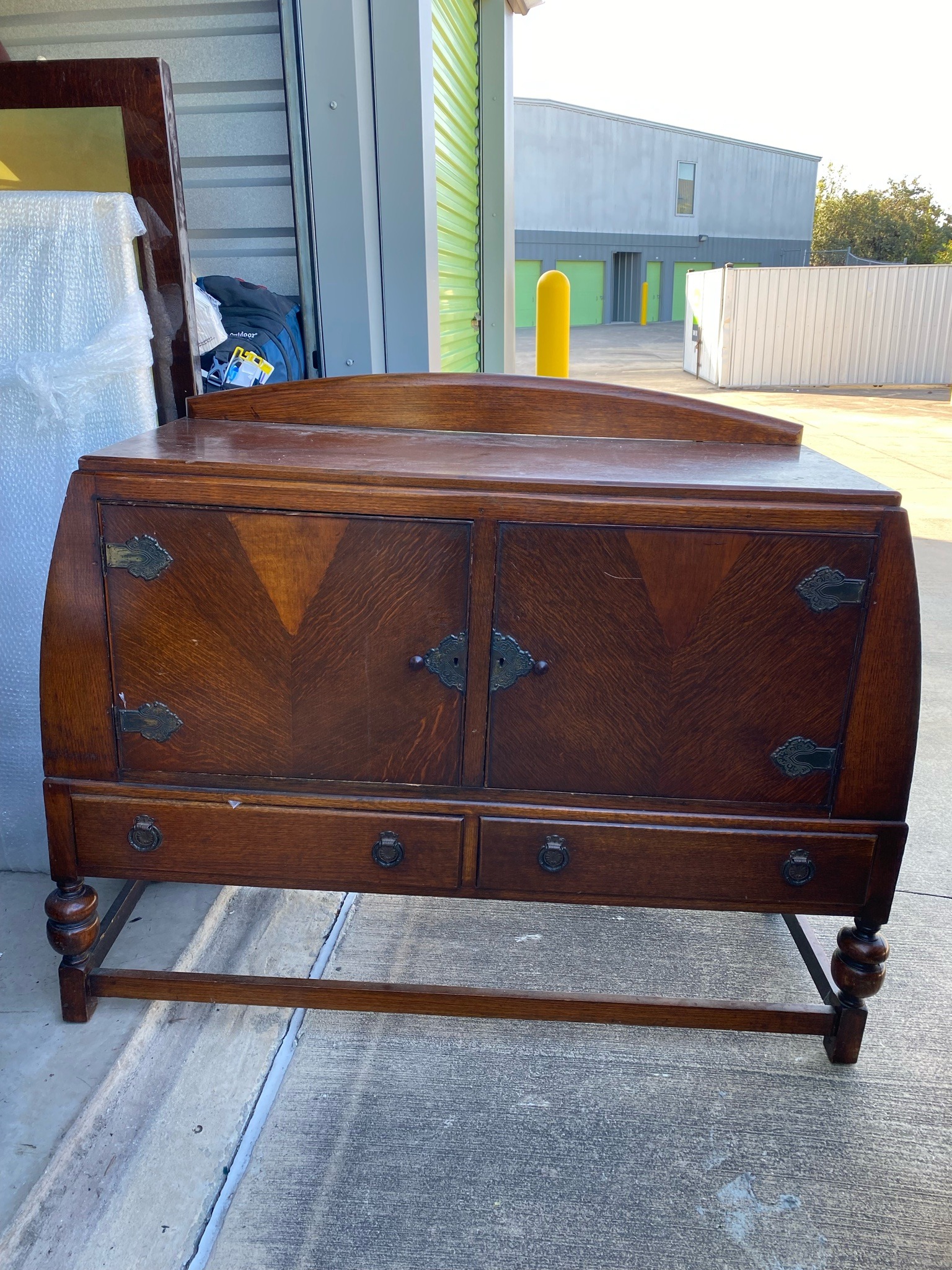
Tudor Revival Style Oak Sideboard

Antique Furniture

AI Estimated Value

·Not an official valuation·Verify before acting

$450 - $650

As of June 30, 2026

AI Item Analysis

·AI can make mistakes·Verify before acting
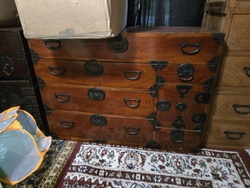
This piece is a compact timber sideboard or buffet, likely dating from the 1920s to 1940s, crafted in a Tudor Revival or Jacobean Revival style. It is constructed primarily of oak and features distinctive book-matched quarter-sawn oak veneers on the two central cabinet doors, creating a high-contrast 'V' grain pattern. The cabinet is elevated on a stretcher base with four short, bulbous turned legs, often referred to as cup-and-cover or melon-bulb turnings, typical of the Jacobean aesthetic. The top surface features a gently arched low backsplash. The hardware is particularly notable, consisting of four decorative bat-wing estilo brass or darkened metal strap hinges on the outer corners and matching escutcheon plates at the center, accompanied by four drop-ring pulls on the lower two drawers. In terms of condition, the piece shows moderate overall wear consistent with age, including surface scratches, some finish loss, and small chips along the edges of the drawers and doors. The patina of the wood is a rich, mid-to-dark brown, though there are visible scuffs and dust common with storage environments. No specific maker's mark is visible in the photograph, but the symmetry and construction suggest a mass-produced but high-quality furniture piece from the early 20th century.
AI Appraisal Report

·AI can make mistakes·Verify before acting
I have completed a visual examination of the Tudor Revival Oak Sideboard. This piece exemplifies the early 20th-century fascination with Jacobean motifs, specifically featuring the characteristic melon-bulb turnings and book-matched quarter-sawn oak veneers. The 'V' grain pattern on the central doors serves as a focal point, suggesting a higher tier of mass-production craftsmanship. The hardware, including the bat-wing strap hinges and drop-ring pulls, appears period-appropriate and adds significant aesthetic value. Regarding condition, I observe surface abrasions, finish degradation on the top surface, and minor edge chipping. These signs of moderate wear are typical for domestic furniture of this age and do not significantly detract from its structural integrity, though they do indicate a need for sympathetic conservation. The market for mid-range revival furniture is currently stable but niche. While not rare, the compact size makes it more desirable for modern living spaces compared to larger, more cumbersome buffets. Comparable sales of similar 1920s-40s oak sideboards in 'as-found' condition generally fluctuate within the $400 to $700 range. Authenticity is assessed visually; however, as this appraisal is based on images, I cannot verify secondary wood species, joinery techniques (such as dovetail construction), or the presence of non-original repairs inside the carcass. A definitive valuation would require an in-person inspection to confirm the stability of the veneers and check for maker's marks or stamps inside the drawer linings. No scientific testing is required, but provenance documentation regarding its manufacture or original purchase would enhance its historical context.

Get your items appraised

Instant estimates of your treasures with AI-powered appraisals

Browse More Appraisals