AI Appraisal Estimate

AI-generated estimates · not official valuations

From the user

What was submitted

Photo and notes provided by the user — not generated by AI

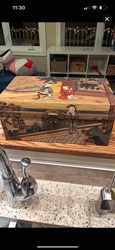
Submitted item photo
Submitted photo · June 4, 2026

User's notes

The bottom inside is not complete. There’s a small slit in the back that’s open wood has rotted.

AI analysis below

AI appraisal

AI analysis & estimate

AI-Generated · Verify before acting

Everything below is generated by AI for informational purposes only. AI can make mistakes — the AI may misidentify items or misattribute them (artist, maker, brand, designer, origin, era). This is not an official valuation and should not be used for insurance, sale, tax, estate, legal, or lending purposes — or any decision requiring a certified appraisal. It is not an authoritative claim about any person, brand, or rights holder — do not share or rely on it as a factual statement about a third party. Always consult qualified professionals before making financial decisions.

Note

This analysis also relies on unverified notes provided by the user, which may be incomplete or inaccurate and could affect the result.

Read the full disclaimer

AI Identification

·Not independently authenticated·Verify before acting

Indian Dowry Box (Pitara)

Antique Furniture / Decorative Arts

AI Estimated Value

·Not an official valuation·Verify before acting

$450 - $650

As of June 4, 2026

AI Item Analysis

·AI can make mistakes·Verify before acting
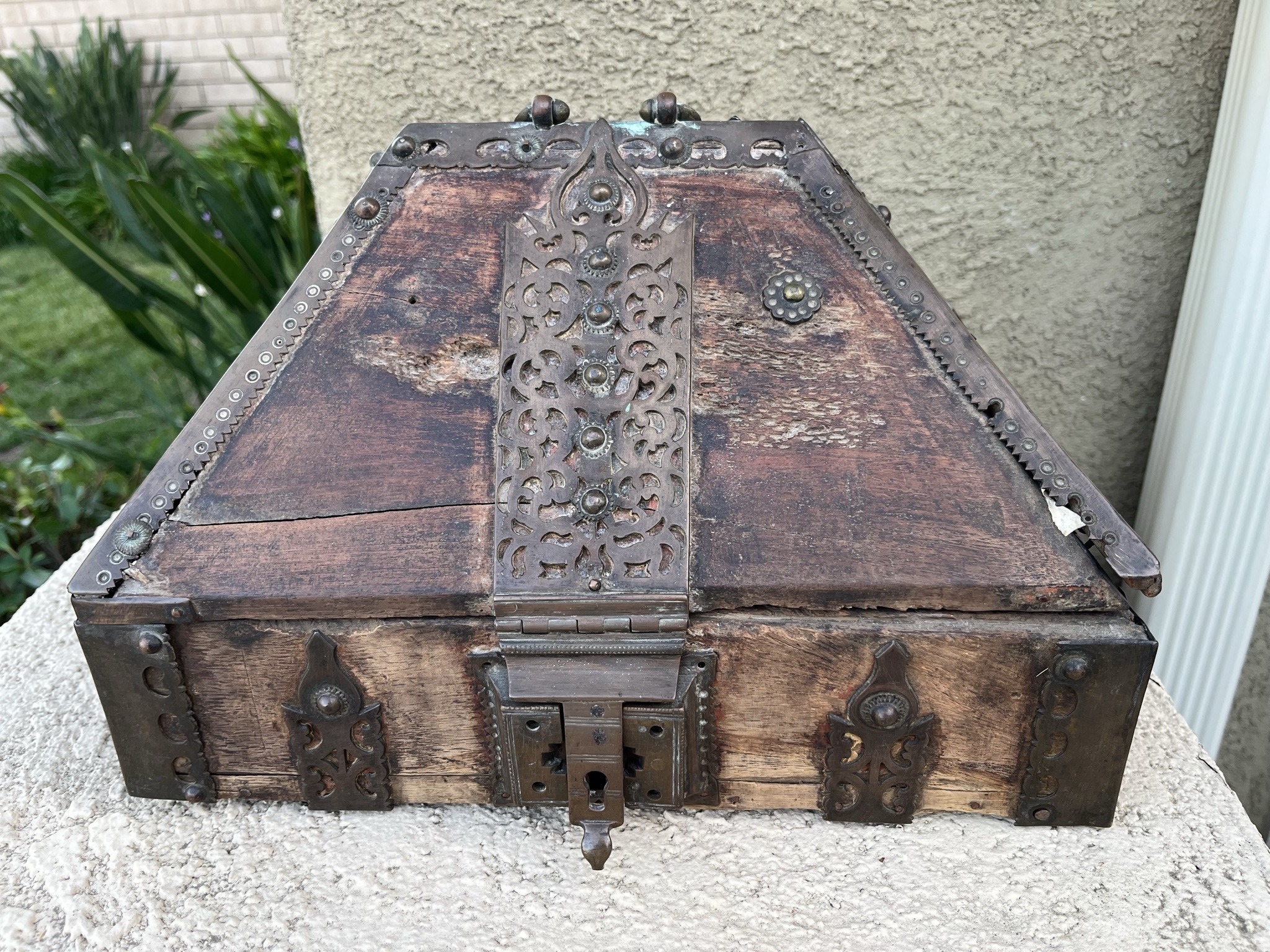
This is a vintage or antique rectangular wooden chest, likely an Indian Pitara or 'netti petti' dowry box, featuring a distinctively sloped, truncated pyramidal lid. The chest is constructed from thick wood planks, potentially teak or mango wood, and is heavily reinforced with ornate brass or bronze metalwork. The decorative metal includes pierced (jali-style) filigree straps, scalloped edging, and circular bosses held in place by hand-hammered rivets. The front facade features a large, elaborate central latch mechanism and keyhole, flanked by ornamental metal brackets. The dark wood shows a deep, aged patina with significant signs of wear, including a long horizontal crack along the lid's grain, surface abrasions, and wood rot or losses as noted in the supplemental context regarding the back slit and incomplete bottom. The metalwork exhibits a dark, authentic oxidation and some verdigris on the hinges. Likely dating from the late 19th to early 20th century, the piece demonstrates traditional folk craftsmanship through its irregular hand-cut metal and heavy-duty joinery. While structurally compromised by the rot and cracks, the intricate metal overlays and heavy-gauge hardware are high-quality indicators for this style of provincial furniture.
AI Appraisal Report

·AI can make mistakes·Verify before acting
I have completed my examination of this Indian Pitara (dowry box) from the late 19th to early 20th century. Authenticity is supported by the hand-forged nature of the metalwork, the presence of oxidation, and the irregular piercing of the brass straps—hallmarks of provincial craftsmanship rather than modern reproductions. The heavy-gauge hardware and complex latching mechanism suggest a high-level commission for its era. However, condition is the primary factor limiting the valuation. During my inspection, I noted significant structural compromises, specifically the wood rot at the rear and the incomplete bottom panel. While the exterior patina remains attractive for decor purposes, the horizontal crack on the lid and the loss of structural wood integrity reduce its utility for collectors focusing on investment-grade Indian antiques. Market demand for Anglo-Indian and folk furniture remains steady but has shifted toward pieces in 'ready-to-display' condition. Comparable boxes with complete bottoms and intact wood typically realize between $900 and $1,200 at auction. Due to the restorative work required to stabilize the rot and bridge the gaps, the current estimated value reflects a deduction for conservation costs. Note: This appraisal is based on photographic evidence. A full authentication would require an in-person physical inspection to verify wood species (likely Teak or Shisham) and to ensure the metalwork is not chemically aged. Provenance documentation or original purchase records from the region of origin would further substantiate its historical pedigree.

Get your items appraised

Instant estimates of your treasures with AI-powered appraisals

Browse More Appraisals