AI estimate as of November 17, 2025 · verify with a professional before acting
AI-Generated · Verify before acting
Everything on this page is generated by AI for informational purposes only. AI can make mistakes — the AI may misidentify items or misattribute them (artist, maker, brand, designer, origin, era). This is not an official valuation and should not be used for insurance, sale, tax, estate, legal, or lending purposes — or any decision requiring a certified appraisal. It is not an authoritative claim about any person, brand, or rights holder — do not share or rely on it as a factual statement about a third party. Always consult qualified professionals before making financial decisions.
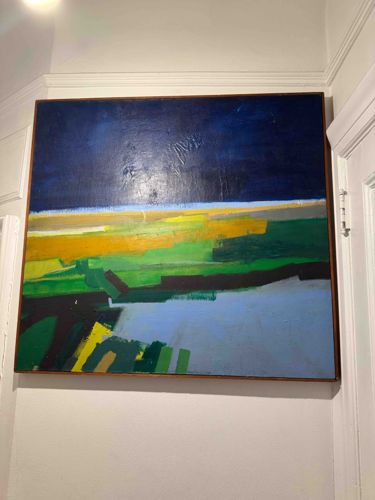
This is a large-format abstract landscape oil painting, characterized by its bold use of color and geometric abstraction. The painting is framed in a simple, dark brown or possibly stained wood frame, which provides a minimalist border without detracting from the artwork itself. The color palette is dominated by a deep, dark blue at the top, likely representing the sky or a distant, atmospheric element, which shows some visible brushstrokes and what appears to be textural variations or perhaps minor surface irregularities. Below this, a vibrant horizontal band of yellow and lighter green suggests a horizon line or distant land, transitioning into a middle ground of varied greens, browns, and some yellow accents, rendered in blocky, abstract shapes that could symbolize fields or terrain. The lower portion of the painting features a substantial area of light blue, possibly representing water, articulated with strokes of darker blues and greens. The painting appears to be executed in oil on canvas or board, given the visible impasto and rich color saturation. There are no visible artist signatures or specific markings in the provided image. The overall style suggests a mid-20th century to contemporary period, aligning with abstract expressionist or color field traditions. The condition appears fair to good from a distance, though closer inspection would be needed to identify any craquelure, paint loss, or repairs. The canvas seems taut within the frame. The robust application of paint and clear, defined color blocks indicate a confident hand and a focus on form and color interaction rather than strict representational accuracy. The proportions suggest a square or near-square format, lending a strong, balanced presence. The piece is a strong example of modern abstract art, focused on conveying mood and landscape forms through non-representational means.
AI Appraisal Report
Based on my visual examination of the image, this abstract landscape oil painting presents as a Mid-20th Century to Contemporary piece, likely oil on canvas or board, given the visible impasto and rich color. The condition appears fair to good from this distance, with the canvas appearing taut within the simple dark frame. There are no visible artist signatures. The geometric abstraction and bold color palette align with abstract expressionist or color field traditions.
Authenticity cannot be definitively verified from an image alone. Without an in-person examination, I cannot confirm the medium, detect craquelure, paint loss, repairs, or any inconsistencies in brushwork that would indicate a non-period or non-original work. An in-person inspection would also be crucial to determine if there's a signature concealed by the frame or if there are any labels on the verso of the canvas/board.
Market conditions for unsigned abstract landscapes from this period are generally moderate. While demand for well-executed abstract works is consistent, the lack of a known artist significantly impacts value. Comparable sales for similar size, quality, and unsigned abstract landscape oils typically fall in the $600-$1,500 range. The strong composition, vibrant colors, and robust application of paint contribute positively to its appeal and value. However, the absence of provenance documentation is a significant limiting factor. Full authentication would require a physical examination, UV light inspection for restoration, and diligent research into potential artists or regional art movements should a signature be uncovered.