Japanese Cloisonné Enamel Vase with Floral Design
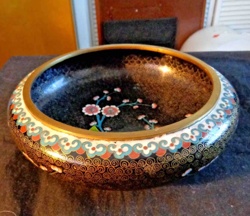
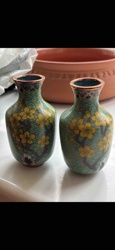
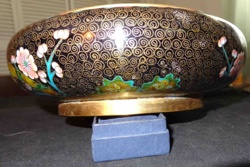
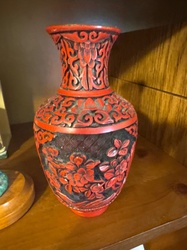
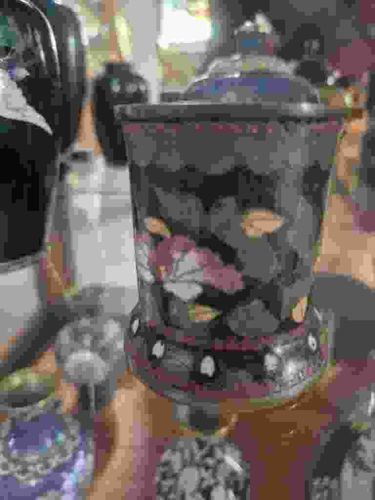
This item is a Japanese cloisonné enamel vase, likely dating from the Meiji period (late 19th to early 20th century). It features a cylindrical form that flares slightly towards the rim and tapers down to a bulbous, decorated base. The primary body of the vase is finished in a deep midnight blue or black ground, serving as a high-contrast backdrop for intricate floral motifs encompassing shades of plum, white, and ochre. The construction involves thin metal wires (cloisons) meticulously applied to a metal body—likely copper or brass—which are then filled with pigmented vitreous enamel and fired. A notable feature is the decorative collar near the base, which displays a repeating pattern of white-centered circular or petal-like motifs against a dark band. The craftsmanship appears to be of high quality, typical of the technical mastery found in late Victorian-era Japanese exports. Regarding condition, the surface shows a slight aged patina with some possible dulling of the original high-polish finish. There are no major visible cracks or large chips ('pitting') apparent in the resolution provided, though minor surface scratches and kiln pinholes consistent with age are expected. The interior of the rim shows a clean metallic edge. While no specific maker’s mark is visible in this view, the style is reminiscent of the work of the Ando Cloisonné Company or similar high-end studios of the era. The vase stands as a sophisticated example of Asian decorative arts, showcasing the bridge between functional vessel and fine art.
AI-Generated Appraisal Disclaimer
Estimated Value
$1,200 - $1,800 USD
Basic Information
Category
Asian Antiques / Decorative Arts
Appraised On
March 2, 2026
Estimated Value
$1,200 - $1,800 USD
Item Description
This item is a Japanese cloisonné enamel vase, likely dating from the Meiji period (late 19th to early 20th century). It features a cylindrical form that flares slightly towards the rim and tapers down to a bulbous, decorated base. The primary body of the vase is finished in a deep midnight blue or black ground, serving as a high-contrast backdrop for intricate floral motifs encompassing shades of plum, white, and ochre. The construction involves thin metal wires (cloisons) meticulously applied to a metal body—likely copper or brass—which are then filled with pigmented vitreous enamel and fired. A notable feature is the decorative collar near the base, which displays a repeating pattern of white-centered circular or petal-like motifs against a dark band. The craftsmanship appears to be of high quality, typical of the technical mastery found in late Victorian-era Japanese exports. Regarding condition, the surface shows a slight aged patina with some possible dulling of the original high-polish finish. There are no major visible cracks or large chips ('pitting') apparent in the resolution provided, though minor surface scratches and kiln pinholes consistent with age are expected. The interior of the rim shows a clean metallic edge. While no specific maker’s mark is visible in this view, the style is reminiscent of the work of the Ando Cloisonné Company or similar high-end studios of the era. The vase stands as a sophisticated example of Asian decorative arts, showcasing the bridge between functional vessel and fine art.
Get Your Items Appraised
Instant estimates of your treasures with AI-powered instant appraisals