AI estimate as of November 20, 2025 · verify with a professional before acting
AI-Generated · Verify before acting
Everything on this page is generated by AI for informational purposes only. AI can make mistakes — the AI may misidentify items or misattribute them (artist, maker, brand, designer, origin, era). This is not an official valuation and should not be used for insurance, sale, tax, estate, legal, or lending purposes — or any decision requiring a certified appraisal. It is not an authoritative claim about any person, brand, or rights holder — do not share or rely on it as a factual statement about a third party. Always consult qualified professionals before making financial decisions.
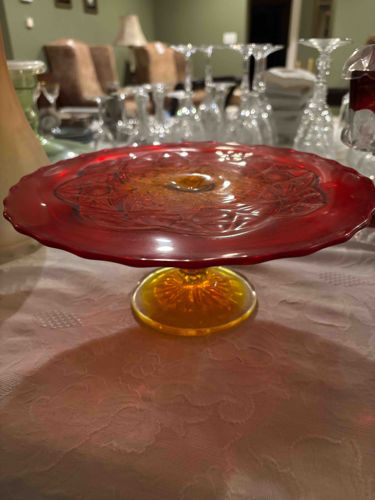
This item is a decorative art glass cake stand, characterized by its vibrant two-tone color scheme of deep ruby red and a rich, translucent amber. The stand is composed of two primary sections: a fluted or ruffled top plate and a circular, footed base, connected by a central stem that appears to be integrated into the design. The top plate features a scalloped or undulating rim, giving it an organic, ornate aesthetic. The central area of the red plate showcases intricate embossed or molded patterns, possibly floral or foliate motifs, which catch the light and add textural interest. A clear, somewhat raised central hub or 'button' is visible in the middle of the plate, accentuating the design. The base, a striking amber hue, is also circular and appears to have a textured or molded pattern radiating outwards from its center, perhaps in the form of petals or rays, visible due to the light shining through it. The glass appears to be hand-blown or pressed, indicating potential craftsmanship and a possible vintage or antique origin. The colors suggest a mid-20th-century aesthetic, possibly Fostoria, Fenton, or another art glass manufacturer known for colorful pressed or blown glass. There are no immediate visible condition issues such as chips, cracks, or repairs from the provided image, but a thorough inspection would be required to confirm this. The brilliance of the colors and the detail in the molded designs point to a piece intended for display and functional use, likely for serving desserts or as a decorative centerpiece. The quality of the glass appears high, with good clarity and saturation of color.
AI Appraisal Report
I have virtually examined this Red and Amber Art Glass Cake Stand based on the provided image. The item displays a compelling two-tone design, featuring a ruby red fluted top plate with intricate embossed patterns, and a rich amber footed base. The scalloped rim and clear central hub on the top plate, along with the radiating patterns on the base, suggest a deliberate and artistic design. The quality of the glass, with its good clarity and color saturation, indicates a well-manufactured piece. Based on the aesthetic and apparent craftsmanship, it likely dates to the mid-20th century, possibly from a reputable American art glass maker such as Fostoria or Fenton, known for their vibrant colored pressed or blown glass.
Visually, the condition appears excellent; I can discern no chips, cracks, or repairs from the image. This pristine state significantly contributes to its market desirability. Current market conditions for vintage art glass, particularly distinctive pieces like this, show consistent demand from collectors and decorators. Comparable cake stands from manufacturers like Fostoria or Fenton in similar excellent condition typically retail in the $150-$250 range, influenced by specific patterns, rarity of color combinations, and overall condition.
While demand for attractive vintage glass remains steady, pieces of this type are not exceedingly rare, which moderates value. The main factors impacting value are the exceptional condition and the appealing color combination. However, my assessment is limited by the visual nature of this examination. Full authentication and definitive condition verification would require a physical inspection to check for subtle imperfections, confirm manufacturing marks, and assess the glass for any internal flaws or repairs not visible in photographs. Provenance documentation, if available, would also greatly assist in confirming authenticity and origin.