AI estimate as of October 5, 2025 · verify with a professional before acting
AI-Generated · Verify before acting
Everything on this page is generated by AI for informational purposes only. AI can make mistakes — the AI may misidentify items or misattribute them (artist, maker, brand, designer, origin, era). This is not an official valuation and should not be used for insurance, sale, tax, estate, legal, or lending purposes — or any decision requiring a certified appraisal. It is not an authoritative claim about any person, brand, or rights holder — do not share or rely on it as a factual statement about a third party. Always consult qualified professionals before making financial decisions.
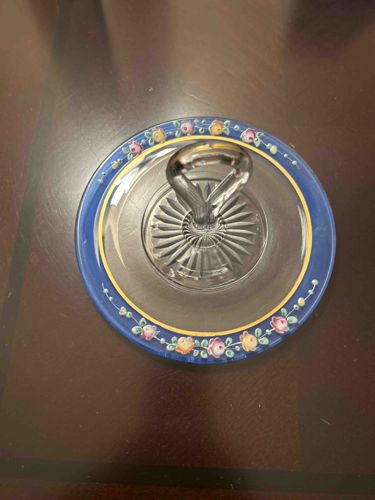
This item is a circular, clear glass bonbon or comport dish featuring a central glass handle. The dish is primarily made of clear pressed glass, showcasing a sunburst or starburst pattern molded into the base of the central section, radiating outwards from beneath the handle. The handle itself is a shaped loop of clear glass, with a subtle golden embellishment or highlight visible along its top edge, suggesting a possible gold trim or accent. The most striking decorative element is the wide, cobalt blue band encircling the rim of the dish. This blue band is further enhanced by a delicate floral motif, hand-painted or enameled, featuring small roses in shades of pink, yellow, and orange, interspersed with green foliage. A thin golden line or band separates the clear glass from the blue rim, adding a touch of elegance. The craftsmanship appears to be of good quality, with clear glass pressing and finely detailed enamel work. There are no immediate visible signs of extensive wear or damage, such as chips, cracks, or significant loss of the enamel paint, though closer inspection would be needed to confirm this. The overall style suggests an aesthetic from the mid-20th century, possibly dating from the 1940s to 1960s, a period known for decorative glass servingware. The combination of pressed glass, enameled decoration, and gold accents points towards a decorative rather than purely utilitarian purpose, likely intended for serving candies, nuts, or small pastries.
AI Appraisal Report
Based on my visual examination of the provided image, this clear glass bonbon dish with a blue and floral enamel rim presents as a charming example of decorative glassware likely from the mid-20th century. The clear pressed glass, featuring a sunburst pattern at the base and a central loop handle with a subtle golden highlight, appears to be in good overall condition. I observe no immediate signs of chips, cracks, or significant wear to the glass itself from the image. The most distinctive feature, the cobalt blue enameled rim with its delicate pink, yellow, and orange rose motif and green foliage, seems intact with good color saturation and minimal, if any, loss of paint. The thin golden line separating the clear glass from the blue rim also appears to be in good shape.
Market conditions for mid-century decorative pressed glass, even with hand-painted enamel, are generally stable but not exceptionally strong for non-signature pieces. Items like this appeal to collectors of vintage glassware and those furnishing homes with a retro aesthetic. Demand is moderate, and while such pieces are not rare, a well-preserved example with attractive enameled decoration can command a fair price. Factors significantly impacting value include the condition of the enamel work, the clarity and integrity of the glass, and the overall aesthetic appeal.
My assessment of authenticity and condition is limited by its reliance on an image. I cannot definitively confirm authenticity, material composition, or the absence of hairline cracks, fleabites, or enamel loss without a physical examination. In-person inspection would allow me to check for surface scratches, manufacturing imperfections, and to truly ascertain the condition of the enamel paint and the presence of any repairs. Provenance documentation would further aid in dating and potentially identifying the manufacturer, which could influence value if it's from a particularly desirable maker.