AI Appraisal Estimate

AI-generated estimates · not official valuations

From the user

What was submitted

Photo and notes provided by the user — not generated by AI

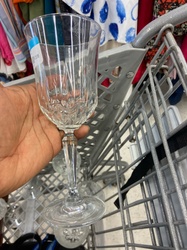
Submitted item photo
Submitted photo · June 3, 2026

User's notes

No additional notes provided.

AI analysis below

AI appraisal

AI analysis & estimate

AI-Generated · Verify before acting

Everything below is generated by AI for informational purposes only. AI can make mistakes — the AI may misidentify items or misattribute them (artist, maker, brand, designer, origin, era). This is not an official valuation and should not be used for insurance, sale, tax, estate, legal, or lending purposes — or any decision requiring a certified appraisal. It is not an authoritative claim about any person, brand, or rights holder — do not share or rely on it as a factual statement about a third party. Always consult qualified professionals before making financial decisions.

Read the full disclaimer

AI Identification

·Not independently authenticated·Verify before acting

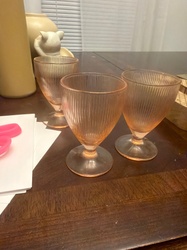
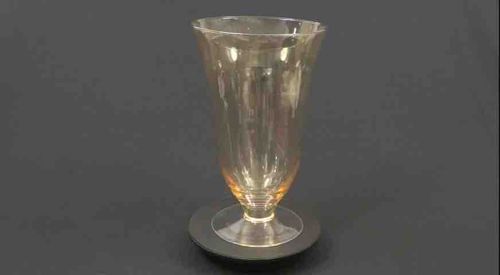
Art Deco Paneled Amber Iridescent Carnival Glass Footed Tumbler

Antique Glassware / Collectible Stemware

AI Estimated Value

·Not an official valuation·Verify before acting

$10 - $25

As of June 3, 2026

AI Item Analysis

·AI can make mistakes·Verify before acting
This is an elegant Art Deco style footed tumbler or parfait glass, characterized by its warm amber-gold hue and subtle iridescent 'carnival' finish. The piece features a tall, flared body with eight distinct vertical panels that create a faceted light-catching effect. The vessel tapers sharply toward a short, ribbed pedestal neck, which is supported by a flat, circular foot. Constructed from blown or pressed soda-lime glass, it exhibits a shimmering luster across its surface, indicative of metallic salts being applied during the cooling process. This specific style of paneling and iridescence was highly popular during the early to mid-20th century, particularly between 1920 and 1940. The piece shows moderate signs of age including minor surface abrasions and some fading of the iridescent coating near the rim, which is common for utilitarian glassware of this era. There are no visible chips or cracks. The craftsmanship suggests a mass-market manufacturer from the Depression era, such as Federal Glass, Fenton, or Jeannette, though no specific maker's mark is visible in the photograph. The glass quality is clear with a smooth finish, representing a fine example of American Depression-era decorative stemware.
AI Appraisal Report

·AI can make mistakes·Verify before acting
Based on my visual examination of the images provided, this piece appears to be a genuine example of Depression-era amber carnival glass, likely dating from the 1930s to 1940s. The distinct eight-panel optic design and specific 'marigold' or amber iridescence strongly point towards mass-market American manufacturers of that period, most notably the Jeannette Glass Company or Federal Glass, potentially part of a 'Floragold' or generic paneled optic line. The condition appears consistent with its age; the noted minor surface abrasions and rim fading are expected for utilitarian stemware that has survived nearly a century. Crucially, the absence of chips or cracks preserves its integrity as a display piece. The market for single pieces of common optic carnival glass is currently soft. These were produced in high volumes as affordable decorative ware or premiums in consumer goods (oatmeal, detergent). While the Art Deco silhouette is desirable, this specific form is relatively abundant in the secondary market. Collectors typically seek complete sets (pitcher and 4-6 glasses), which command higher premiums. As a standalone tumbler without a rare pattern like 'Elk and Bear' or 'Dragon and Lotus,' the value is modest. Please note: This appraisal is based solely on digital imagery. An in-person inspection would be required to verify the specific weight and 'feel' of the glass to rule out modern reproductions, although reproductions of this specific generic paneled style are rare. Physical examination would also check for 'sick glass' (permanent cloudiness) or minute 'flea bite' chips on the foot rim that photographs often obscure.

Get your items appraised

Instant estimates of your treasures with AI-powered appraisals

Browse More Appraisals