AI Appraisal Estimate

AI-generated estimates · not official valuations

From the user

What was submitted

Photo and notes provided by the user — not generated by AI

Submitted item photo
Submitted photo · July 3, 2026

User's notes

No additional notes provided.

AI analysis below

AI appraisal

AI analysis & estimate

AI-Generated · Verify before acting

Everything below is generated by AI for informational purposes only. AI can make mistakes — the AI may misidentify items or misattribute them (artist, maker, brand, designer, origin, era). This is not an official valuation and should not be used for insurance, sale, tax, estate, legal, or lending purposes — or any decision requiring a certified appraisal. It is not an authoritative claim about any person, brand, or rights holder — do not share or rely on it as a factual statement about a third party. Always consult qualified professionals before making financial decisions.

Read the full disclaimer

AI Identification

·Not independently authenticated·Verify before acting

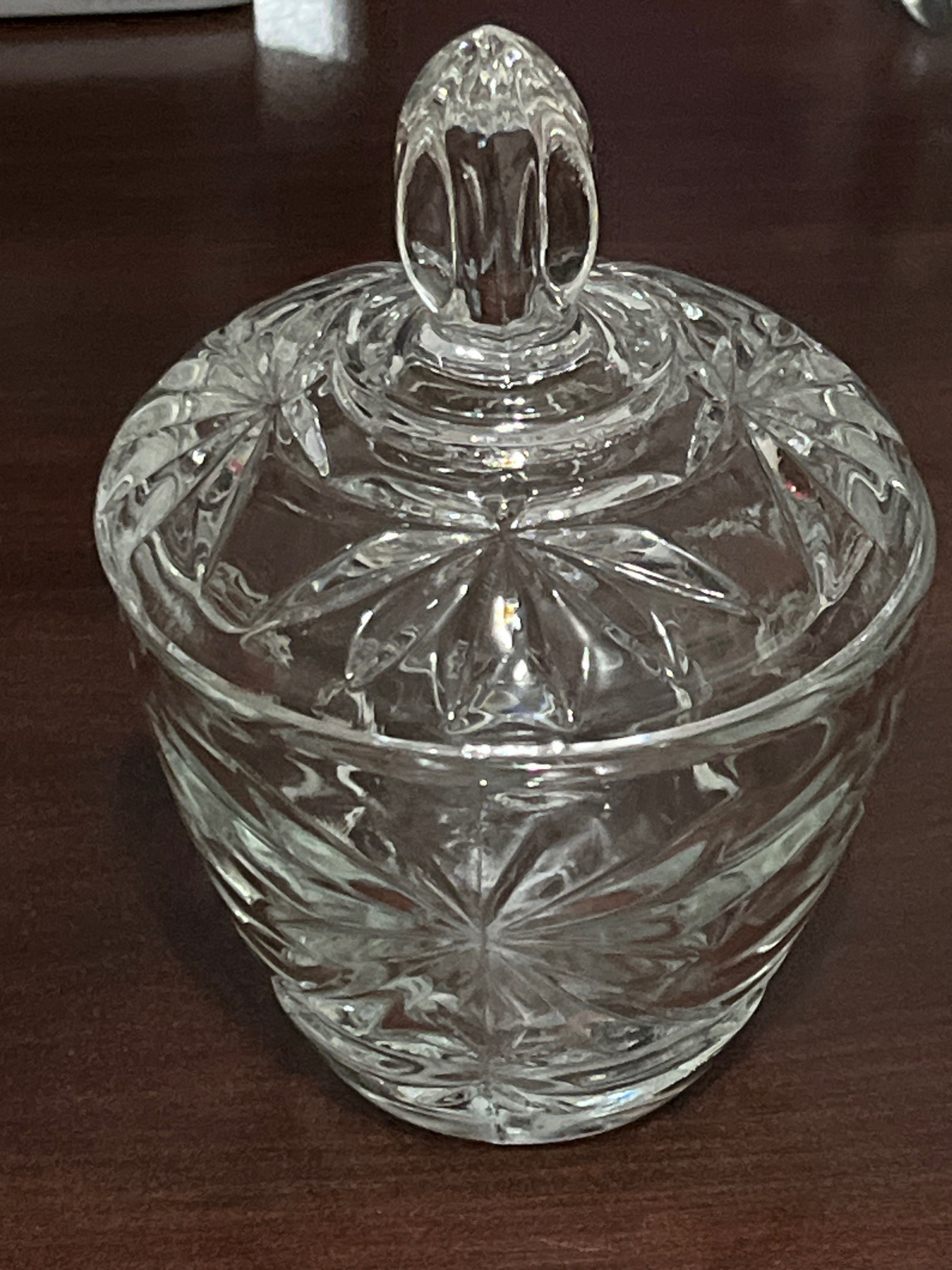
Cut or pressed glass covered dish in the pinwheel style

Glassware

AI Estimated Value

·Not an official valuation·Verify before acting

$35.00 - $85.00

As of July 3, 2026

AI Item Analysis

·AI can make mistakes·Verify before acting
This appears to be a small covered vessel, potentially a sugar bowl or candy dish, crafted from colorless glass with decorative geometric patterns. The object features a rounded body and a domed lid topped with a faceted, teardrop-shaped finial. The primary decorative motif is a 'pinwheel' or starburst pattern consisting of radiating wedge-cut or pressed grooves that create a sense of rotation. The body of the dish is further embellished with vertical curved fans and diamond-like textures consistent with American Brilliant or European cut glass styles, though it could also be a mid-to-late 20th-century pressed glass imitation designed to mimic traditional heavy lead crystal. The glass appears to be of moderate thickness, reflecting light internally in a way that suggests a potential lead content, though this cannot be verified without physical testing for weight and ring tone. No maker's marks, signatures, or acid-etched stamps are visible in the provided image; therefore, an attribution to a specific manufacturer like Waterford, Libbey, or Dorflinger remains a hypothesis. The craftsmanship shows clean lines and symmetrical geometry. Condition appears good from the photograph, with no large chips or cracks visible on the exterior surfaces, though subtle flea bites or interior rim wear often associated with such utility glass cannot be ruled out. The style is consistent with traditional glassware produced from the late 19th through the late 20th century.

AI Appraisal Report

·AI can make mistakes·Verify before acting
I have examined the image provided of the glass covered vessel. Based on what I can see, the item features a pinwheel and fan motif characteristic of the American Brilliant period style or its later 20th-century pressed glass derivatives. I cannot verify from a photo whether this is high-lead content hand-cut crystal or a mold-pressed glass imitation, as this would require a physical inspection to check for weight, sharpness of the cut edges, and a resonant ring tone when tapped. The lack of visible maker’s marks suggests a hypothesis that this is a quality utility piece from the mid-to-late 20th century rather than a signed work by a premium house like Libbey. The value estimate of $35.00 to $85.00 is based on the assumption that this is a well-preserved piece of vintage glassware in the pinwheel style. If physical examination were to reveal that the piece is authentic hand-cut lead crystal from the American Brilliant era (c. 1876–1917), the value could increase toward the higher end of the range or above. Conversely, if the glass is determined to be a common mass-produced soda-lime glass reproduction with molded seams, the value would likely fall below $20.00. The market for traditional cut glass remains stable, though it is currently dominated by collectors seeking specific, verifiable patterns. To confirm this attribution, an in-person examination by a specialist is required to feel the 'bite' of the cuts and observe light refraction under controlled settings. Scientific testing for lead content or documentation of provenance would also be necessary to move beyond this hypothetical valuation.

Get your items appraised

Instant estimates of your treasures with AI-powered appraisals

Browse More Appraisals