AI estimate as of October 6, 2025 · verify with a professional before acting
AI-Generated · Verify before acting
Everything on this page is generated by AI for informational purposes only. AI can make mistakes — the AI may misidentify items or misattribute them (artist, maker, brand, designer, origin, era). This is not an official valuation and should not be used for insurance, sale, tax, estate, legal, or lending purposes — or any decision requiring a certified appraisal. It is not an authoritative claim about any person, brand, or rights holder — do not share or rely on it as a factual statement about a third party. Always consult qualified professionals before making financial decisions.
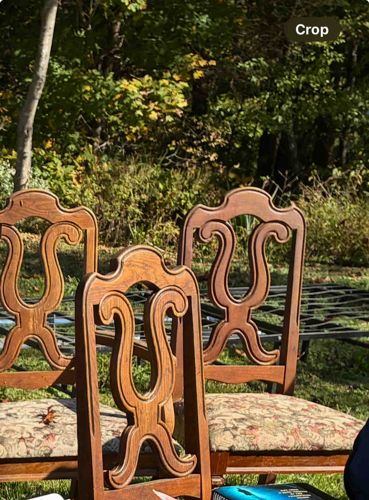
This set includes three vintage dining chairs, primarily constructed from a warm, medium-toned wood, likely oak or a similar hardwood, exhibiting a visible grain pattern. The chairs feature a distinctive openwork backrest design, characterized by elegant S-scroll and C-scroll carvings that form a symmetrical, lyre-back or modified splat design. The top rail of each chair back is subtly curved, adding to their decorative appeal. The seats are upholstered with a patterned fabric, potentially a floral or damask motif, featuring a palette of muted greens, creams, and reds/pinks, though the pattern is somewhat obscured and appears faded or worn in areas. The chairs exhibit signs of age and use consistent with vintage furniture, including minor scratches, scuffs, and a general patina on the wooden frames. The upholstery shows discoloration and some fraying, particularly on the chair in the foreground where a small insect (possibly a beetle) is visible on the fabric, indicating potential outdoor storage or usage. The craftsmanship suggests a period style, possibly late 19th or early 20th century, or a revival piece from the mid-20th century, drawing inspiration from Rococo or Neoclassical designs due to the ornate scrollwork. There are no immediate visible maker's marks or signatures in the provided image. The construction appears solid, though details of joinery are not discernible. The overall aesthetic points to them being part of a larger dining set, designed for formal or semi-formal dining spaces. The condition of the upholstery indicates a need for professional cleaning or reupholstering to restore them to optimal condition, while the wood frame seems structurally sound for its age, though minor refinishing might be desired by some to address surface wear.
AI Appraisal Report
Based on my visual examination of the provided image, this set of three vintage carved wood dining chairs appears to be constructed from a medium-toned hardwood, likely oak, exhibiting a visible grain. The distinctive S-scroll and C-scroll openwork backrests suggest a design influence from late 19th or early 20th-century period styles, possibly Rococo or Neoclassical revival, or a mid-20th-century interpretation. The craftsmanship appears solid, and the frames show a consistent patina with minor scratches and scuffs typical of vintage furniture.
However, the upholstered seats are in poor condition, displaying significant fading, discoloration, and fraying. The visible insect on one chair's upholstery points to potential storage issues or outdoor exposure, significantly impacting the aesthetic appeal and requiring immediate attention. This condition necessitates professional cleaning or, more likely, complete reupholstering. While the wood frames seem structurally sound, they would benefit from cleaning and a potential light refinishing to enhance their appearance.
Market conditions for vintage dining chairs are somewhat varied. While period pieces can fetch higher prices, sets in need of extensive restoration, particularly upholstery, often see their value reduced significantly to account for these costs. Comparables for similar style chairs in good to excellent condition generally range higher, but the current state of the upholstery is a major detractor. The fact that it's a set of three, rather than a full dining set (e.g., six or eight chairs), also limits its market appeal and utility.
Demand for revival styles exists, but the condition of these specific chairs will predominantly attract buyers who are also restorers or are willing to invest in restoration. Rarity is not a significant factor here; while unique in their specific carving, the overall style is not exceptionally rare.
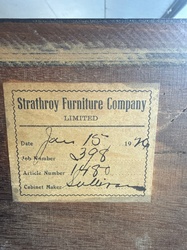
Factors significantly impacting value include the distressed upholstery, the presence of an insect (raising hygiene concerns), and the incomplete set size. The lack of visible maker’s marks also limits potential provenance-driven value.
Limitations: Without in-person examination, I cannot definitively confirm wood type, assess joinery integrity, or verify the extent of any structural repairs or insect damage to the wood frames. A tactile inspection would also be crucial to determine the true condition of the wood finish and the type of fabric. Full authenticity verification regarding specific period or maker would require provenance documentation or a more detailed expert assessment of construction techniques.