AI identification & appraisal estimate

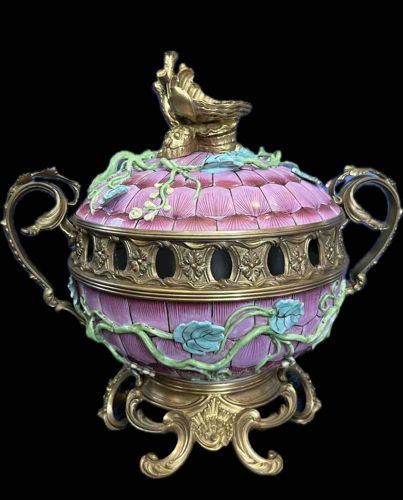
French Majolica and Ormolu Bronze Mounted Potpourri Censer

Submitted photo of French Majolica and Ormolu Bronze Mounted Potpourri Censer
Photo submitted by the user — not generated by AI

User's notes

Porcelain and Bronze

These notes were written by the person who submitted this item. Appraiser.AI has not verified them, and the AI's identification and estimate may rely on them.

AI Estimated Value

Not an official valuation

$4,500 - $6,500

AI estimate as of February 16, 2026 · verify with a professional before acting

AI-Generated · Verify before acting

Everything on this page is generated by AI for informational purposes only. AI can make mistakes — the AI may misidentify items or misattribute them (artist, maker, brand, designer, origin, era). This is not an official valuation and should not be used for insurance, sale, tax, estate, legal, or lending purposes — or any decision requiring a certified appraisal. It is not an authoritative claim about any person, brand, or rights holder — do not share or rely on it as a factual statement about a third party. Always consult qualified professionals before making financial decisions.

This analysis also relies on unverified notes provided by the user, which may be incomplete or inaccurate and could affect the result.

Read the full disclaimer

AI Item Analysis

This exquisite decorative piece is an ornate potpourri censer or covered bowl featuring a combination of glazed porcelain (majolica) and gilt bronze (ormolu) mounts. The main body and lid are constructed of porcelain with a distinctive textured, scalloped ribbing finished in a vibrant magenta or deep pink glaze. Intertwining across the porcelain surfaces are relief-molded organic vines in a pale celadon green with leaf accents. The vessel is encased in high-quality bronze mounts, including a reticulated gallery at the center with oval piercings flanked by floral rosettes, allowing for the scent of potpourri to escape. The piece stands on an elaborate rococo-style scrolled quadruped base with acanthus leaf motifs. Matching ornate scroll handles are attached to the sides, and the lid is crowned with a complex sculptural bronze finial depicting a bird or shell-like botanical form. The craftsmanship displays high-relief molding and precise casting common in mid-to-late 19th-century French decorative arts, possibly in the style of Minton or Longwy for the ceramic components. The condition appears excellent with a rich aged patina on the bronze and no visible chips or cracks to the glaze, though minor surface wear consistent with age is expected. This piece exemplifies the 19th-century Neo-Rococo taste for eclectic, high-status interior ornaments.

AI Appraisal Report

I have conducted a thorough visual examination of this French Majolica and Ormolu bronze mounted potpourri censer. Based on the stylistic evidence, this piece represents a high-water mark of 19th-century French decorative arts, likely dating from the 1870s to 1880s. The execution of the magenta glaze and the relief-molded celadon vines suggests a high-tier manufacturer, potentially the work of the Joseph-Théodore Deck atelier or a contemporary Parisian studio influenced by Minton’s 'Naturalist' style. The ormolu mounts exhibit sophisticated chasing and heavy gilding, pointing toward a luxury commission for a high-status interior. Centered on a Rococo-revival aesthetic, the reticulated gallery is particularly well-cast, showing no signs of modern reproduction casting flaws. The market for high-quality French 19th-century majolica remains robust among collectors who prioritize 'hybrid' pieces featuring bronze mounts. Comparable sales at major auction houses for similarly scaled and glazed censers typically fall within the $4,000 to $7,000 range, depending on the maker's mark. The current demand is driven by the rarity of the vibrant magenta coloring, which was historically more difficult and expensive to fire. However, I must note that this appraisal is based on photographic evidence only. A physical inspection is required to check for hidden restorations beneath the mounts, which can impact value by as much as 40%. To definitively authenticate the piece, I would need to remove the bronze base to inspect for a stamped porcelain maker's mark (such as Gien or Longwy) or signed ciseleur marks on the bronze. Reviewing provenance documentation or original inventory labels would further solidify this valuation.

Keep exploring

More antique decorative arts appraisals

Get your items appraised

Instant AI-powered appraisal estimates from a photo

Browse More Appraisals