AI estimate as of October 2, 2025 · verify with a professional before acting
AI-Generated · Verify before acting
Everything on this page is generated by AI for informational purposes only. AI can make mistakes — the AI may misidentify items or misattribute them (artist, maker, brand, designer, origin, era). This is not an official valuation and should not be used for insurance, sale, tax, estate, legal, or lending purposes — or any decision requiring a certified appraisal. It is not an authoritative claim about any person, brand, or rights holder — do not share or rely on it as a factual statement about a third party. Always consult qualified professionals before making financial decisions.
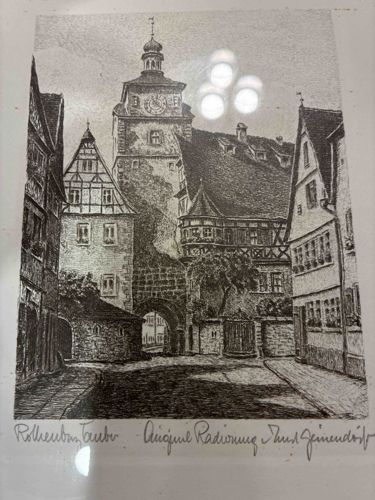
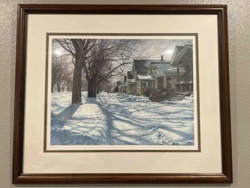
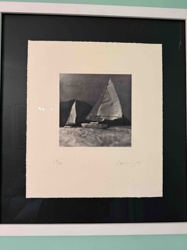
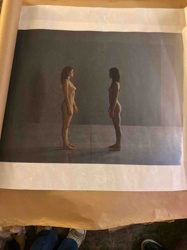
This item is an etching, likely a hand-pulled print, depicting a picturesque cityscape scene from Rothenburg ob der Tauber, Germany. The primary colors are black and white, typical of an etching on paper. The composition is dominated by architectural elements, featuring a prominent clock tower in the background, characteristic half-timbered houses on either side, and an arched gateway leading into a street. The etching technique is evident in the fine lines and cross-hatching used to create shading, texture, and depth, particularly visible in the brickwork of the tower, the roofs, and the details of the buildings. The varying density of lines suggests meticulous craftsmanship. The print is signed or inscribed at the bottom in what appears to be pencil, reading 'Rothenburg Tauber. Original Radierung Paul Geissendörfer'. This inscription provides critical manufacturing details, identifying the location depicted and attributing the work to artist Paul Geissendörfer. 'Original Radierung' confirms it is an original etching. The paper appears slightly off-white or cream-colored, suggesting some age or intended aesthetic. There are some visible condition issues, including reflections on the surface from the camera flash, which may obscure minor details or imperfections. The overall condition appears good for its age, though without better lighting, it's hard to discern any foxing, discoloration beyond natural aging, or creases. The style period is likely late 19th to mid-20th century, given the artistic medium and typical subject matter for German artists of that era. The depiction captures the historical charm and intricate architecture of Rothenburg, a well-preserved medieval town.
AI Appraisal Report
Based on my visual examination of the provided image, I assess this Rothenburg ob der Tauber cityscape etching by Paul Geissendörfer. The etching appears to be an authentic hand-pulled print, strongly supported by the 'Original Radierung' inscription and the evident fine linework and cross-hatching characteristic of the medium. The signature and title in pencil further suggest originality. The condition appears to be good for an item of its likely age (late 19th to mid-20th century). While camera reflections obscure some surface details, I don't observe overt damage like major tears or significant foxing, though a physical inspection would be crucial to confirm this. The slightly off-white paper tone suggests natural aging or intended aesthetic.
In terms of market conditions, etchings by Paul Geissendörfer, particularly those depicting German cityscapes, are generally sought after by regional collectors and those interested in historical German art. However, they typically fall into an accessible price range rather than high-value investment art. Demand is moderate, rather than rare. Comparable sales of similar Geissendörfer etchings often range from $100 to $300, depending on condition, specific imagery, and whether they are framed.
The primary factors impacting value here are the good apparent condition, the clear identification of the artist and subject, and the 'Original Radierung' designation. Limitations in authenticity verification from images alone include the inability to inspect the paper quality, plate marks, or the precise nature of the pencil inscription (e.g., pressure marks, graphite characteristics) which would confirm it as an original signature. A physical examination would allow for tactile inspection, detailed condition assessment for foxing, discoloration, or hidden damage, and a forensic analysis of the signature and title for absolute certainty of authenticity rather than high probability. Provenance documentation, though not typically extensive for these types of works, would be beneficial if available.