AI Appraisal Estimate

AI-generated estimates · not official valuations

From the user

What was submitted

Photo and notes provided by the user — not generated by AI

Submitted item photo
Submitted photo · May 27, 2026

User's notes

No additional notes provided.

AI analysis below

AI appraisal

AI analysis & estimate

AI-Generated · Verify before acting

Everything below is generated by AI for informational purposes only. AI can make mistakes — the AI may misidentify items or misattribute them (artist, maker, brand, designer, origin, era). This is not an official valuation and should not be used for insurance, sale, tax, estate, legal, or lending purposes — or any decision requiring a certified appraisal. It is not an authoritative claim about any person, brand, or rights holder — do not share or rely on it as a factual statement about a third party. Always consult qualified professionals before making financial decisions.

Read the full disclaimer

AI Identification

·Not independently authenticated·Verify before acting

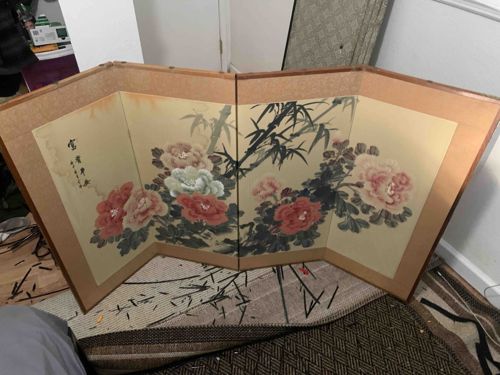
Four-Panel Chinese Ink and Color Folding Screen

Asian Antiques & Decorative Arts

AI Estimated Value

·Not an official valuation·Verify before acting

$100 - $200

As of May 27, 2026

AI Item Analysis

·AI can make mistakes·Verify before acting
This is a low-profile, four-panel folding table screen featuring a decorative painting of peonies and bamboo in the traditional Chinese 'mogu' (boneless) style. The panels are constructed with a wooden frame that supports a paper or silk substrate. The artwork displays a vibrant palette of pink, red, and white peony blossoms accented by dark green foliage and black ink-drawn bamboo stalks. On the far-left panel, there is a vertical column of Chinese calligraphy characters and a red seal mark, typically indicating the artist’s signature or the title of the work. The screen is finished with a wide silk or paper decorative border in a tan-gold hue. In terms of condition, the item shows significant signs of age and poor storage. There is prominent water staining and moisture damage, particularly visible as dark 'tide lines' along the upper-left panel. The paper is yellowed and brittle, with visible creasing along the hinges between panels. The surrounding environment suggests it has been stored in a cluttered area, potentially leading to further structural instability. Based on the style and materials, it is likely a mid-20th-century decorative piece intended for domestic use as a room accent or table topper.
AI Appraisal Report

·AI can make mistakes·Verify before acting
Upon my virtual examination of this four-panel ‘mogu’ style table screen, I have determined it to be a decorative mid-20th-century piece. While the peony and bamboo motifs are executed with localized charm, the work lack the technical precision and calligraphic mastery associated with highly collectible early 20th-century or late Qing dynasty masters. The materials—likely a machine-made paper and mass-produced silk borders—further support a mid-century dating for the commercial export or domestic decorative market. The most significant factor impacting the valuation is the poor condition. The presence of severe water staining (tide lines) on the upper sections suggests prolonged exposure to moisture, which has likely compromised the acidity of the substrate and led to permanent discoloration. This type of damage is notoriously difficult and expensive to remediate, often exceeding the fair market value of the item itself. In the current market, decorative Asian screens of this size and period are relatively common. Collectors typically seek examples in pristine condition or those with verifiable provenance to known studios. This piece, hindered by its condition issues, currently appeals primarily to the 'shabby chic' decor market rather than serious art collectors. Limitations: This appraisal is based solely on digital images. A definitive assessment of age and authenticity is limited without physical inspection. To confirm these findings, I would require an in-person examination to test paper fiber composition, inspect the ink’s penetration into the substrate, and verify the authenticity of the red seal through a seal directory. Provenance documentation regarding the original purchase or previous ownership would also be necessary to elevate the valuation beyond a decorative baseline.

Get your items appraised

Instant estimates of your treasures with AI-powered appraisals

Browse More Appraisals