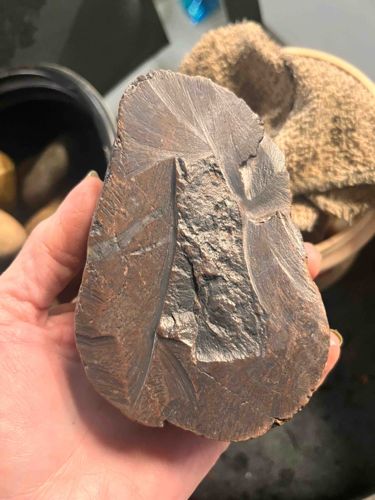
Shatter Cone Fragment in Carbonate Rock
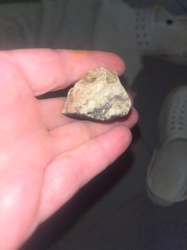
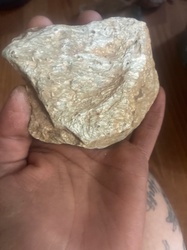
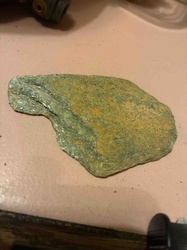
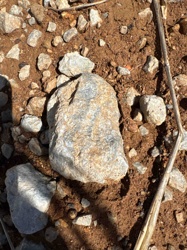
This specimen is a geological fragment known as a shatter cone, which is a rare geological structure formed only in the bedrock beneath meteorite impact craters or at underground nuclear explosion sites. The item measures approximately 3 to 4 inches in length, fitting comfortably in the palm of a hand. It exhibits a distinct conical shape with characteristic 'horsetail' striations or flutings that radiate from an apex. The coloration is primarily a deep, earthy brownish-red to dark gray, likely due to high iron or manganese content within the sedimentary or metamorphic host rock. The texture is rough and matte, displaying the high-pressure shock metamorphism that created the fan-like patterns. Most of the cone is intact, though there are jagged, irregular edges along the perimeter where it was broken from a larger rock mass. The surface shows some light superficial wear and minor chipping consistent with field collection. There are no maker's marks, as this is a natural (impact-driven) occurrence. These structures are of significant scientific interest to collectors of meteoritical and geological rarities for their diagnostic role in identifying ancient impact sites.
AI-Generated Appraisal Disclaimer
Estimated Value
$150 - $250
Basic Information
Category
Geological Specimen / Impactite
Appraised On
April 7, 2026
Estimated Value
$150 - $250
Item Description
This specimen is a geological fragment known as a shatter cone, which is a rare geological structure formed only in the bedrock beneath meteorite impact craters or at underground nuclear explosion sites. The item measures approximately 3 to 4 inches in length, fitting comfortably in the palm of a hand. It exhibits a distinct conical shape with characteristic 'horsetail' striations or flutings that radiate from an apex. The coloration is primarily a deep, earthy brownish-red to dark gray, likely due to high iron or manganese content within the sedimentary or metamorphic host rock. The texture is rough and matte, displaying the high-pressure shock metamorphism that created the fan-like patterns. Most of the cone is intact, though there are jagged, irregular edges along the perimeter where it was broken from a larger rock mass. The surface shows some light superficial wear and minor chipping consistent with field collection. There are no maker's marks, as this is a natural (impact-driven) occurrence. These structures are of significant scientific interest to collectors of meteoritical and geological rarities for their diagnostic role in identifying ancient impact sites.
Get Your Items Appraised
Instant estimates of your treasures with AI-powered instant appraisals