AI identification & appraisal estimate

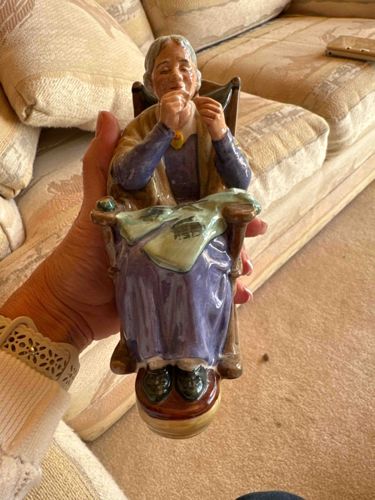
Figurine of an Elderly Woman Knitting

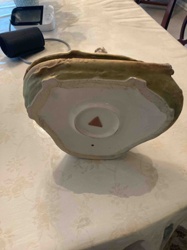
Submitted photo of Figurine of an Elderly Woman Knitting
Photo submitted by the user — not generated by AI

AI Estimated Value

Not an official valuation

$75-125

AI estimate as of August 23, 2025 · verify with a professional before acting

AI-Generated · Verify before acting

Everything on this page is generated by AI for informational purposes only. AI can make mistakes — the AI may misidentify items or misattribute them (artist, maker, brand, designer, origin, era). This is not an official valuation and should not be used for insurance, sale, tax, estate, legal, or lending purposes — or any decision requiring a certified appraisal. It is not an authoritative claim about any person, brand, or rights holder — do not share or rely on it as a factual statement about a third party. Always consult qualified professionals before making financial decisions.

Read the full disclaimer

AI Item Analysis

This item is a glazed ceramic or porcelain figurine depicting an elderly woman seated in a chair, engaged in what appears to be knitting or needlework. Physical characteristics include an approximate height of 6-8 inches, judging by its proportion to the hand holding it. The figurine is crafted from what appears to be earthenware or fine ceramic, finished with a glossy glaze. The color palette primarily features muted tones: a deep purple dress, a brown or tan shawl, blue sleeves, and the natural light brown/tan of the chair. The woman's hair is grey, and her face exhibits a light skin tone, with red applied to the lips. Notable features include finely sculpted details illustrating the woman's facial expression, hands, and the folds of her clothing, indicating a high level of craftsmanship. She holds what looks like knitting needles or a similar tool in her hands, with a light green or teal piece of 'fabric' resting on her lap and the arms of the chair. The chair itself is a simple brown wooden design. The figurine appears to be in good overall condition, with no immediately visible chips, cracks, or repairs. The glaze appears consistent, suggesting original condition without significant wear or damage. The base on which the chair rests is a darker brown, possibly with a reddish undertone. While no specific maker's marks or signatures are visible in the provided images, the style suggests it could be a piece from a well-known ceramic manufacturer like Royal Doulton, Lladro, or similar, often crafted in the mid-20th century or later. The naturalistic yet slightly idealized portrayal of the figure points towards a style period that emphasizes domestic comfort and traditional craftsmanship. The quality of the molding and hand-painting indicates a mass-produced item of relatively good quality, likely intended for decorative display.
AI Appraisal Report

I have examined the image of this ceramic or porcelain figurine depicting an elderly woman knitting. My assessment is that the piece appears to be in very good condition, with no visible chips, cracks, or repairs from the provided image. The consistency of the glossy glaze further supports its original condition. Authenticity, based solely on visual examination, appears consistent with a mass-produced decorative item from a reputable manufacturer, likely mid-20th century or later, as suggested by the naturalistic style and attention to detail. However, without visible maker's marks or signatures, definitive authentication and attribution to specific makers like Royal Doulton or Lladro cannot be made from images alone. Regarding market conditions, such figurines generally appeal to collectors of vintage decorative ceramics and those seeking sentimental or domestic-themed pieces. Demand for these types of figurines is steady but not exceptionally high for unnamed pieces, though quality pieces always find buyers. Rarity is difficult to ascertain without knowing the manufacturer and production run; generally, these were mass-produced. Factors significantly impacting value include the lack of visible maker's marks, which limits its attribution to a specific, highly collectible line. The excellent apparent condition enhances its appeal. Limitations in authenticity verification from images alone are significant. A physical in-person examination would be crucial to inspect for subtle repairs, determine the exact material (ceramic vs. porcelain), and search for obscured maker's marks on the base or within the structure. Provenance documentation, such as original purchase receipts or family records, would provide invaluable context regarding its origin and history. Scientific testing, while unlikely for this type of item, might involve material analysis to confirm composition if there were specific doubts about its age or origin.

Keep exploring

More ceramic or porcelain figurine appraisals

Get your items appraised

Instant AI-powered appraisal estimates from a photo

Browse More Appraisals