AI Appraisal Estimate

AI-generated estimates · not official valuations

From the user

What was submitted

Photo and notes provided by the user — not generated by AI

Submitted item photo
Submitted photo · May 26, 2026

User's notes

No additional notes provided.

AI analysis below

AI appraisal

AI analysis & estimate

AI-Generated · Verify before acting

Everything below is generated by AI for informational purposes only. AI can make mistakes — the AI may misidentify items or misattribute them (artist, maker, brand, designer, origin, era). This is not an official valuation and should not be used for insurance, sale, tax, estate, legal, or lending purposes — or any decision requiring a certified appraisal. It is not an authoritative claim about any person, brand, or rights holder — do not share or rely on it as a factual statement about a third party. Always consult qualified professionals before making financial decisions.

Read the full disclaimer

AI Identification

·Not independently authenticated·Verify before acting

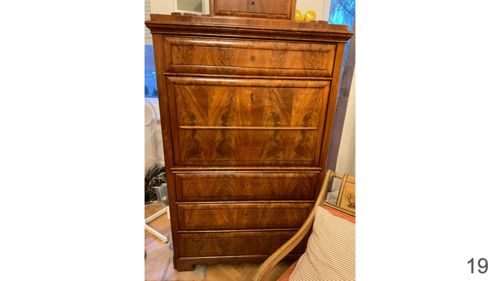
Biedermeier Style Flame Walnut Secretary Desk (Abattant)

Antique Furniture

AI Estimated Value

·Not an official valuation·Verify before acting

$1,800 - $3,200

As of May 26, 2026

AI Item Analysis

·AI can make mistakes·Verify before acting
This is an exquisite Biedermeier-style tall secretary desk, likely dating from the mid-to-late 19th century or early 20th century. The piece is characterized by its rectangular, architectural silhouette and the magnificent use of flame walnut veneers. The book-matched veneers are symmetrically arranged across the fall-front desk and drawer fronts, creating a dramatic V-shaped grain pattern that reflects high-quality craftsmanship. The structure consists of a top frieze drawer, a prominent drop-down writing surface (abattant) that likely conceals an interior nest of small drawers, and three full-width graduate drawers below. The piece is crowned with a stepped-out cornice and sits on short block feet. Each drawer and the central flap feature a centered, discrete keyhole, indicating secured storage. The finish shows a rich, warm amber patina typical of aged fruitwood or walnut under shellac. Regarding condition, the piece appears well-maintained with minor surface abrasions, slight edge wear, and faint vertical cracking in the veneer consistent with age and natural wood movement. The lack of visible hardware other than the locks suggests a clean, minimalist aesthetic characteristic of the late Biedermeier or Neoclassical periods, focusing on the natural beauty of the timber over ornate decoration.
AI Appraisal Report

·AI can make mistakes·Verify before acting
Upon examining the provided imagery of this Biedermeier-style secrétaire à abattant, I am immediately struck by the dramatic quality of the flame walnut veneers. The book-matched application creates a stunning, symmetrical visual anchor, which is the primary value driver for this piece. The architectural silhouette, featuring a stepped cornice and block feet, aligns well with the Neoclassical restraint typical of the mid-to-late 19th century or early 20th-century revivals. The finish possesses a warm, amber patina suggestive of French polish or shellac, appearing largely intact despite minor surface abrasions and the expected vertical veneer stress cracks common in case goods of this age. The market for Biedermeier and Neoclassical furniture has softened from its peak in the early 2000s, but high-quality examples with exceptional figuring like this remain desirable to interior designers and collectors seeking statement pieces. Comparables for similar walnut secretaries generally hammer at auction between $1,200 and $2,500, with retail gallery prices often reaching $4,500 depending on the interior fittings, which are unfortunately not visible here. Several limitations exist in this remote appraisal. I cannot verify the secondary woods (pine vs. oak) or the construction techniques (dovetailing), which are crucial for distinguishing a period 1830s piece from a later 1900s revival. A true period piece would command a significantly higher valuation. Furthermore, I cannot inspect the interior writing cabinet for potential modifications or damage to the leather surface or small drawers. An in-person inspection is required to confirm the age of the carcass and ensure the veneer is stable throughout.

Get your items appraised

Instant estimates of your treasures with AI-powered appraisals

Browse More Appraisals