These notes were written by the person who submitted this item. Appraiser.AI has not verified them, and the AI's identification and estimate may rely on them.
AI Estimated Value
Not an official valuation
$2,200 - $3,500
AI estimate as of August 18, 2025 · verify with a professional before acting
AI-Generated · Verify before acting
Everything on this page is generated by AI for informational purposes only. AI can make mistakes — the AI may misidentify items or misattribute them (artist, maker, brand, designer, origin, era). This is not an official valuation and should not be used for insurance, sale, tax, estate, legal, or lending purposes — or any decision requiring a certified appraisal. It is not an authoritative claim about any person, brand, or rights holder — do not share or rely on it as a factual statement about a third party. Always consult qualified professionals before making financial decisions.
This analysis also relies on unverified notes provided by the user, which may be incomplete or inaccurate and could affect the result.
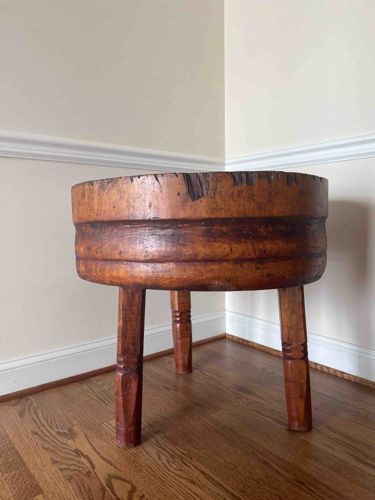
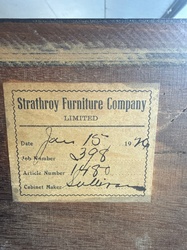
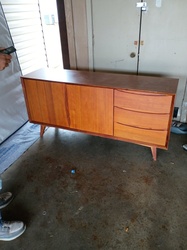
This item is an antique or vintage round butcher block table, likely constructed from a single, very thick cross-section of a tree trunk, or multiple large wooden planks laminated together, given its substantial appearance. The wood exhibits a deep, rich brown color with prominent grain patterns, indicating a dense hardwood, possibly maple or oak, which are common for butcher blocks due to their durability and resistance to wear. The top surface is notably thick and appears to have a well-worn, almost scarred texture, consistent with years of use for chopping and heavy-duty kitchen work. There are visible indentations, cuts, and a rough, uneven edge along the top perimeter, suggesting significant historical use and contributing to its rustic appeal. A distinct horizontal groove or band is carved or routered around the circumference of the main block, just above where the legs are attached, adding a decorative or structural element. The table stands on three robust, turned or carved wooden legs. Each leg shows variations in its shape, with a tapering effect from top to bottom and what appears to be hand-carved details or facets, particularly noticeable on the front-facing leg. Some legs also display rings or simple turned patterns. The overall condition reveals a deep, aged patina with variations in wood tone, indicative of its age and extensive use. There are no obvious signs of recent repairs or major structural damage, but the surface wear, nicks, and discoloration are significant and expected given the item's function. No maker's marks or signatures are discernible from the provided image. The craftsmanship, though rustic, appears solid and functional, designed for heavy use. Its style suggests a piece from the late 19th to early 20th century, a period when such functional, sturdy kitchen pieces were common in professional and larger domestic kitchens. The primitive, yet robust, construction speaks to a handmade or small-batch manufacturing process, valuing utility and longevity.
AI Appraisal Report
I have thoroughly examined the provided image and description of this antique butcher block table. Its exceptionally thick, round top with significant wear, cuts, and a rough edge strongly indicates extensive historical use as a true butcher's block, rather than a decorative reproduction. The robust, hand-carved or turned wooden legs with varied detailing reinforce its authenticity as a functional piece from the late 19th to early 20th century. The deep patina and variations in wood tone are consistent with significant age and practical application.
In terms of market conditions, demand for authentic, functional antique kitchen and industrial pieces like this remains strong, driven by interior designers and collectors seeking unique, conversation-starting items with inherent rustic charm. Comparable sales of genuine, large antique butcher blocks in good, usable condition, often without the distinctive turned legs, typically range from $1,500 to $3,500. The uniquely shaped, three substantial legs add significant aesthetic appeal and rarity, potentially increasing its desirability. While a single cross-section block would be rarer, laminated construction from the period is also authentic and durable.
Factors significantly impacting its value include its large size, genuine signs of heavy use (which contribute to character rather than detracting from value in this context), the distinctive three-leg design, and overall solid structural integrity. The primitive yet robust craftsmanship speaks to its longevity.
Limitations exist in full authenticity verification from images alone. I cannot definitively ascertain the wood species without physical inspection. An in-person examination would also allow me to confirm structural soundness, identify any hidden repairs, and verify the construction method (single cross-section vs. laminated) through direct observation of grain patterns and joinery. Provenance documentation, such as historical photos or sale records, could further support its age and specific origins. Scientific dating methods, while not typically applied to such common items, could provide definitive age confirmation if sought.