AI estimate as of August 16, 2025 · verify with a professional before acting
AI-Generated · Verify before acting
Everything on this page is generated by AI for informational purposes only. AI can make mistakes — the AI may misidentify items or misattribute them (artist, maker, brand, designer, origin, era). This is not an official valuation and should not be used for insurance, sale, tax, estate, legal, or lending purposes — or any decision requiring a certified appraisal. It is not an authoritative claim about any person, brand, or rights holder — do not share or rely on it as a factual statement about a third party. Always consult qualified professionals before making financial decisions.
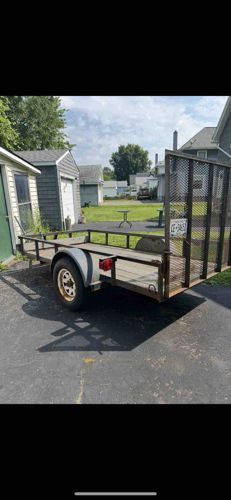
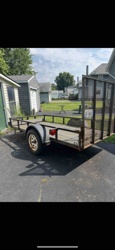
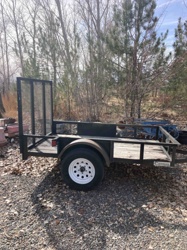
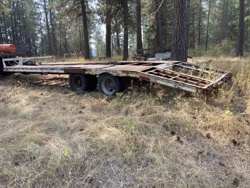
This is a single-axle utility trailer, likely designed for light-duty hauling tasks such as yard waste, sporting equipment, or landscaping materials. Its primary construction appears to be steel frame, painted dark, possibly black or dark grey, showing some signs of rust and wear, particularly on the lower components and around the wheel hub. The flooring consists of several wooden planks, which seem to be in fair condition with visible discoloration from weathering and use, but no obvious rot or breakage. The trailer features open sides with short metal rails, suggesting it relies on a rear gate for retaining cargo. The rear gate is a large, tall, expanded metal mesh ramp, which can be folded up and secured vertically or lowered for loading. This ramp serves as both the rear barrier and a loading aid, indicative of a design for hauling items like lawnmowers or ATVs. The single wheel is covered by a metal fender, which appears to be galvanized or painted a lighter color, possibly silver or light grey, contrasting with the dark frame. The tire shows decent tread but the rim has significant surface rust. A standard red rectangular taillight is visible on the left rear, and a license plate is affixed to the right side of the ramp. The overall condition suggests regular use and exposure to elements, resulting in expected cosmetic wear, but no apparent structural damage that would render it unusable. This type of utility trailer is common for residential or light commercial use, characterized by its practical, no-frills design, likely dating from the mid-2000s onwards given its common construction style.
AI Appraisal Report
Upon my virtual examination of this single-axle utility trailer with a mesh ramp, I observe a functional, light-duty hauling solution. The steel frame, though showing expected signs of surface rust and wear common with outdoor equipment, appears structurally sound. The wooden plank flooring exhibits discoloration but no overt rot or breakage, suggesting it retains its integrity for intended use. The distinguishing feature is the large expanded metal mesh ramp, serving dual purpose as a gate and loading aid, which is a desirable feature for users transporting wheeled equipment like ATVs or lawnmowers. Cosmetic wear is evident on the fender and particularly the rusted wheel rim, but these are typical for a trailer of this type and age.
In terms of market conditions, utility trailers like this are in consistent demand, particularly from homeowners, landscapers, and small businesses. They are common and not rare. The value is primarily driven by utility and condition rather than rarity or historical significance. Comparable used trailers with similar features and condition typically sell in the range of $600 to $1,000, depending on brand reputation (if known, which it isn't here), exact dimensions, and local market specifics. The presence of surface rust on the frame and particularly the wheel rim, along with the weathered wood, are factors slightly depressing the value compared to a meticulously maintained example. However, the operational mesh ramp and apparently solid structure uphold its utility.
Limitations in authenticity verification are significant. From images alone, I cannot definitively confirm structural integrity, inspect for hidden frame cracks, assess the true condition of bearings, brakes (if equipped), electrical wiring beyond visible lights, or verify tire age and dryness. A hands-on inspection would be necessary to fully confirm the absence of critical structural damage, assess the functionality of the axle and hitch, and verify the working condition of all lights and connections. We cannot verify the manufacturer or year of manufacture without a VIN or other visible serial numbers. My assessment is based purely on visual cues, assuming basic functionality given its apparent good overall condition for its type.