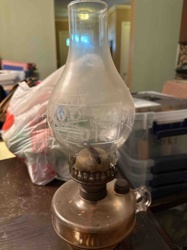
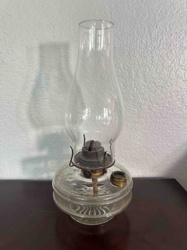
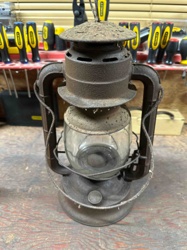
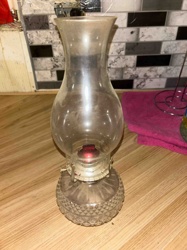
These notes were written by the person who submitted this item. Appraiser.AI has not verified them, and the AI's identification and estimate may rely on them.
AI Estimated Value
Not an official valuation
$25-50
AI estimate as of November 16, 2025 · verify with a professional before acting
AI-Generated · Verify before acting
Everything on this page is generated by AI for informational purposes only. AI can make mistakes — the AI may misidentify items or misattribute them (artist, maker, brand, designer, origin, era). This is not an official valuation and should not be used for insurance, sale, tax, estate, legal, or lending purposes — or any decision requiring a certified appraisal. It is not an authoritative claim about any person, brand, or rights holder — do not share or rely on it as a factual statement about a third party. Always consult qualified professionals before making financial decisions.
This analysis also relies on unverified notes provided by the user, which may be incomplete or inaccurate and could affect the result.
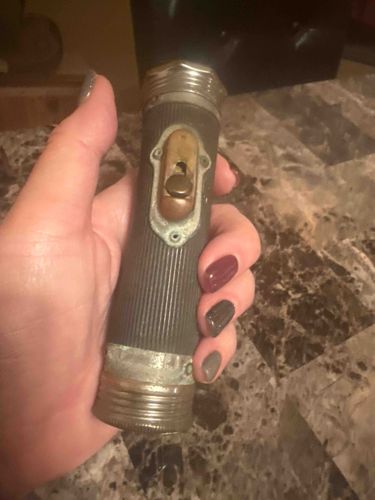
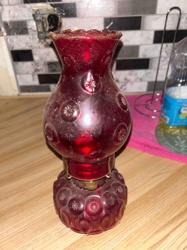
This item is a vintage cylindrical flashlight, likely dating from the early to mid-20th century. Its overall form is a classic tube-shaped body with a distinct metallic cap at one end, which would typically house the lens and bulb assembly, and a threaded base at the other for battery insertion. The main body of the flashlight appears to be constructed from a dark-colored metal, possibly steel or brass, with a ribbed or fluted design running vertically along its length. This ribbed texture would have provided a better grip and also added to its aesthetic appeal. The metallic end caps, including the one visible at the top, and the base, exhibit a silver-toned finish, suggesting nickel plating or aluminum, and show significant wear, tarnishing, and corrosion consistent with age and use. The most prominent feature is the brass-toned, oblong switch mechanism located on the side of the body. This mechanism is secured by two small rivets or screws and features a raised, circular button or lever for operation, suggesting a simple on/off push-button or slide mechanism. The brass component shows a significant dark patina and some verdigris, indicating its age and exposure to the elements. Below this brass switch, there is a distinct U-shaped metallic plate, also showing tarnishing and possibly some green corrosion, further suggesting the age of the piece. The general condition of the flashlight indicates heavy use and age, with visible scratches, dents, and extensive tarnishing on all metallic surfaces, particularly the end caps and the switch mechanism. Despite its wear, the construction appears robust, a characteristic of utilitarian objects from its estimated period. There are no visible manufacturer's marks or signatures in the provided image.
AI Appraisal Report
Upon visual examination of the provided image, this vintage cylindrical flashlight appears to be an authentic utilitarian object likely from the early to mid-20th century. The ribbed dark metal body, the silver-toned end caps (suggesting nickel plating or aluminum), and especially the brass-toned oblong switch mechanism with its notable patina and some verdigris, all align with flashlights of that era. The U-shaped metallic plate below the switch further supports this dating. Condition-wise, the flashlight shows significant wear, including scratches, dents, extensive tarnishing, and corrosion, particularly on the metallic end caps and switch components. This wear is consistent with age and heavy use, which is common for such items. Authenticity, based solely on the image, appears strong due to age-appropriate materials and construction.
In terms of market conditions, vintage utility flashlights like this generally fall into a niche collector's market. Comparables for heavily worn, non-branded early 20th-century flashlights typically range from $20 to $70. The lack of manufacturer's marks significantly impacts its value, as branded or rare models fetch much higher prices. Demand for unbranded, heavily used examples is moderate, appealing primarily to collectors of vintage tools, lighting devices, or purely nostalgic items. The rarity of this specific model is difficult to ascertain without branding.
Factors significantly impacting value are the unidentifiable manufacturer, the heavy wear and tear, and the non-working condition (assumed). For full authentication and a more precise valuation, a physical examination would be crucial to assess the internal components, confirm materials (e.g., distinguishing steel from brass under the dark coating), check for hidden markings, and determine if it's in working order, which often adds value. Provenance documentation, if available, would also be highly beneficial.