AI Appraisal Estimate

AI-generated estimates · not official valuations

From the user

What was submitted

Photo and notes provided by the user — not generated by AI

Submitted item photo
Submitted photo · June 12, 2026

User's notes

No additional notes provided.

AI analysis below

AI appraisal

AI analysis & estimate

AI-Generated · Verify before acting

Everything below is generated by AI for informational purposes only. AI can make mistakes — the AI may misidentify items or misattribute them (artist, maker, brand, designer, origin, era). This is not an official valuation and should not be used for insurance, sale, tax, estate, legal, or lending purposes — or any decision requiring a certified appraisal. It is not an authoritative claim about any person, brand, or rights holder — do not share or rely on it as a factual statement about a third party. Always consult qualified professionals before making financial decisions.

Read the full disclaimer

AI Identification

·Not independently authenticated·Verify before acting

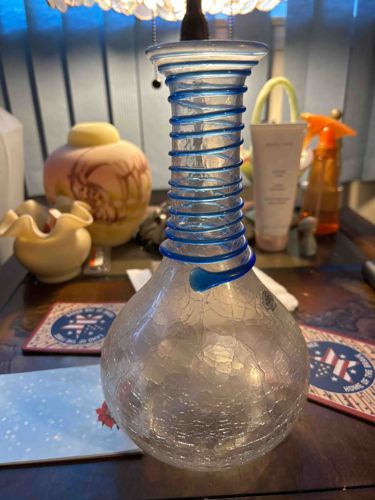
Crackle Glass Vase with Blue Applied Threading

Decorative Glassware

AI Estimated Value

·Not an official valuation·Verify before acting

$75 - $125

As of June 12, 2026

AI Item Analysis

·AI can make mistakes·Verify before acting
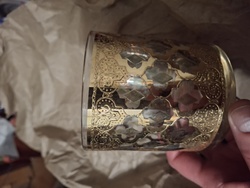
This item is a decorative glass vase, characterized by its distinctive crackle glass body and an applied blue glass threading accent. The vase features a rounded, bulbous base that tapers upwards into a tall, slender neck. The primary body of the vase is made from clear glass, which has been intentionally treated to create a 'crackle' effect, giving it a textured, icy appearance with numerous fine internal fractures that catch and reflect light, enhancing its visual depth. Over the upper portion of the neck and extending slightly onto the shoulder, a vibrant, translucent blue glass thread has been spirally applied, forming a continuous coil around the circumference. This blue thread starts from the rim, which also appears to have a subtle blue tint or rim, and concludes with a small, delicate curl or loop near the shoulder. The craftsmanship suggests it may be hand-blown due to the organic nature of the applied threading and the unique crackle pattern. The overall condition appears good, with no immediately visible chips, cracks (beyond the intentional crackle), or significant damage. It exhibits a clean, well-maintained surface, indicating careful handling. The style points to a mid-20th century to contemporary decorative glass piece, possibly Venetian or Murano-inspired given the use of applied threading. The quality indicators include the uniform crackle effect and the skillful application of the blue glass element, which add to its aesthetic appeal and suggest a degree of artisanal care in its creation.
AI Appraisal Report

·AI can make mistakes·Verify before acting
I have examined the image provided for this Crackle Glass Vase with Blue Applied Threading. Based on the visual evidence, the condition appears to be very good, with no visible chips, cracks (beyond the intentional crackle), or significant damage. The intentional crackle effect seems uniform, and the applied blue threading is skillfully executed, suggesting careful craftsmanship. The style points to a mid-20th century to contemporary decorative glass piece, possibly inspired by Venetian or Murano techniques. In terms of market conditions, crackle glass, while popular at various times, generally falls into a mid-range decorative category unless associated with highly coveted designers or specific rarities. Applied threading adds visual interest but is not inherently rare. Similar pieces of decorative crackle glass with applied elements typically retail in the $50-$150 range for unmarked examples. Demand for such items is steady for home decor but not driven by strong collector interest for most generic pieces. The main factors impacting value are the decorative appeal and the perceived quality of craftsmanship. Without manufacturer marks or definitive provenance, it's challenging to attribute it to a specific artisan or studio, which would significantly increase value. Limitations in authenticity verification are substantial from images alone. While the craftsmanship appears good, a physical examination would be crucial to confirm material quality, exact manufacturing techniques (e.g., hand-blown vs. mold-blown with applied elements), and to check for any hidden repairs or subtle imperfections. Provenance documentation, such as original purchase receipts or maker's marks, would be essential for full authentication and attribution to a specific maker. Scientific testing, while unlikely for this type of item due to cost, could definitively determine glass composition and age if there were doubts about authenticity during an in-person inspection.

Get your items appraised

Instant estimates of your treasures with AI-powered appraisals

Browse More Appraisals