AI Appraisal Estimate

AI-generated estimates · not official valuations

From the user

What was submitted

Photo and notes provided by the user — not generated by AI

Submitted item photo
Submitted photo · June 6, 2026

User's notes

No additional notes provided.

AI analysis below

AI appraisal

AI analysis & estimate

AI-Generated · Verify before acting

Everything below is generated by AI for informational purposes only. AI can make mistakes — the AI may misidentify items or misattribute them (artist, maker, brand, designer, origin, era). This is not an official valuation and should not be used for insurance, sale, tax, estate, legal, or lending purposes — or any decision requiring a certified appraisal. It is not an authoritative claim about any person, brand, or rights holder — do not share or rely on it as a factual statement about a third party. Always consult qualified professionals before making financial decisions.

Read the full disclaimer

AI Identification

·Not independently authenticated·Verify before acting

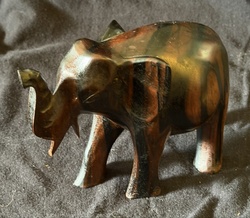
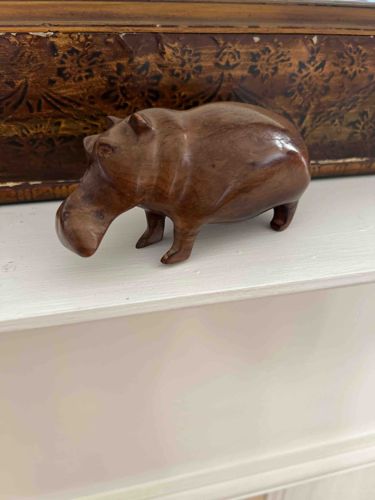
Hand-Carved Mahogany Wood Hippopotamus Figurine

Decorative Arts & Collectibles / Wood Carvings

AI Estimated Value

·Not an official valuation·Verify before acting

$45–$85

As of June 6, 2026

AI Item Analysis

·AI can make mistakes·Verify before acting
This is a hand-carved animal sculpture depicting a hippopotamus in a standing posture. The figurine is crafted from what appears to be a medium-to-dark tone tropical hardwood, likely mahogany or rosewood, exhibiting a rich, warm brown color with a subtle, natural grain pattern. The sculpture measures approximately 4 to 6 inches in length. It features a stylized yet representational design, characterized by smooth, rounded contours that emphasize the bulky anatomy of the animal. The surface has been polished to a low-sheen or satin finish, highlighting the craftsmanship of the carving. Detailed features include small pointed ears, recessed eye sockets, and a prominent, broad snout. The legs are short and sturdy, integrated into the singular block of wood from which the piece was carved. There are no visible maker's marks or signatures on the upper body, which is common for folk art or vintage safari souvenirs from the mid-20th century (circa 1950s-1970s), often originating from East African woodworking traditions. The condition appears excellent with a well-developed patina; there are no obvious cracks, chips, or skeletal repairs visible in the photograph, though very minor surface scuffs consistent with age may be present on the underside of the feet. The quality is indicative of skilled artisanal handwork rather than mass-produced factory molding.

AI Appraisal Report

·AI can make mistakes·Verify before acting
Based on my visual examination of the hand-carved mahogany hippo figurine, I find it to be a fine example of mid-to-late 20th-century East African artisanal craft. The piece exhibits high-quality workmanship, characterized by the fluid, stylized lines typical of 'Safari Art' from regions like Kenya or Tanzania. The use of a dense tropical hardwood—likely mahogany—is evident in the tight grain and rich, reddish-brown hue. The condition appears to be excellent, with a deep, naturally developed patina that suggests the item has been well-preserved for several decades. The market for such carvings is currently stable but populated with a high volume of similar mid-century souvenirs. Its value is driven primarily by its aesthetic appeal as a decorative object rather than a specific sculptor's pedigree, as the lack of a signature is consistent with communal workshop traditions. Comparables for 4-to-6-inch hardwood animals of this quality typically sell within the $40 to $90 range at specialty vintage boutiques and online auction platforms like Etsy or eBay. Items with larger scales or documented provenance from notable collections fetch higher premiums. Limitations: This appraisal is based solely on high-resolution imagery. A physical inspection would be required to confirm the density of the wood (distinguishing it from stained lighter woods) and to identify any internal structural stress fractures or expertly disguised repairs. To fully authenticate the period of origin and wood species, an in-person examination of the tool marks on the underside and a microscopic wood-grain analysis would be necessary. Provenance documentation, such as an original purchase receipt or import records, would also provide a definitive timeline for its manufacture.

Get your items appraised

Instant estimates of your treasures with AI-powered appraisals

Browse More Appraisals