Delft Blue Baluster-Shaped Ceramic Vase
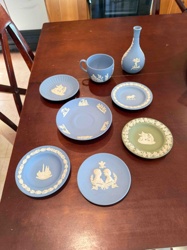
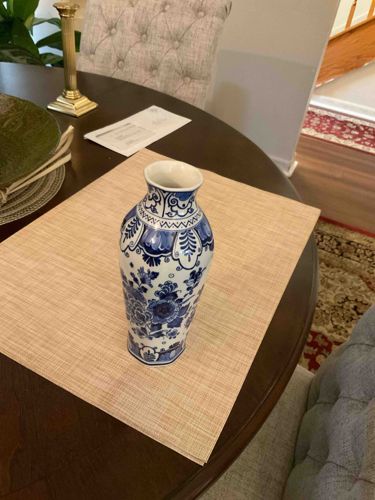
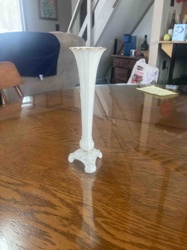
This is a decorative ceramic vase featuring the classic blue and white aesthetic associated with Delftware or Chinoiserie styles. The piece exhibits a baluster-like form with a flared rim, a constricted neck, and a tapering body that ends in a slightly flared base. It is constructed from white glazed ceramic, likely earthenware or porcelain, decorated with cobalt blue underglaze. The central body is adorned with intricate floral motifs, including large stylized peonies or chrysanthemums and trailing leaf patterns. The neck and shoulder feature geometric and scrollwork bordering, including traditional ruyi-head or cloud-collar patterns. In terms of condition, the piece appears well-maintained with high-gloss glaze intact; however, a minor chip is visible on the inner upper rim. No maker's mark is visible from this angle, but the style suggests a mid-to-late 20th-century reproduction of 17th-century Dutch Delft or Chinese Export porcelain. The weight and sharpness of the floral transfers suggest a commercial production rather than a hand-painted museum-grade antique, though it remains a fine example of traditional decorative arts.
AI-Generated Appraisal Disclaimer
Estimated Value
$125 - $225
Basic Information
Category
Decorative Arts / Ceramics
Appraised On
March 2, 2026
Estimated Value
$125 - $225
Item Description
This is a decorative ceramic vase featuring the classic blue and white aesthetic associated with Delftware or Chinoiserie styles. The piece exhibits a baluster-like form with a flared rim, a constricted neck, and a tapering body that ends in a slightly flared base. It is constructed from white glazed ceramic, likely earthenware or porcelain, decorated with cobalt blue underglaze. The central body is adorned with intricate floral motifs, including large stylized peonies or chrysanthemums and trailing leaf patterns. The neck and shoulder feature geometric and scrollwork bordering, including traditional ruyi-head or cloud-collar patterns. In terms of condition, the piece appears well-maintained with high-gloss glaze intact; however, a minor chip is visible on the inner upper rim. No maker's mark is visible from this angle, but the style suggests a mid-to-late 20th-century reproduction of 17th-century Dutch Delft or Chinese Export porcelain. The weight and sharpness of the floral transfers suggest a commercial production rather than a hand-painted museum-grade antique, though it remains a fine example of traditional decorative arts.
Get Your Items Appraised
Instant estimates of your treasures with AI-powered instant appraisals