AI estimate as of August 24, 2025 · verify with a professional before acting
AI-Generated · Verify before acting
Everything on this page is generated by AI for informational purposes only. AI can make mistakes — the AI may misidentify items or misattribute them (artist, maker, brand, designer, origin, era). This is not an official valuation and should not be used for insurance, sale, tax, estate, legal, or lending purposes — or any decision requiring a certified appraisal. It is not an authoritative claim about any person, brand, or rights holder — do not share or rely on it as a factual statement about a third party. Always consult qualified professionals before making financial decisions.
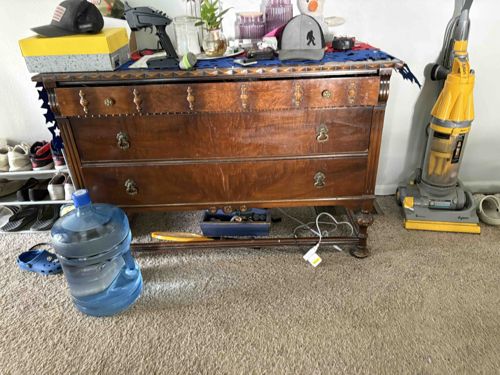
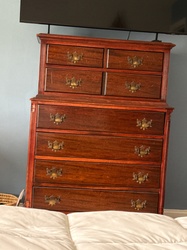
This is a wooden dresser, likely made of a darker wood such as oak or mahogany, exhibiting a rich, warm brown tone with visible wood grain, suggesting solid wood construction rather than veneer for the main body. The dresser features three full-width drawers positioned below two smaller half-width drawers at the top, totaling five drawers. The drawers are equipped with ornate metal pull handles, possibly brass or bronze, featuring an antique or classical design. The top surface of the dresser has a decorative border, possibly carved or inlaid, adding to its aesthetic appeal. The overall shape is a serpentine or bombé front, giving it a curved, bow-fronted appearance, characteristic of Rococo revival or Victorian styles. The legs appear to be short and turned, ending in what might be bun feet or small carved feet. There is a lower stretcher bar connecting the legs, providing additional support. The finish shows noticeable wear, including scratches, scuffs, and areas where the finish has thinned or worn away, particularly on the drawer fronts and edges, indicating significant age and use. There is also a potential water stain or discoloration on one of the lower drawer fronts. The hardware appears intact but may benefit from cleaning. While no specific maker's marks are visible, the style strongly suggests a piece from the late 19th to early 20th century, likely between 1880 and 1920. The craftsmanship appears sturdy, indicative of period furniture built for durability, though its current condition reflects a need for restoration to bring back its original luster. The top surface shows signs of common use, with various modern objects placed on it.
AI Appraisal Report
Upon examining the provided image of this antique serpentine front wooden dresser, I've assessed its condition and potential value. The dresser appears to be constructed from a dark wood, likely oak or mahogany, exhibiting solid wood construction characteristic of its era. The serpentine or bombé front, along with the ornate metal pull handles and decorative top border, points strongly to a late 19th to early 20th century piece, likely between 1880 and 1920. This style aligns with Rococo revival or Victorian aesthetics.
Its condition shows significant age and use, with noticeable scratches, scuffs, and areas of wear on the finish, particularly on drawer fronts and edges. A potential water stain is also visible. While the hardware seems intact, it could benefit from cleaning. This state of 'as-is' wear, though indicative of authenticity and age, significantly impacts its immediate market value, as restoration would be required to bring it to its original luster.
Regarding market conditions, there is a steady demand for well-preserved or professionally restored antique furniture. However, pieces requiring substantial work, like this one, typically fetch lower prices from casual buyers and are more appealing to collectors or restorers looking for project pieces. Rarity considerations for a piece of this style and era are moderate; while not unique, its specific design details add character.
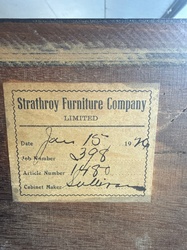
A key factor impacting value is its current condition leading to the need for restoration. Lack of visible maker's marks is common for this period but would, if present, enhance value.
It is imperative to state that this appraisal is based solely on visual examination of the image. Full authentication, exact wood identification, and precise assessment of structural integrity and extent of damage would necessitate in-person examination. Provenance documentation, though not typically available for such common household items, could strengthen its value. Scientific testing for wood age or finish composition is not usually performed on items of this type unless significant financial value is at stake or for historical preservation.
Considering the required restoration, I've factored in the cost and effort. Pieces in better condition might fetch significantly more.