AI Appraisal Estimate

AI-generated estimates · not official valuations

From the user

What was submitted

Photo and notes provided by the user — not generated by AI

Submitted item photo
Submitted photo · June 12, 2026

User's notes

No additional notes provided.

AI analysis below

AI appraisal

AI analysis & estimate

AI-Generated · Verify before acting

Everything below is generated by AI for informational purposes only. AI can make mistakes — the AI may misidentify items or misattribute them (artist, maker, brand, designer, origin, era). This is not an official valuation and should not be used for insurance, sale, tax, estate, legal, or lending purposes — or any decision requiring a certified appraisal. It is not an authoritative claim about any person, brand, or rights holder — do not share or rely on it as a factual statement about a third party. Always consult qualified professionals before making financial decisions.

Read the full disclaimer

AI Identification

·Not independently authenticated·Verify before acting

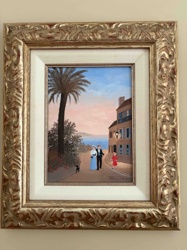
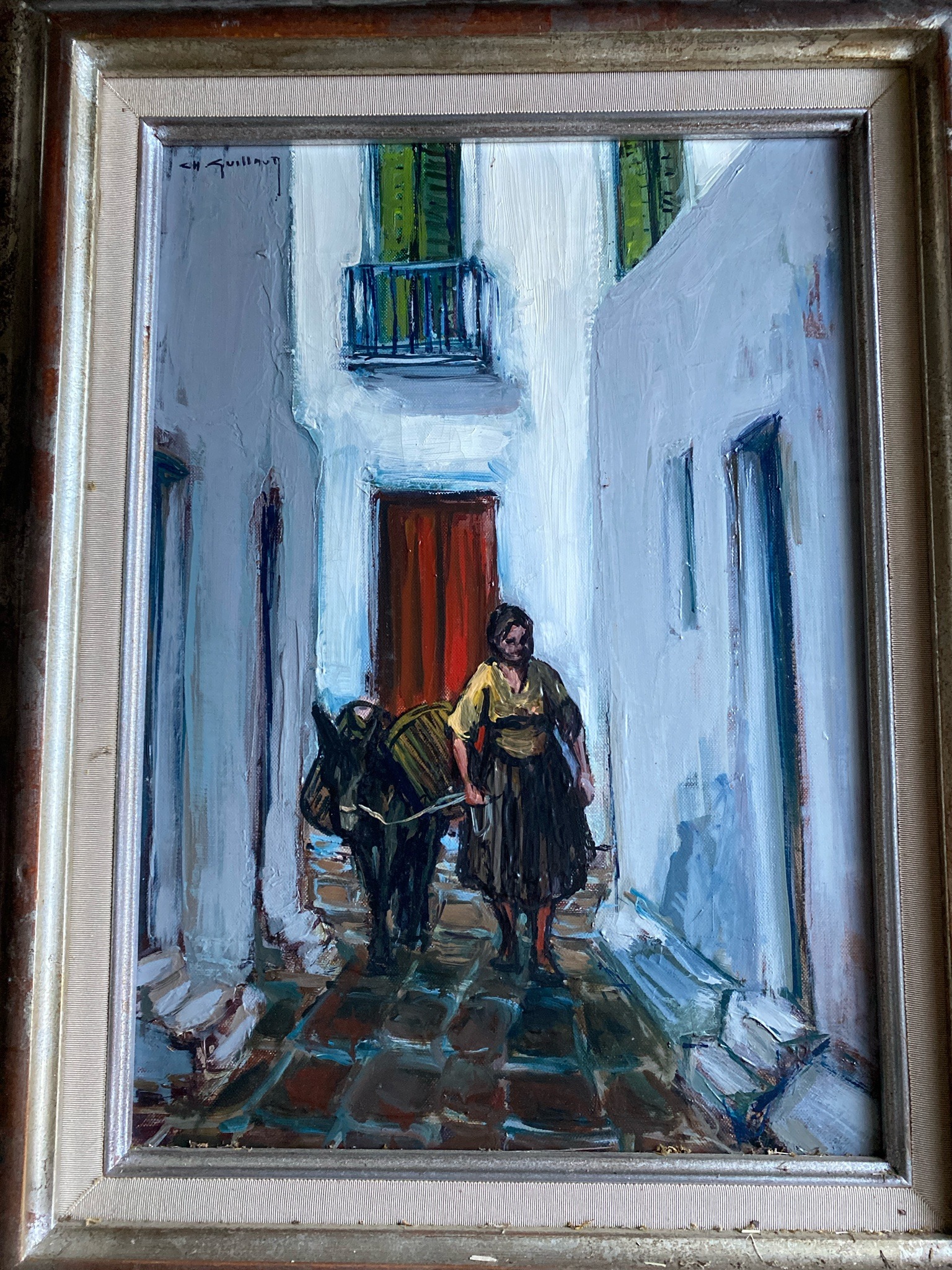
Post-Impressionist Style Oil Painting of a Mediterranean Village Scene signed 'Ch. Guillaud'

Fine Art - Painting

AI Estimated Value

·Not an official valuation·Verify before acting

$400 - $650

As of June 12, 2026

AI Item Analysis

·AI can make mistakes·Verify before acting
This is a mid-late 20th-century oil painting on canvas or canvas board depicting a traditional Mediterranean street scene, likely in Spain or Southern France. The composition features a woman in rustic attire leading a laden donkey or burro down a narrow cobblestone alleyway flanked by white-washed buildings. The artist utilizes a post-impressionist or expressionist style with visible, impasto brushwork that creates physical texture on the surface. Notable colors include stark whites and cool blues for the architectural structures, contrasted by a bold burnt-orange/red door in the center and green shutters above. The figure wears a yellow ochre blouse and a dark brown skirt. In the upper left corner, the work is signed 'Ch. Guillaud'. The painting is housed in a multi-layered vintage frame consisting of a silver-toned outer molding, a neutral textile-covered liner (possibly linen), and a silver inner fillet. Condition-wise, the painting surface appears generally stable, though there are visible particulates and debris collected at the bottom edge of the frame. The frame shows minor signs of age and patina with slight darkening to the silver finish and minor dirt accumulation on the fabric liner. The craftsmanship reflects a skilled hand with a strong grasp of perspective and light play, characteristic of European mid-century commercial or regional fine art.


AI Appraisal Report

·AI can make mistakes·Verify before acting
Upon visual examination of this oil on canvas board, I find the work to be a characteristic mid-20th-century European street scene attributed to Charles Guillaud. The composition demonstrates a strong command of light and shadow, particularly in the cool-toned architectural recesses which contrast effectively with the vibrant central orange door and the impasto-heavy 'burro' figure. The condition is fair to good; while the pigment appears stable with no immediate signs of craquelure or lifting, there is significant debris accumulation at the lower frame lip and localized yellowing of the varnish that suggests a professional cleaning would enhance its luminosity. The market for mid-century European regionalism remains steady but localized. Works by Guillaud and his contemporaries frequently appear in European auction houses and boutique galleries, typically fetching mid-range prices for decorative yet technically sound representational art. The rarity is low, as these scenes were popular for both the export and tourist markets of the 1960s, but the artist's specific handling of the Mediterranean light adds value. Limitations of Image-Based Appraisal: This valuation is based solely on digital images and must be considered a preliminary estimate. To definitively authenticate the work, I would require an in-person inspection to verify the canvas weave, identify any 'over-painting' via UV light examination, and inspect the reverse for gallery labels or provenance stamps. Scientific testing of pigment composition would only be necessary if the work were being attributed to a high-tier Master, which is not the case here. The presence of the original textile-matted frame, while showing patina, supports a mid-century origin.

Get your items appraised

Instant estimates of your treasures with AI-powered appraisals

Browse More Appraisals