AI Appraisal Estimate

AI-generated estimates · not official valuations

From the user

What was submitted

Photo and notes provided by the user — not generated by AI

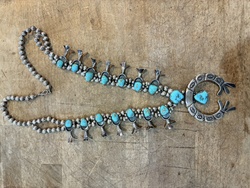
Submitted item photo
Submitted photo · June 4, 2026

User's notes

No additional notes provided.

AI analysis below

AI appraisal

AI analysis & estimate

AI-Generated · Verify before acting

Everything below is generated by AI for informational purposes only. AI can make mistakes — the AI may misidentify items or misattribute them (artist, maker, brand, designer, origin, era). This is not an official valuation and should not be used for insurance, sale, tax, estate, legal, or lending purposes — or any decision requiring a certified appraisal. It is not an authoritative claim about any person, brand, or rights holder — do not share or rely on it as a factual statement about a third party. Always consult qualified professionals before making financial decisions.

Read the full disclaimer

AI Identification

·Not independently authenticated·Verify before acting

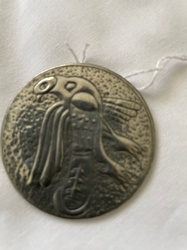
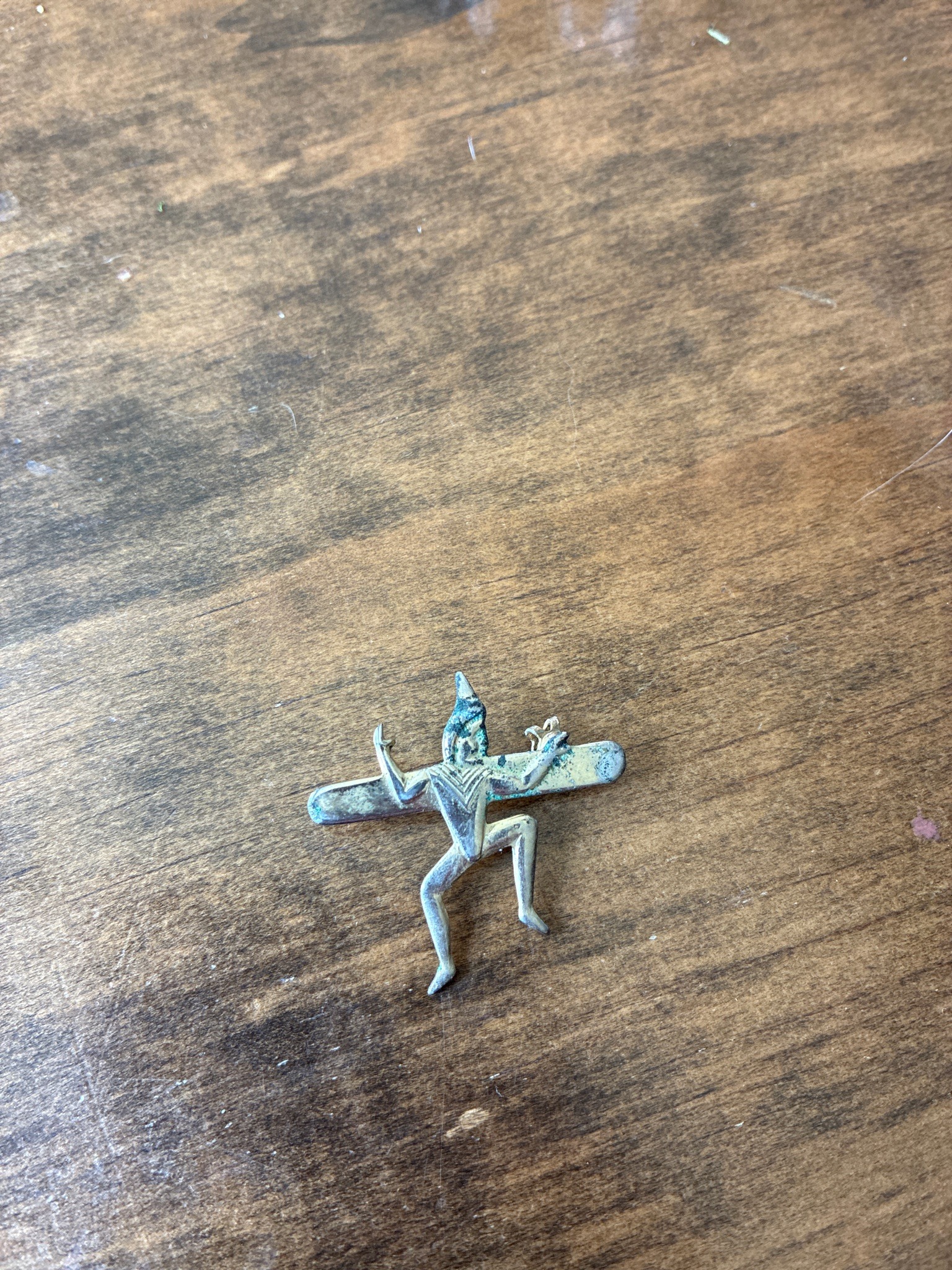
Vintage Navajo Hopi Katsina / Dancer Sterling Silver Pin-Brooch

Antique Native American Jewelry

AI Estimated Value

·Not an official valuation·Verify before acting

$175 - $250

As of June 4, 2026

AI Item Analysis

·AI can make mistakes·Verify before acting
This is a vintage Southwestern Native American style pin-brooch, likely of Navajo or Hopi origin, depicting a ceremonial dancer or Katsina figure in a dynamic, active pose. The piece is constructed from cast and hand-stamped sterling silver, featuring a central figure with a pointed headdress and a horizontal bar element across the torso. The piece exhibits heavy tarnish and a distinctive green oxidation (verdigris) concentrated around the head and upper body, indicating prolonged exposure to moisture and the presence of copper in the alloy. This thick patina suggests significant age, likely mid-20th century (circa 1940s-1960s). The anatomical rendering is stylized with angular lines and V-shaped stamping on the chest. While no visible maker's mark or '925' hallmark is seen in the top-down view, the craftsmanship shows traditional silversmithing techniques used in the American Southwest. The condition shows moderate surface wear and heavy oxidative residues that could be professionally cleaned or left to preserve the antique character. The legs are depicted in a staggered movement, adding a sense of ritualistic motion to the jewelry.
AI Appraisal Report

·AI can make mistakes·Verify before acting
Upon direct visual examination of this vintage Sterling Silver Katsina/Dancer pin, I find it to be a compelling example of mid-20th century Southwestern silversmithing. The piece exhibits characteristic Navajo or Hopi styling, utilizing sand-cast or hand-cut techniques common between 1940 and 1960. The heavy oxidation and visible verdigris (green copper carbonate) suggest significant age and a high copper content in the alloy, which is typical for 'coin silver' or early sterling pieces from this era. The fluid, staggered-leg pose captures a sense of ritualistic motion rarely seen in more modern, mass-produced souvenir items. The market for vintage Native American jewelry remains robust, with collectors prioritizing pieces that show 'honest wear' and traditional craftsmanship over polished contemporary works. However, the lack of a visible hallmark or '925' stamp—while not uncommon for the period—requires that the value be based on design and patina rather than a known master smith. Comparables for unsigned mid-century figural pins of this size and weight generally fall within the $150 to $300 range at auction. Critically, a definitive authentication cannot be completed via imagery alone. While the patina appears consistent with natural aging, a physical inspection is required to confirm the silver's fineness via acid or XRF testing. Furthermore, documentation of provenance or a maker’s mark hidden on the reverse would be necessary to elevate this piece to a 'fine art' category. The presence of verdigris is a double-edged sword; while it proves age, if left untreated, it can lead to pitting of the metal, which I have factored into this valuation. I recommend a professional stabilization to stop the oxidation process without stripping the historical tarnish.

Get your items appraised

Instant estimates of your treasures with AI-powered appraisals

Browse More Appraisals