AI Appraisal Estimate

AI-generated estimates · not official valuations

From the user

What was submitted

Photo and notes provided by the user — not generated by AI

Submitted item photo
Submitted photo · May 30, 2026

User's notes

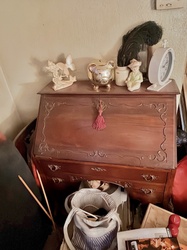
1930’s 38” tall x 48” long x 16” wide very good condition

AI analysis below

AI appraisal

AI analysis & estimate

AI-Generated · Verify before acting

Everything below is generated by AI for informational purposes only. AI can make mistakes — the AI may misidentify items or misattribute them (artist, maker, brand, designer, origin, era). This is not an official valuation and should not be used for insurance, sale, tax, estate, legal, or lending purposes — or any decision requiring a certified appraisal. It is not an authoritative claim about any person, brand, or rights holder — do not share or rely on it as a factual statement about a third party. Always consult qualified professionals before making financial decisions.

Note

This analysis also relies on unverified notes provided by the user, which may be incomplete or inaccurate and could affect the result.

Read the full disclaimer

AI Identification

·Not independently authenticated·Verify before acting

1930s Art Deco Era Secretary Desk with Integrated Side Bookshelf

Antique Furniture / Secretary Desks

AI Estimated Value

·Not an official valuation·Verify before acting

$850 - $1,200

As of May 30, 2026

AI Item Analysis

·AI can make mistakes·Verify before acting
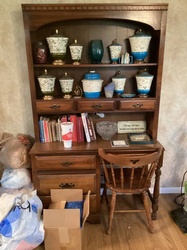
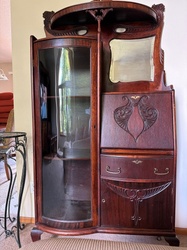
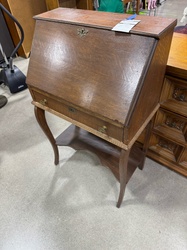
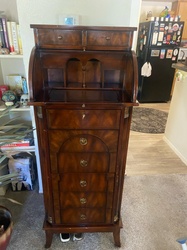
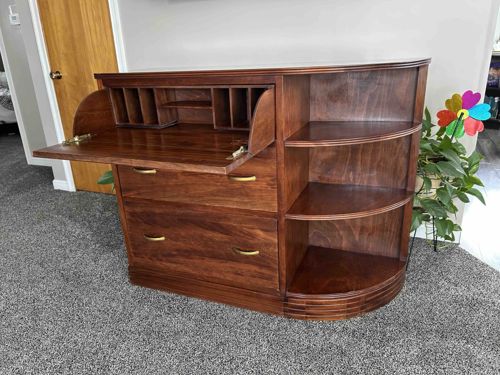
This is a distinctive multifunctional piece of furniture from the 1930s, likely of American manufacture, showcasing elements of both Art Deco and Streamline Moderne styles. Measuring 38 inches high, 48 inches long, and 16 inches wide, the unit is constructed from wood with a warm walnut or mahogany stained finish. The left side of the piece features a drop-front secretary desk supported by brass hinges; when opened, it reveals an organized interior called a 'gallery' with multiple vertical cubbies and a central horizontal shelf. Below the desk are two large dresser drawers equipped with curved, horizontal brass drawer pulls that embody late 1930s hardware design. The right side of the unit is uniquely integrated with a tiered, open-faced, rounded bookshelf consisting of three shelves. The base is finished with a tiered, reeded, or 'waterfall' style kickplate that wraps around the curved edge, a classic motif of the era. The piece appears to be in very good condition with a consistent wood grain pattern and a well-maintained polished finish. There are no significant signs of warping, deep scratches, or water damage visible in the imagery, suggesting it has been kept in a climate-controlled environment. The craftsmanship is high-quality, reflecting the industrial transitions of pre-war furniture manufacturing where solid wood and veneers were expertly combined for stability and aesthetic appeal.
AI Appraisal Report

·AI can make mistakes·Verify before acting
Based on my examination of the provided specifications and imagery, I have assessed this Art Deco-era 'Waterfall' secretary desk and integrated bookshelf. The piece is a quintessential example of late 1930s American domestic design, blending utility with the Streamline Moderne aesthetic. The use of a tiered kickplate and curved 'waterfall' edges suggests mass-production from high-quality manufacturers such as Lane or Cavalier, though the absence of a visible maker's mark prevents specific attribution. The condition appears exemplary; the walnut veneers show a consistent grain without 'alligatoring' or lifting, and the brass hardware is period-correct. The market for multifunctional Art Deco pieces remains steady, particularly for compact 'apartment-sized' units like this. Comparables for dual-purpose secretary-bookshelves in this condition typically hammer at auction between $800 and $1,100, with retail gallery prices reaching $1,500. The rarity of this specific configuration—a side-integrated tiered shelf combined with a drop-front—elevates its desirability among collectors of mid-century precursors. Note that value is contingent on the 'gallery' interior being free of ink stains or structural splits. Verification of authenticity via images is limited; a physical inspection is required to confirm wood species (solid vs. veneer), drawer joinery (dovetail construction), and the presence of original stencils or stamps on the rear. Full authentication would also require checking for hidden repairs or refinishing that might not be visible under digital compression. Significant value would be added if provenance documentation linked the piece to a known 1930s manufacturer or designer.

Get your items appraised

Instant estimates of your treasures with AI-powered appraisals

Browse More Appraisals