Amethyst Hand-Blown Art Glass Gourd Vase
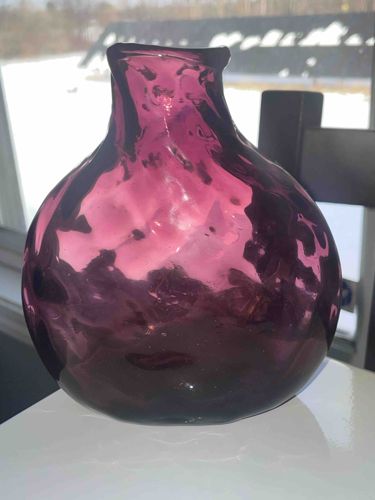
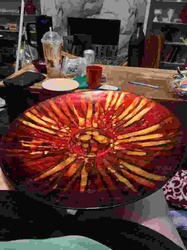
This is a mid-sized decorative vase crafted from translucent amethyst or plum-colored art glass. The piece features a globular, bulbous body tapering into a short, slightly irregular neck, reminiscent of a natural gourd or pomegranate shape. Its construction shows clear signs of being hand-blown, characterized by a dimpled or 'hammered' surface texture that creates localized variations in glass thickness and light refraction. The color depth fluctuates from a deep violet at the base and neck to a lighter lavender where the glass is thinner across the body. The rim appears to be flame-polished with a soft, organic unevenness typical of studio art glass. In terms of condition, the exterior surface exhibits a high gloss with no immediate evidence of major chips or structural cracks, though micro-scratches consistent with desktop display are likely present on the weighted base. This style of organic, textured glass was popularized in the mid-to-late 20th century by studio glass movements and companies like Blenko or various European glassworks. The craftsmanship is evident in the uniform distribution of the dimpled pattern and the clarity of the amethyst tint, which lacks the sediment or internal bubbles often found in lower-quality mass-produced glass.
AI-Generated Appraisal Disclaimer
Estimated Value
$125 - $225
Basic Information
Category
Art Glass / Decorative Collectibles
Appraised On
January 18, 2026
Estimated Value
$125 - $225
Item Description
This is a mid-sized decorative vase crafted from translucent amethyst or plum-colored art glass. The piece features a globular, bulbous body tapering into a short, slightly irregular neck, reminiscent of a natural gourd or pomegranate shape. Its construction shows clear signs of being hand-blown, characterized by a dimpled or 'hammered' surface texture that creates localized variations in glass thickness and light refraction. The color depth fluctuates from a deep violet at the base and neck to a lighter lavender where the glass is thinner across the body. The rim appears to be flame-polished with a soft, organic unevenness typical of studio art glass. In terms of condition, the exterior surface exhibits a high gloss with no immediate evidence of major chips or structural cracks, though micro-scratches consistent with desktop display are likely present on the weighted base. This style of organic, textured glass was popularized in the mid-to-late 20th century by studio glass movements and companies like Blenko or various European glassworks. The craftsmanship is evident in the uniform distribution of the dimpled pattern and the clarity of the amethyst tint, which lacks the sediment or internal bubbles often found in lower-quality mass-produced glass.
Related Tags
Get Your Items Appraised
Instant estimates of your treasures with AI-powered instant appraisals