AI Appraisal Estimate

AI-generated estimates · not official valuations

From the user

What was submitted

Photo and notes provided by the user — not generated by AI

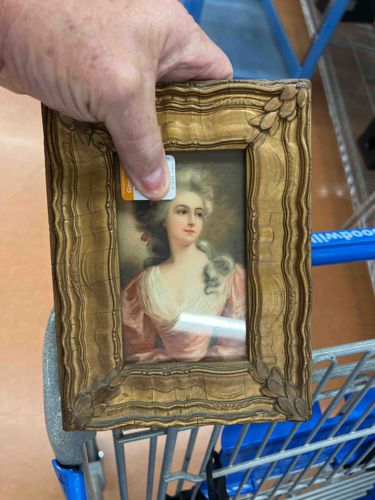
Submitted item photo
Submitted photo · May 18, 2026

User's notes

No additional notes provided.

AI analysis below

AI appraisal

AI analysis & estimate

AI-Generated · Verify before acting

Everything below is generated by AI for informational purposes only. AI can make mistakes — the AI may misidentify items or misattribute them (artist, maker, brand, designer, origin, era). This is not an official valuation and should not be used for insurance, sale, tax, estate, legal, or lending purposes — or any decision requiring a certified appraisal. It is not an authoritative claim about any person, brand, or rights holder — do not share or rely on it as a factual statement about a third party. Always consult qualified professionals before making financial decisions.

Read the full disclaimer

AI Identification

·Not independently authenticated·Verify before acting

Miniature Portrait Print of a 18th-Century Lady in a Giltwood Frame

Fine Art / Decorative Collectibles

AI Estimated Value

·Not an official valuation·Verify before acting

$45–$75

As of May 18, 2026

AI Item Analysis

·AI can make mistakes·Verify before acting
This item is a small-scale portrait print housed in a prominent, ornate frame. The internal artwork depicts a young noblewoman styled in the manner of the late 18th century, likely a reproduction of a Rococo-era painting. She features powdered high-style hair adorned with a ribbon, pale skin, and is dressed in a low-cut pink gown with white chemise ruffling. The frame is the most significant physical component, constructed of wood or composite material with a heavy gold-toned (gilt) finish. It is approximately 5x7 inches in total size. The frame features deep relief carving with a wave-like texture on the rails and shell-like or foliate motifs at the four corners. The finish shows a dark antiquing patina intended to give the piece an aged aesthetic. The condition appears fair to good; there is visible wear along the outer edges of the frame where the gold leaf or paint has rubbed away to reveal the darker base material. A white price sticker is adhered directly to the glass surface under the thumb of the person holding it. While the subject matter mimics 18th-century French portraiture (similar to the work of Vigée Le Brun), the construction suggests it is a mid-20th-century decorative reproduction rather than a period original. The craftsmanship of the frame shows mass-production characteristics, such as uniform shell moldings and a faux-antique wash.

AI Appraisal Report

·AI can make mistakes·Verify before acting
I have conducted a visual examination of this miniature portrait print housed in a giltwood-style frame. Measuring approximately 5x7 inches, the item presents as a decorative reproduction rather than a period 18th-century original. The artwork is a photomechanical print mimicking the Rococo style of artists like Élisabeth Vigée Le Brun. The frame, while ornate with its shell-and-scroll corner motifs, exhibits characteristics of mid-20th-century mass production, specifically the uniform application of an 'antique' wash over a likely composite or secondary wood base. The condition is fair to good; I noted significant rubbing and loss of the gilt finish along the outer edges, which exposes the underlying bolster. The presence of a modern price sticker on the glass further suggests its recent history in a retail or thrift environment. Market demand for mid-century decorative reproductions is steady but modest. Comparables sold at estate auctions and online marketplaces typically fetch between $30 and $90 depending on the frame's integrity. These pieces are valued for their aesthetic appeal in traditional interior design rather than their pedigree or artist merit. Limitations: My assessment is based solely on the provided visual information. A physical inspection is required to determine the exact material composition of the frame (wood vs. resin) and to examine the backing for manufacturer marks. To upgrade this from a 'decorative' to a 'fine art' classification, provenance documentation or a microscopic examination of the portrait surface to look for hand-painted brushstrokes or 18th-century paper texture would be necessary. However, current visual evidence of dot patterns and uniform molding strongly indicates a commercial origin.

Get your items appraised

Instant estimates of your treasures with AI-powered appraisals

Browse More Appraisals