AI estimate as of August 9, 2025 · verify with a professional before acting
AI-Generated · Verify before acting
Everything on this page is generated by AI for informational purposes only. AI can make mistakes — the AI may misidentify items or misattribute them (artist, maker, brand, designer, origin, era). This is not an official valuation and should not be used for insurance, sale, tax, estate, legal, or lending purposes — or any decision requiring a certified appraisal. It is not an authoritative claim about any person, brand, or rights holder — do not share or rely on it as a factual statement about a third party. Always consult qualified professionals before making financial decisions.
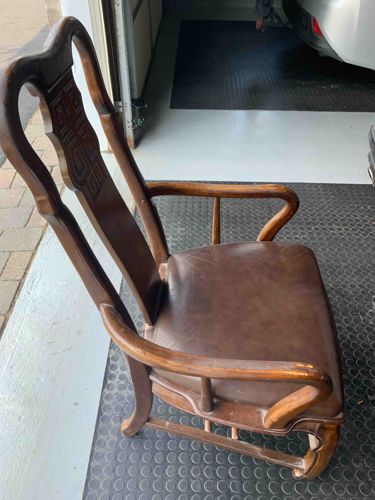
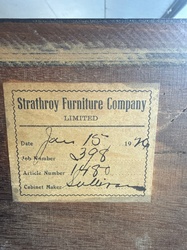
This appears to be a vintage armchair or lounge chair, likely of Asian or Chinoiserie influence, given the carved details on the chair back. The chair is constructed primarily from dark wood, possibly mahogany, walnut, or a similarly dense hardwood, exhibiting a rich, deep brown hue with visible grain patterns. The overall form suggests a relaxed seating posture with slightly reclined back. The backrest features a central carved panel with intricate, geometric or stylized symbols that resemble Chinese characters or traditional patterns, indicative of fine craftsmanship and attention to detail. This carving is a significant distinguishing element. The arms are curved and follow a graceful, organic line, blending into the front supports, which are also subtly carved at the base. The seat is upholstered with a thick, possibly padded, leather or faux-leather cushion in a dark brown color, showing some signs of wear including creases and a light sheen from use, suggesting a comfortable, lived-in feel. There are visible scuffs and finish loss on the arms and legs, particularly at points of frequent contact, consistent with age and use. The construction appears to be solid, utilizing mortise and tenon or similar robust joinery. The design elements, especially the carving and the overall silhouette, point towards a late 19th or early 20th-century period, possibly dating from the Arts and Crafts movement or a period influenced by Eastern aesthetics. No specific maker's marks or signatures are discernible from the image, but the quality of the carving and joinery suggests a well-made piece of furniture.
AI Appraisal Report
Upon visual examination of this carved wooden armchair, I assess it to be a compelling piece, likely dating to the early 20th century, circa 1910-1930. The design exhibits a strong Chinoiserie or Asian influence, particularly evident in the intricately carved back splat featuring stylized traditional motifs. The dark-stained hardwood, possibly mahogany or a similar dense wood, and robust construction suggest skilled craftsmanship. The leather seat appears to be original or an older, well-done replacement, showing age-appropriate wear with creasing and patina, which contributes to its character.
The condition is fair to good, with visible scuffs, scratches, and finish loss on the arms and legs, consistent with a century of use. These signs of wear are expected and do not drastically detract from the value for a piece of this nature; however, any structural looseness in the joints would negatively impact it.
Market demand exists for well-made, decorative accent chairs with unique carvings. Similar Chinoiserie-style or Arts and Crafts-era armchairs in this condition typically sell in the $300 to $600 range at auctions and antique marketplaces. The primary value driver is the decorative quality of the carving. Without a discernible maker's mark, its value is tied more to its aesthetic appeal than to a specific high-end manufacturer.
It is crucial to note the limitations of a photo-based appraisal. A physical inspection is required to confirm the type of wood, assess the integrity of the joinery, and look for hidden maker's marks or labels. Without provenance, its specific history is unknown. Full authentication would benefit from an in-person examination to verify originality and rule out it being a later reproduction.