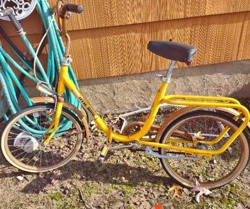
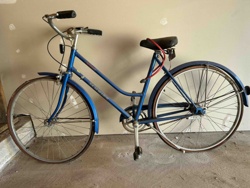
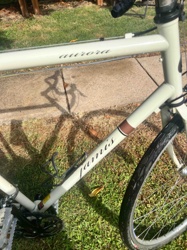
These notes were written by the person who submitted this item. Appraiser.AI has not verified them, and the AI's identification and estimate may rely on them.
AI Estimated Value
Not an official valuation
$150-$250
AI estimate as of September 1, 2025 · verify with a professional before acting
AI-Generated · Verify before acting
Everything on this page is generated by AI for informational purposes only. AI can make mistakes — the AI may misidentify items or misattribute them (artist, maker, brand, designer, origin, era). This is not an official valuation and should not be used for insurance, sale, tax, estate, legal, or lending purposes — or any decision requiring a certified appraisal. It is not an authoritative claim about any person, brand, or rights holder — do not share or rely on it as a factual statement about a third party. Always consult qualified professionals before making financial decisions.
This analysis also relies on unverified notes provided by the user, which may be incomplete or inaccurate and could affect the result.
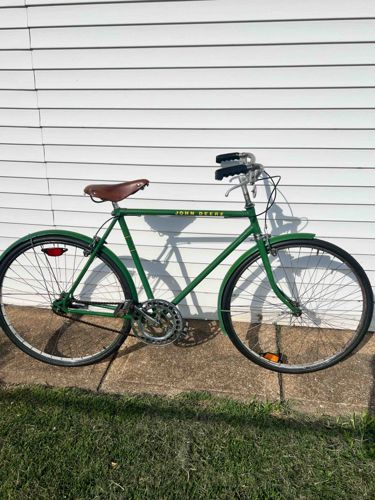
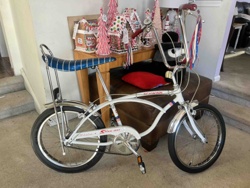
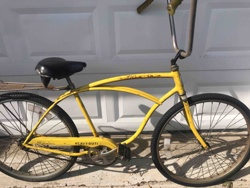
This is a vintage-style John Deere branded bicycle, characterized by its distinctive dark green frame, reminiscent of the iconic agricultural equipment color scheme. The frame appears to be made of steel, given its classic geometry and relative thickness, and features a step-through design, often associated with comfort or 'cruiser' style bikes, though the handlebar type suggests a more upright, potentially commuter-oriented riding position. The bike is equipped with front and rear fenders, which are also green, providing protection from splashes. It has a single-speed or possibly a very simple geared drivetrain, indicated by the relatively simple chainring and rear hub arrangement. The chainring is silver-colored and has a classic tooth pattern. The wheels are spoked with silver rims and appear to have standard road or multi-surface tires in black. A notable feature is the brown, leather-look saddle, which provides a contrasting and aesthetically pleasing element. The handlebars are chrome or silver colored, with black rubber grips. There is a visible red reflector on the rear and an orange reflector on the front pedal, indicating compliance with safety standards. The 'JOHN DEERE' branding is clearly visible in yellow lettering on the horizontal crossbar of the frame. The overall condition appears good for its age, with some visible wear consistent with use, but no major damage or rust observable from the image. The paint finish seems generally intact, and components like the pedals and chain appear functional. The bike appears to be a promotional or nostalgia item, likely manufactured in the late 20th or early 21st century, designed to appeal to enthusiasts of the John Deere brand. The craftsmanship aligns with mass-produced bicycles, focusing on durability and brand aesthetics.
AI Appraisal Report
Based on my visual examination of this John Deere branded bicycle, I assess its condition as good for its apparent age, consistent with light-to-moderate use. The dark green paint, characteristic of the John Deere aesthetic, appears largely intact, with no significant rust or major damage visible. The step-through steel frame, fenders, and components like the chainring and pedals appear functional. The clear 'JOHN DEERE' branding, in yellow lettering, strongly indicates its authenticity as a licensed or promotional item, rather than a counterfeit. The brown leather-look saddle and chrome handlebars add to its vintage appeal.
In terms of market conditions, similar mass-produced, brand-specific cruiser or nostalgia bicycles typically fall into a modest value range. While the John Deere branding creates a niche appeal, these bikes are not rare, nor are they high-performance cycling equipment. Comparables include other branded promotional bikes or entry-level cruiser bicycles. Demand is driven primarily by John Deere enthusiasts or those seeking a casual, unique ride. Its single-speed or minimal gearing, while durable, does not command a premium.
Factors significantly impacting its value include its good cosmetic condition and the strong brand association. Without the John Deere branding, its value would be considerably lower. The most significant limitation in this appraisal is the lack of physical examination. While the branding appears authentic, a full authentication would require inspecting details like serial numbers, component stamps, and verifying the quality of the branding application to rule out aftermarket customization. An in-person inspection would also allow for a thorough assessment of mechanical integrity (e.g., bearings, brake function, wheel true) and detection of any subtle frame damage or rust not visible in images.