Japanese Meiji Style Satsuma Moriage Immortal Vase
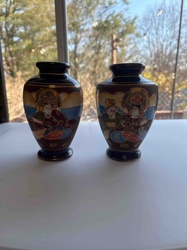
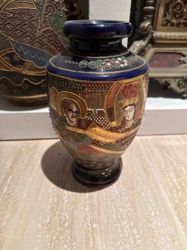
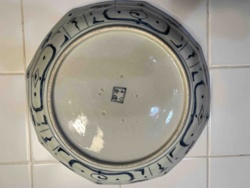
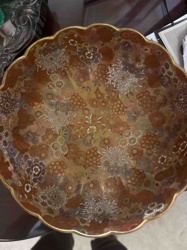
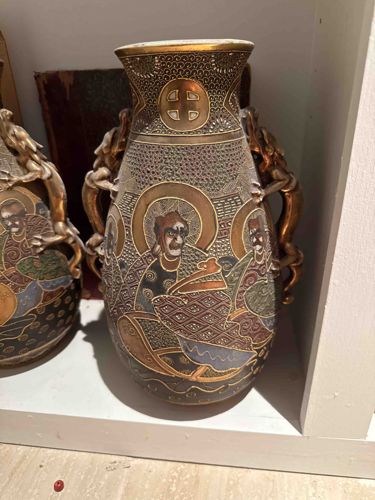
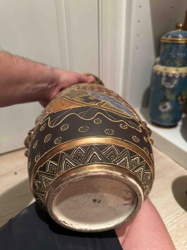
This is a highly decorative Japanese Satsuma vase, likely dating from the late Meiji period to the early Taisho era (late 19th to early 20th century). The vase features a classic ovoid body with a flared rim and is notably adorned with two figural dragon handles that appear to be hand-sculpted and applied, finished in a matte gold or bronzed gilding. The central motif depicts Buddhist Arhats or Immortals, rendered in thick, raised moriage polychrome enamels. These figures are characterized by expressive, hand-painted faces and elaborate robes featuring geometric and floral patterns. The background is covered in a dense 'millefleurs' or 'thousand butterfly' style repeating pattern using the 'dot' moriage technique, creating a rich tactile texture. A circular crest, possibly a mon, is featured on the neck. The color palette is dominated by earthy tones including iron red, forest green, and mustard yellow, heavily accented with gold leaf. While the overall structure appears intact, there is visible wear to the gilding on the rim and handles, along with a fine network of craquelure across the glaze, which is characteristic of authentic earthenware from this period. No makers mark is visible in the current view, but the craftsmanship suggests a mid-to-high quality production intended for the Western export market.
AI-Generated Appraisal Disclaimer
Estimated Value
$400 - $600
Basic Information
Category
Asian Antiques - Japanese Ceramics
Appraised On
February 26, 2026
Estimated Value
$400 - $600
Item Description
This is a highly decorative Japanese Satsuma vase, likely dating from the late Meiji period to the early Taisho era (late 19th to early 20th century). The vase features a classic ovoid body with a flared rim and is notably adorned with two figural dragon handles that appear to be hand-sculpted and applied, finished in a matte gold or bronzed gilding. The central motif depicts Buddhist Arhats or Immortals, rendered in thick, raised moriage polychrome enamels. These figures are characterized by expressive, hand-painted faces and elaborate robes featuring geometric and floral patterns. The background is covered in a dense 'millefleurs' or 'thousand butterfly' style repeating pattern using the 'dot' moriage technique, creating a rich tactile texture. A circular crest, possibly a mon, is featured on the neck. The color palette is dominated by earthy tones including iron red, forest green, and mustard yellow, heavily accented with gold leaf. While the overall structure appears intact, there is visible wear to the gilding on the rim and handles, along with a fine network of craquelure across the glaze, which is characteristic of authentic earthenware from this period. No makers mark is visible in the current view, but the craftsmanship suggests a mid-to-high quality production intended for the Western export market.
Related Tags
Get Your Items Appraised
Instant estimates of your treasures with AI-powered instant appraisals