Edo Period Kusazoshi (Japanese Illustrated Woodblock Printed Book)
Antiquarian Books and Manuscripts

Edo Period Kusazoshi (Japanese Illustrated Woodblock Printed Book)

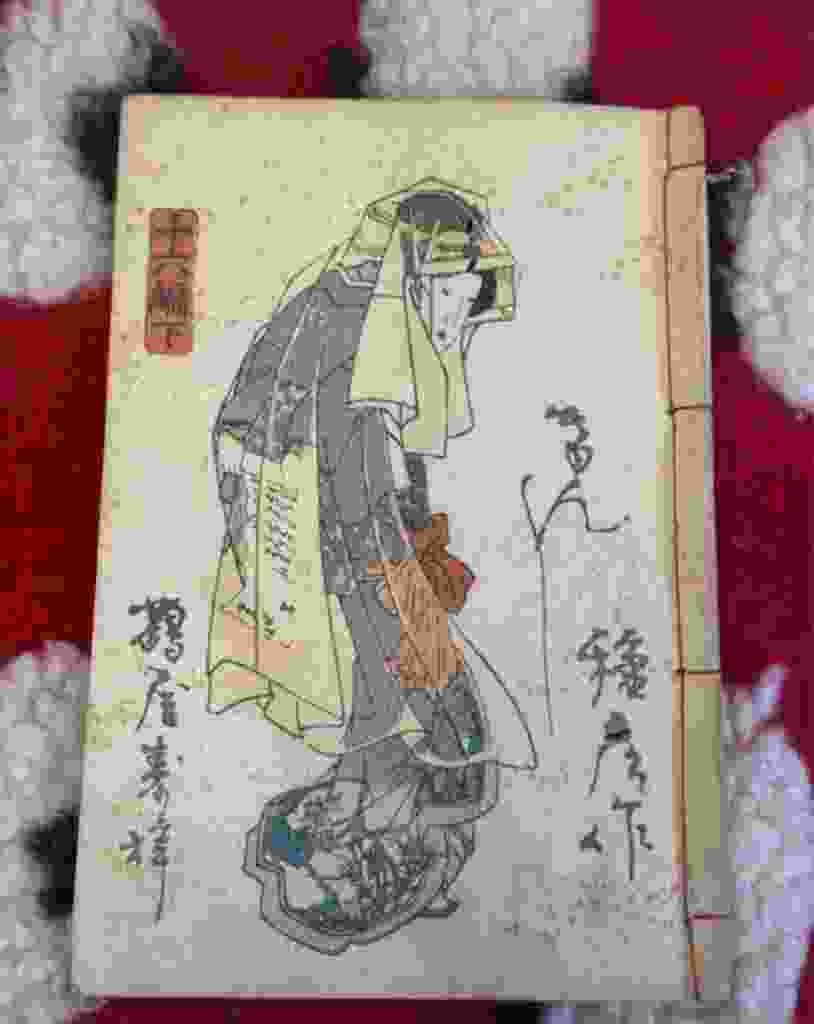
This is a 19th-century Japanese woodblock-printed book, likely belonging to the genre of 'kusazoshi' or 'gōkan', popular illustrated fiction of the late Edo period. The item features a vertical rectangular format with traditional 'fukuro-toji' (pouch binding) where pages are folded and sewn along the spine. The cover displays a polychrome woodblock illustration of a figure, possibly a 'bijin' (beautiful woman) or a theatrical character, dressed in elaborate layered robes with a distinctive yellow and green head covering. The color palette includes muted earthy tones, black, and light yellow, which have softened over time. Notable calligraphic inscriptions and an orange publisher or seal mark are visible on the left and right margins of the cover. Construction utilizes traditional handmade 'washi' paper, characterized by its fibrous texture and durability. Condition-wise, the book shows significant signs of age-related wear (patina), including minor foxing, surface soiling, and rounding of the paper corners. The binding cords appear intact, though there is visible fraying at the edges. Such books were mass-produced for the urban population of Edo (modern-day Tokyo) and represent high-quality craftsmanship in commercial printing, specifically the integration of text and image by skilled carvers and printers. The style suggests an origin between 1800 and 1860, reflecting the mature period of Ukiyo-e aesthetic influence.
Estimated Value

$450 - $700

Basic Information

Category

Antiquarian Books and Manuscripts

Appraised On

April 10, 2026

Estimated Value

$450 - $700

Additional Details Provided By Owner

User Provided Information

libro o comic japones 1800

Item Description

This is a 19th-century Japanese woodblock-printed book, likely belonging to the genre of 'kusazoshi' or 'gōkan', popular illustrated fiction of the late Edo period. The item features a vertical rectangular format with traditional 'fukuro-toji' (pouch binding) where pages are folded and sewn along the spine. The cover displays a polychrome woodblock illustration of a figure, possibly a 'bijin' (beautiful woman) or a theatrical character, dressed in elaborate layered robes with a distinctive yellow and green head covering. The color palette includes muted earthy tones, black, and light yellow, which have softened over time. Notable calligraphic inscriptions and an orange publisher or seal mark are visible on the left and right margins of the cover. Construction utilizes traditional handmade 'washi' paper, characterized by its fibrous texture and durability. Condition-wise, the book shows significant signs of age-related wear (patina), including minor foxing, surface soiling, and rounding of the paper corners. The binding cords appear intact, though there is visible fraying at the edges. Such books were mass-produced for the urban population of Edo (modern-day Tokyo) and represent high-quality craftsmanship in commercial printing, specifically the integration of text and image by skilled carvers and printers. The style suggests an origin between 1800 and 1860, reflecting the mature period of Ukiyo-e aesthetic influence.
Get Your Items Appraised

Instant estimates of your treasures with AI-powered instant appraisals

Browse More Appraisals