AI estimate as of November 30, 2025 · verify with a professional before acting
AI-Generated · Verify before acting
Everything on this page is generated by AI for informational purposes only. AI can make mistakes — the AI may misidentify items or misattribute them (artist, maker, brand, designer, origin, era). This is not an official valuation and should not be used for insurance, sale, tax, estate, legal, or lending purposes — or any decision requiring a certified appraisal. It is not an authoritative claim about any person, brand, or rights holder — do not share or rely on it as a factual statement about a third party. Always consult qualified professionals before making financial decisions.
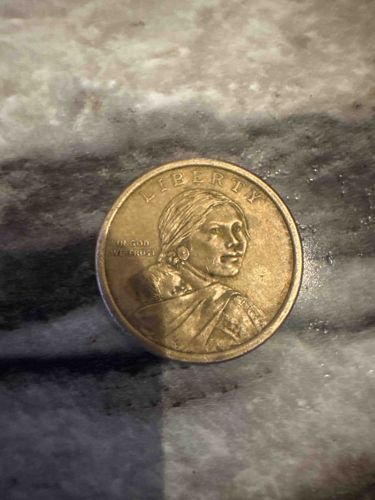
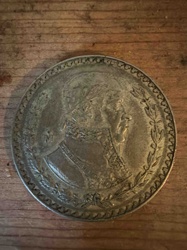
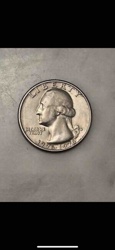
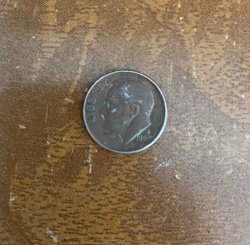
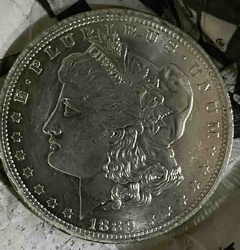
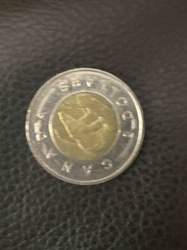
The item is a United States Sacagawea dollar coin, specifically showing the obverse (front) side. The coin is circular and appears to be made of a golden-colored manganese brass alloy, characteristic of these dollar coins. The primary design features the portrait of Sacagawea, a Shoshone woman, looking to the right, carrying her infant son, Jean Baptiste Charbonneau, in a papoose on her back. The word "LIBERTY" is prominently arched across the top edge of the coin, above Sacagawea's head. To the left of Sacagawea's face, the motto "IN GOD WE TRUST" is inscribed vertically. The coin exhibits a circulated condition, as evidenced by some loss of luster and slight wear on the raised features, though the details of Sacagawea's face, hair, and the infant are still clearly discernible. There are no major scratches, dents, or significant damage visible that would suggest heavy abuse, but the surface shows general smoothing consistent with being handled and passed through commerce. The background has a slightly mottled appearance due to age and handling, and possibly the surface it rests upon in the image. Although the date is not visible on this side (it's typically on the edge or reverse), the design indicates it is from the Sacagawea dollar series, which began in 2000. The craftsmanship is consistent with U.S. Mint production standards for circulating coinage. The coin's overall appearance suggests it is a regular issue, not a proof or special strike, given the lack of mirror-like fields or frosted devices.
AI Appraisal Report
Based on my visual examination of the provided image of the Sacagawea Dollar Coin (Obverse), I can confirm its authenticity as a genuine United States Sacagawea dollar. The design elements, including the portrait of Sacagawea, the infante Jean Baptiste, and the inscriptions 'LIBERTY' and 'IN GOD WE TRUST,' are consistent with U.S. Mint production. The coin appears to be made of the characteristic golden-colored manganese brass alloy. Its condition is circulated, exhibiting some loss of original luster and slight wear on the highest points of the design, such as parts of Sacagawea's hair and the infant's head. However, all major details remain clear. There are no signs of significant damage like deep scratches or dings that would detract from its value beyond normal circulation wear.
From a market perspective, these coins are very common. Millions were minted, and while popular in their early years, they did not widely replace the dollar bill in commerce. Consequently, demand is generally low among collectors for common issues in circulated condition, as they are still readily available through banks at face value or slightly above. This particular coin does not show any indications of being a rare variety, error coin, or an uncirculated specimen, which would significantly increase its value. Its primary value is its face value.
Factors impacting its low value include its circulated condition and high mintage numbers. Without seeing the date, mint mark (which would typically be on the reverse or edge for some years), and condition of the reverse, a precise assessment of any potential rarity is impossible. For a full authentication, particularly for uncirculated examples or potential errors, a physical in-hand examination would be crucial to assess luster, exact wear points under magnification, and confirm exact date and mint mark. Scientific testing could confirm alloy composition if there were any doubts about authenticity, but based on the image, it presents as a standard issue.