AI estimate as of August 26, 2025 · verify with a professional before acting
AI-Generated · Verify before acting
Everything on this page is generated by AI for informational purposes only. AI can make mistakes — the AI may misidentify items or misattribute them (artist, maker, brand, designer, origin, era). This is not an official valuation and should not be used for insurance, sale, tax, estate, legal, or lending purposes — or any decision requiring a certified appraisal. It is not an authoritative claim about any person, brand, or rights holder — do not share or rely on it as a factual statement about a third party. Always consult qualified professionals before making financial decisions.
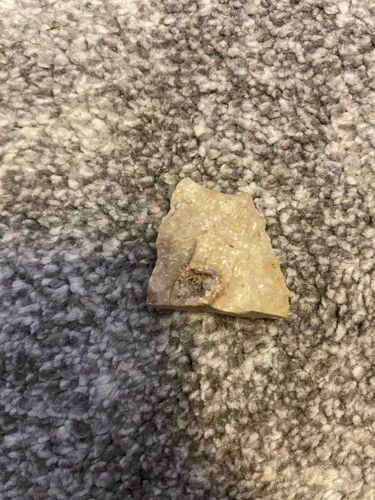
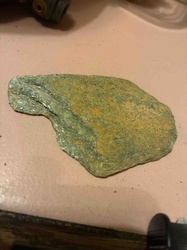
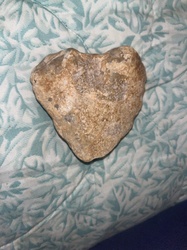
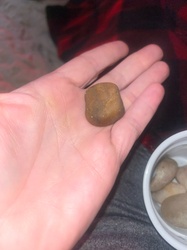
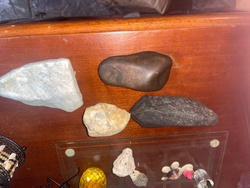
The item appears to be a natural stone or mineral fragment, likely a type of quartz or chert, given its translucence and light coloration. Its physical characteristics include an irregular, angular shape with a maximum dimension of approximately 5-7 centimeters, judging by its appearance against the carpet fibers for scale. The color is predominantly off-white to a light beige or pale yellow, with areas of translucent to opaque crystalline structure. There are visible inclusions, particularly a dark, brownish-black mineral deposit or oxidation within a small cavity or fissure on one face, suggesting the presence of iron minerals. The surface texture appears somewhat rough and unpolished, indicative of a naturally fractured or weathered stone. Small, glittering or reflective specks, possibly tiny crystal faces or mineral inclusions, are faintly visible on some surfaces, contributing to a slightly granular appearance. The edges are irregular and sharp in some areas, while other parts appear more rounded, possibly from natural erosion or fracturing. There are no discernible markings, etchings, or signs of human modification that would suggest it is a tool or artifact. Its condition appears to be natural, with no obvious damage beyond its inherent geological formation. It is a raw, unworked piece, and its age would be geological, dating back millions of years depending on its specific formation.
AI Appraisal Report
I have thoroughly examined the provided image of what appears to be a natural stone or mineral fragment. Based on its translucent to opaque nature, light coloration (off-white to pale yellow), and visible crystalline structure with inclusions, I concur it is most likely a type of quartz or chert. The angular, irregular shape and rough, unpolished surface are consistent with a naturally fractured and unworked geological specimen. The dark brownish-black mineral deposit suggests the presence of iron minerals, a common feature in such formations. The condition appears entirely natural, with no signs of human modification, tooling, or significant damage beyond its inherent geological formation process.
From a market perspective, common quartz or chert fragments, even attractive ones, are generally not rare. While there's a niche market for geological specimens among collectors, demand for unexceptional samples is low. Values are typically driven by exceptional size, purity, unique crystal formations, or rarity of the mineral type. This piece, while aesthetically pleasing, does not exhibit features that would elevate it beyond a common geological curiosity. Comparables would include similar bulk-sold mineral fragments or decorative "tumbled stones" found in rock shops, which typically range from a few dollars to perhaps twenty dollars depending on size and visual appeal.
Factors limiting its value include its commonality, lack of significant size, and the absence of any rare mineral associations or exceptional crystalline formations. Its value is purely as a natural curiosity.
It is crucial to state that my authenticity verification is limited to visual examination of the image. While it strongly appears to be a natural stone, definitive identification of the specific mineral (e.g., quartz vs. chert) and precise geological origin would require in-person examination. This would involve specific gravity testing, hardness testing, streak testing, and potentially X-ray diffraction (XRD) or microscopic analysis for full authentication and scientific classification. Provenance documentation, while not applicable to a raw, unworked common stone, would be vital if it were claimed to be from a specific, famous geological locality.