AI Appraisal Estimate

AI-generated estimates · not official valuations

From the user

What was submitted

Photo and notes provided by the user — not generated by AI

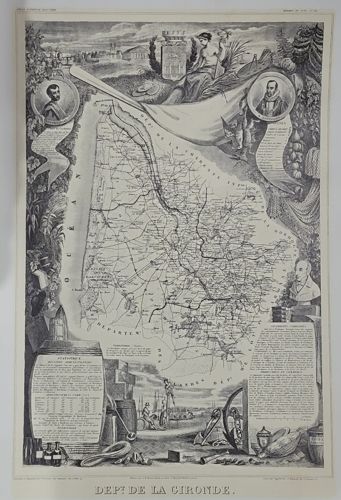
Submitted item photo
Submitted photo · June 16, 2026

User's notes

No additional notes provided.

AI analysis below

AI appraisal

AI analysis & estimate

AI-Generated · Verify before acting

Everything below is generated by AI for informational purposes only. AI can make mistakes — the AI may misidentify items or misattribute them (artist, maker, brand, designer, origin, era). This is not an official valuation and should not be used for insurance, sale, tax, estate, legal, or lending purposes — or any decision requiring a certified appraisal. It is not an authoritative claim about any person, brand, or rights holder — do not share or rely on it as a factual statement about a third party. Always consult qualified professionals before making financial decisions.

Read the full disclaimer

AI Identification

·Not independently authenticated·Verify before acting

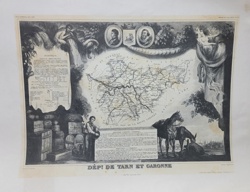
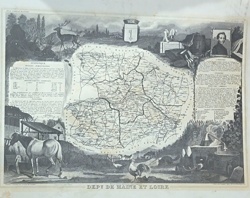
Victor Levasseur's Cartographic Engraving of the Departement de la Gironde

Antique Maps and Prints

AI Estimated Value

·Not an official valuation·Verify before acting

$150 - $250

As of June 16, 2026

AI Item Analysis

·AI can make mistakes·Verify before acting
This is a detailed black-and-white steel engraving of the French department of Gironde, part of Victor Levasseur's influential 'Atlas National de la France Illustre,' typically dated circa 1845 to 1852. The central feature is a highly detailed road map of the region, flanked by the Atlantic Ocean (Ocean) and neighboring departments. The map is famously surrounded by an elaborate, allegorical vignette border that highlights the region's wealth and industry. To the bottom left, a large wine barrel is inscribed with meticulous statistical data concerning the department's population, schools, and agricultural output. Surrounding it are various bottles and tools representing the renowned Bordeaux wine trade. To the top, a female allegorical figure rests amidst a cornucopia of agricultural goods, while medallions feature notable local historical figures. The bottom right includes text boxes detailing the administration and topography of the region. The engraving demonstrates superb craftsmanship with fine cross-hatching and stippling techniques characteristic of mid-19th-century French printmaking. The paper exhibits a natural aged patina with slight yellowing, though it appears to be in good overall condition with no significant tears or foxing visible in the frame. Such prints were originally published by J. Hautecoeur in Paris and are prized for their marriage of technical cartography and decorative artistry.
AI Appraisal Report

·AI can make mistakes·Verify before acting
I have conducted a visual examination of this steel-plate engraving of the ‘Departement de la Gironde’ by Victor Levasseur, extracted from the 'Atlas National de la France Illustre.' This specific map, produced between 1845 and 1852, represents a high point in 19th-century French decorative cartography. The execution of the allegorical vignettes—featuring the iconic Bordeaux wine barrels and neoclassical figures—remains crisp, suggesting an early to mid-state strike from the plate. The paper exhibits a characteristic age-toning (patina) consistent with mid-19th-century rag paper. The market for Levasseur prints is stable but specialized. While the 'Gironde' is one of the more desirable maps in the series due to the worldwide fame of its wine region, these plates were produced in significant quantities, which limits their rarity. Comparable sales at auction and through specialist map dealers typically fall within the $150 to $250 range for examples in good condition. Factors supporting this value include the historical interest in the Bordeaux trade depicted in the margins and the lack of visible foxing or water damage. Limitations: This appraisal is based on a digital image and is subject to physical verification. I cannot definitively assess the presence of acid-burn from the frame's backing, the weight of the paper, or the presence of a watermark (which would further confirm authenticity). Full authentication would require removing the print from its frame to inspect the verso and margins for repairs or trimming. Scientific fiber analysis or provenance documentation proving it was part of an original J. Hautecoeur binding would be necessary for a definitive certification of authenticity.

Get your items appraised

Instant estimates of your treasures with AI-powered appraisals

Browse More Appraisals