AI Appraisal Estimate

AI-generated estimates · not official valuations

From the user

What was submitted

Photo and notes provided by the user — not generated by AI

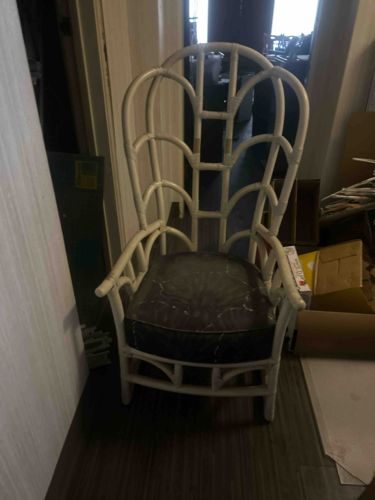
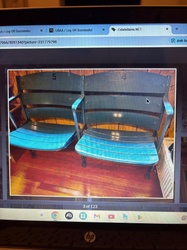
Submitted item photo
Submitted photo · May 19, 2026

User's notes

No additional notes provided.

AI analysis below

AI appraisal

AI analysis & estimate

AI-Generated · Verify before acting

Everything below is generated by AI for informational purposes only. AI can make mistakes — the AI may misidentify items or misattribute them (artist, maker, brand, designer, origin, era). This is not an official valuation and should not be used for insurance, sale, tax, estate, legal, or lending purposes — or any decision requiring a certified appraisal. It is not an authoritative claim about any person, brand, or rights holder — do not share or rely on it as a factual statement about a third party. Always consult qualified professionals before making financial decisions.

Read the full disclaimer

AI Identification

·Not independently authenticated·Verify before acting

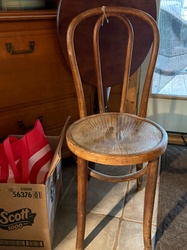
High-Back Bent Rattan Peacock Chair

Furniture / Vintage Seating

AI Estimated Value

·Not an official valuation·Verify before acting

$150 - $250

As of May 19, 2026

AI Item Analysis

·AI can make mistakes·Verify before acting
This is a vintage-style high-back accent armchair constructed from bent rattan or wicker poles, finished with a white or off-white paint. The chair's design is characterized by a dramatic, tall backrest featuring a 'peacock' or fan-style lattice work, created through curved concentric bents of rattan joined by vertical cross-members. The frame includes integrated armrests that flow from the back into curved front supports. The seat is fitted with a thick, circular padded cushion upholstered in a dark, patterned fabric, likely a botanical or tropical palm frond motif in shades of deep green or black with white accents. The base features a reinforced stretcher design for stability. Regarding its condition, the white finish shows signs of significant wear, with visible chipping, scuffing, and discoloration (patina) across the high-contact areas of the arms and backrest, revealing the natural wood color beneath. There is evidence of repair or reinforcement around the central joints of the backrest, where tape or modern adhesive may have been applied and since discolored. This piece represents the mid-century modern 'Hollywood Regency' or 'Tiki' style popular in the 1960s and 1970s. The craftsmanship uses traditional steam-bending techniques, though the current state of the finish suggests it has seen substantial use or storage in a humid environment.
AI Appraisal Report

·AI can make mistakes·Verify before acting
Upon visual examination of this vintage 'Peacock' style armchair, I have identified it as a classic example of mid-to-late 20th-century Hollywood Regency/Tiki-style furniture. The piece demonstrates traditional steam-bent rattan construction and the characteristic fan-back silhouette popularized in the 1960s and 70s. The condition of this specific piece is the primary factor impacting its valuation. While the structure appears intact, the white finish shows significant distressing, including chipping, scuffing, and localized discoloration consistent with heavy use or a humid environment. Of particular concern are the visible repairs at the central stress points of the backrest; the presence of modern adhesives or tape suggests a DIY restoration that detracts from the integrity of the original craftsmanship. The cushion, while functional, reflects a modern replacement rather than original upholstery. Market demand for peacock chairs remains steady due to the enduring popularity of Bohemian and Maximalist interior trends. However, collectors and designers typically seek pieces either in pristine original 'blonde' condition or professionally restored examples. Comparables in similar worn condition frequently sell in the $150-$250 range at regional auctions or via local marketplaces. Limitations: This appraisal is based solely on high-resolution imagery. A physical inspection is required to assess the structural rigidity of the rattan and the depth of the wood rot, if any. Full authentication would require checking for manufacturer tags (such as 'Franco Albini' or 'Vivre') and verifying the binding materials (rattan peel vs. synthetic). Without provenance documentation, I cannot rule out later 1990s reproductions which use thinner gauge poles and lower-quality joinery.

Get your items appraised

Instant estimates of your treasures with AI-powered appraisals

Browse More Appraisals