AI Appraisal Estimate

AI-generated estimates · not official valuations

From the user

What was submitted

Photo and notes provided by the user — not generated by AI

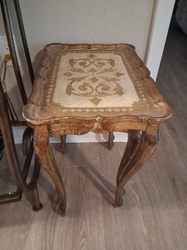
Submitted item photo
Submitted photo · May 26, 2026

User's notes

No additional notes provided.

AI analysis below

AI appraisal

AI analysis & estimate

AI-Generated · Verify before acting

Everything below is generated by AI for informational purposes only. AI can make mistakes — the AI may misidentify items or misattribute them (artist, maker, brand, designer, origin, era). This is not an official valuation and should not be used for insurance, sale, tax, estate, legal, or lending purposes — or any decision requiring a certified appraisal. It is not an authoritative claim about any person, brand, or rights holder — do not share or rely on it as a factual statement about a third party. Always consult qualified professionals before making financial decisions.

Read the full disclaimer

AI Identification

·Not independently authenticated·Verify before acting

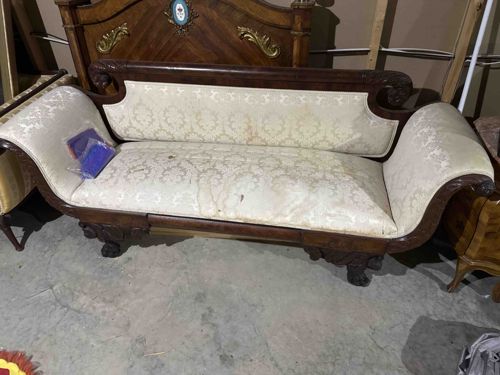
American Empire Mahogany Double-Scroll Sofa

Antique Furniture

AI Estimated Value

·Not an official valuation·Verify before acting

$400 - $800

As of May 26, 2026

AI Item Analysis

·AI can make mistakes·Verify before acting
An American Empire period sofa, likely dating from the 1830s to 1845, featuring a robust flame mahogany veneer and solid mahogany construction. The piece is characterized by its dramatic double-scroll arms, a signature of the late Classical or Empire style. The frame displays tight, curved silhouettes with a recessed backboard and out-swept, scrolled ends. It rests on massive, hand-carved acanthus leaf and hairy-paw feet, which exhibit the high-quality craftsmanship typical of New York or Philadelphia furniture makers of the mid-19th century. The wood frame shows a deep, aged patina with some minor abrasions and veneer chipping consistent with age. Notable condition issues include significant staining, yellowing, and water damage to the cream-colored damask upholstery, particularly across the center seat cushion and backrest. There is also a small puncture or tear visible in the seat fabric. The structural integrity of the frame appears sound, though the finish on the mahogany shows some clouding and minor surface wear. This piece retains its original grandiose proportions and serves as a prime example of the bold, architectural furniture popular in early Victorian American homes.
AI Appraisal Report

·AI can make mistakes·Verify before acting
I have virtually examined this American Empire mahogany sofa, which dates to the late Classical period, circa 1830-1845. The form is quintessential to the style, featuring bold double-scroll arms and impressive, hand-carved acanthus leaf and hairy-paw feet, traits highly indicative of New York or Philadelphia workshops. The flame mahogany veneer is striking, showcasing the rich figuring preferred during this era. Structurally, the frame appears robust, retaining the architectural solidity these pieces are known for. However, the condition significantly impacts my valuation. While the wood frame possesses a desirable deep patina, visible veneer chips and surface clouding require restoration. More critical is the state of the upholstery; the cream damask is heavily stained with visible water damage and tears, rendering it unusable. Reupholstering a piece of these proportions is a costly endeavor for any buyer. Currently, the market for massive Victorian and Empire brown furniture is soft. While high-style examples from renowned makers (like Meeks or Duncan Phyfe) can command thousands, generic or unsigned pieces struggle to find buyers due to their large footprint and changing interior design tastes. Comparables in similar 'project' condition often sell at auction for under $500, purely for the value of the frame. My valuation assumes the frame is structurally sound but acknowledges the necessity of full restoration. To confirm an attribution to a specific maker like Phyfe, I would need an in-person inspection to look for internal maker's marks, specific joinery techniques, or secondary wood analysis (e.g., poplar vs. pine) often hidden beneath the upholstery.

Get your items appraised

Instant estimates of your treasures with AI-powered appraisals

Browse More Appraisals