AI estimate as of November 21, 2025 · verify with a professional before acting
AI-Generated · Verify before acting
Everything on this page is generated by AI for informational purposes only. AI can make mistakes — the AI may misidentify items or misattribute them (artist, maker, brand, designer, origin, era). This is not an official valuation and should not be used for insurance, sale, tax, estate, legal, or lending purposes — or any decision requiring a certified appraisal. It is not an authoritative claim about any person, brand, or rights holder — do not share or rely on it as a factual statement about a third party. Always consult qualified professionals before making financial decisions.
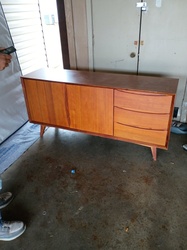
This is a modern console table, likely crafted from a dark-stained solid wood, possibly mahogany, walnut, or an engineered wood with a similar finish. The top surface is a smooth, glossy dark brown or almost black, reflecting light distinctly. It exhibits a minimalist design with clean lines. The table's structure consists of a flat rectangular top, supported by four legs. A notable feature is the angled stance of the legs, which splay slightly outwards from the top, creating a contemporary aesthetic. A horizontal metallic rod, possibly brass or bronze given its warm, slightly iridescent sheen, connects the front and back pairs of legs, serving as a subtle structural element and possibly a design accent. The table appears to be of a size suitable for placement behind a sofa or along a hallway wall. No obvious manufacturing marks, signatures, or stamps are visible in the provided images. The overall condition appears good, with no visible significant wear, chips, or damage to the wood surface or finish. The glossy finish suggests it is well-maintained, though minor surface scratches are difficult to ascertain from the provided resolution. The style suggests it belongs to a modern or contemporary design period, likely dating from the late 20th century to the present day due to its sleek silhouette and choice of dark, rich tones. The craftsmanship appears solid and functional, with an emphasis on form and clean lines.
AI Appraisal Report
I have examined the provided image of this modern dark wood console table. Visually, the table appears to be in very good condition; the glossy finish on the top surface suggests it has been well-maintained, with no obvious chips, deep scratches, or significant damage discernible from the resolution provided. The clean lines and outward-splaying leg design, accented by the metallic rod, firmly place it within contemporary design aesthetics. Without physical inspection, I cannot definitively determine the wood species (mahogany, walnut, or engineered wood with a veneer) or the exact material of the metallic rod, though it presents as brass or bronze. The craftsmanship appears solid for its form. Authenticity as a specific designer piece cannot be confirmed without manufacturer marks, signatures, or provenance documentation. This is a significant limitation as many modern designs are replicated.
In terms of market conditions, console tables of this contemporary style are widely available, both new and in the secondary market. Comparables from retail stores or online marketplaces for similar dark wood, minimalist console tables typically range from $250 to $800, depending on materials, brand, and origin. Higher values are associated with high-end designers or solid exotic woods. Demand for functional and stylish modern furniture remains consistent, but rarity is low for unmarked pieces without distinguished provenance. The lack of identifiable branding or unique design elements prevents it from commanding a premium as a collectible or rare item. Factors impacting value include the actual wood type, the quality of construction visible in person, and any hidden manufacturer's marks. For full authentication and to ascertain the exact materials, an in-person examination, including detailed inspection of joints, underside, and wood grain, along with potentially provenance documentation for dating and origin, would be essential.